 Back
BackIntroduction to Physics: Units, Physical Quantities, and Measurement
Study Guide - Smart Notes
 Tailored notes based on your materials, expanded with key definitions, examples, and context.
Introduction to Physics and Scientific Method
What is Physics?
Physics is the study of the fundamental principles governing the natural world. It seeks to understand how the universe behaves, from the smallest particles to the largest structures, using observation, experimentation, and mathematical modeling.
Core of Natural Sciences: Physics underpins all other sciences, technology, and engineering disciplines.
Predictive Power: Physics allows us to predict where things will be and why, based on established laws and models.
Scientific Method: Involves observation, hypothesis formation, experimentation, and refinement of theories.
Modeling Reality: Reality is complex, but physicists use the simplest possible models to approximate and predict outcomes effectively.
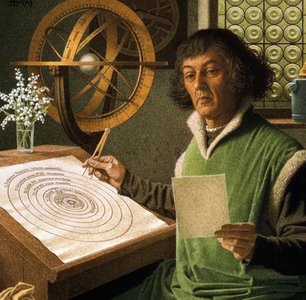
Example: The motion of planets was once explained by divination, but the scientific revolution (Copernicus, Kepler, Galileo, Newton, Hooke, and others) replaced superstition with empirical science.



Units, Physical Quantities, and Standards
Physical Quantities and Their Units
Physical quantities are properties of objects or phenomena that can be measured. Each physical quantity is expressed as a number and a unit.
Fundamental Quantities: The three most basic physical quantities are length (L), mass (M), and time (T).
Notation: [x] denotes the units of x. For example, [z] = L if z measures length.
Example: If z is height, then [z] = L (length).
International System of Units (SI)
The SI system is the standard system of units used in science and engineering worldwide.
Time: seconds (s)
Length: meters (m)
Mass: kilograms (kg)
Other systems, such as the British system, use units like inches, miles, and pounds (lb).
Unit Conversions
It is often necessary to convert between different units. Common conversions include:
1 inch = 2.54 cm = 0.0254 m
1 lb = 0.454 kg
1 mile = 1.609 km
Example: To convert 2.54 cm to meters:
Example: To convert 0.454 kg to grams:
Dimensional Analysis
Principle of Dimensional Consistency
All terms in a physical equation must have the same dimensions (units). This ensures that equations are physically meaningful.
Always carry units through calculations.
Check equations for dimensional consistency.
Example: For the equation , if [d] = m and [t] = s, then [v] must be m/s and [h] must be m.
Unit Conversion in Problem Solving
When solving problems, use ratios and equivalences to convert between units.
Set up conversion factors so that units cancel appropriately.
Example Problem: If you have to travel 50 km, your car gives 22 miles per gallon, you have $5, and gas costs $4.00 per gallon, can you make it to your destination?
Relevant equivalences: 22 miles = 1 gallon, $4.00 = 1 gallon, 1 mile = 1.609 km
Convert $5 to km using these ratios to determine if the trip is possible.
Uncertainty and Significant Figures
Significant Figures
Significant figures reflect the precision of a measurement. The number of significant digits in a value indicates the certainty of the measurement.
2.10 m (three significant figures) is not the same as 2.1 m (two significant figures).
When performing calculations, round the final answer to the appropriate number of significant figures.
Percent Error
Percent error quantifies the accuracy of a measurement compared to a true or accepted value.
Formula:
Example: The distance between train stations is 159.87 km. The train traveled 159.90 km. The percent error is:
Even a small percent error can correspond to a significant absolute difference, which may be critical in engineering or safety contexts.
Best Practices and Course Policies
Always bring a scientific calculator (not graphical or programmable) to class.
Bring a green scantron and pencil for assessments.
Read the syllabus and complete all assigned activities and homework.
Participation and engagement in class activities are essential for learning.
Summary Table: SI and British Units
Quantity | SI Unit | British Unit | Conversion |
|---|---|---|---|
Length | meter (m) | inch, mile | 1 inch = 2.54 cm = 0.0254 m; 1 mile = 1.609 km |
Mass | kilogram (kg) | pound (lb) | 1 lb = 0.454 kg |
Time | second (s) | second (s) | — |
Key Takeaways
Physics relies on precise measurement, clear definitions, and consistent use of units.
Dimensional analysis is a powerful tool for checking equations and solving problems.
Understanding significant figures and percent error is crucial for reporting and interpreting experimental results.
Active participation and careful attention to course policies will support your success in physics.
