 Back
BackKinematics: Motion in One and Two Dimensions
Study Guide - Smart Notes
 Tailored notes based on your materials, expanded with key definitions, examples, and context.
Kinematics: Motion in One and Two Dimensions
Constant Velocity: Uniform Motion
Kinematics is the branch of physics that describes the motion of objects without considering the forces that cause the motion. In the simplest case, an object moves with constant velocity, meaning its speed and direction remain unchanged.
Initial Conditions: The motion is defined by the initial time (), initial position (), and initial velocity ().
Kinematic Equation: The position at any time is given by:
Velocity: For constant velocity,
Displacement:
Graphical Representation: The slope of the vs. graph gives the velocity, and the area under the vs. $t$ graph gives the displacement.
Example: A car moving at a constant speed along a straight road.

Constant Acceleration: Linear Motion
When an object experiences a constant acceleration, its velocity changes uniformly over time. This is common in situations such as free-fall or vehicles accelerating in a straight line.
Initial Conditions: Defined by initial position (), initial velocity (), and initial time ().
Kinematic Equations:
Graphical Representation: The slope of the vs. graph gives the acceleration, and the area under the vs. $t$ graph gives the change in velocity.
Example: A truck accelerating from rest.
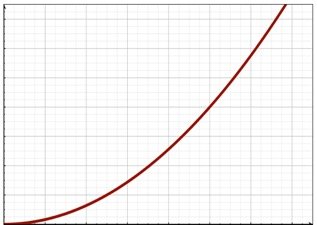
Free Fall and Vertical Motion
Near the Earth's surface, objects experience a constant downward acceleration due to gravity (). The motion can be described using kinematic equations, with the vertical direction denoted as .
Gravity: (downward)
Kinematic Equations:
Thrown vs. Dropped: If an object is thrown, exists; if dropped, .
Example: A ball thrown upward from ground level.

Projectile Motion: Two-Dimensional Kinematics
Projectile motion occurs when an object is launched into the air and moves under the influence of gravity alone (no air resistance). The motion can be separated into horizontal () and vertical () components.
Initial Velocity: at angle ; ,
Horizontal Motion: ,
Vertical Motion: ,
Maximum Height: Occurs when ; ,
Range: For ,
Example: A cannonball launched at with m/s.
Example Problems
Applying kinematic equations to solve real-world problems is essential for mastering the concepts.
Cannonball Example: Calculate time in air and range for a projectile launched at with m/s. m/s m/s s m
Cliff Example: Mr. Bean rides off a 6.00 m high cliff with m/s. s m
Summary Table: Kinematic Equations
Type of Motion | Equation | Variables |
|---|---|---|
Constant Velocity | , , | |
Constant Acceleration | , , , | |
Vertical Free Fall | , , , | |
Projectile Range | , , |
