 Back
BackMagnetic Fields and Their Applications
Study Guide - Smart Notes
 Tailored notes based on your materials, expanded with key definitions, examples, and context.
The Magnetic Field
Applications of Magnetic Fields
Magnetic fields are fundamental to the operation of many modern devices and technologies. They are used in a wide range of applications, from household electronics to large-scale industrial machinery.
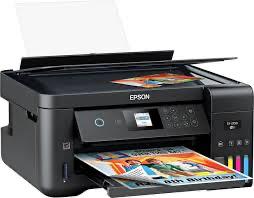
Printers: Use magnetic fields to control ink placement and paper movement in some types of printers.
Wind Turbines: Employ magnetic fields in generators to convert mechanical energy into electrical energy.
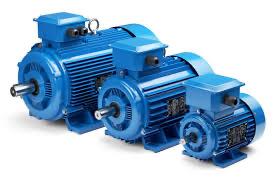
Motors: Rely on magnetic fields to produce rotational motion from electrical energy.
Communication Systems: Utilize magnetic fields in antennas and signal processing equipment.
Computers, Speakers, Microphones, Hard Drives: All use magnetic fields for data storage, sound production, and signal detection.
Magnetic Levitation: Used in maglev trains for frictionless transportation.
Medical Devices: MRI machines use strong magnetic fields for imaging internal body structures.








Magnetism: Historical Background and Basic Concepts
Discovery and Early Uses
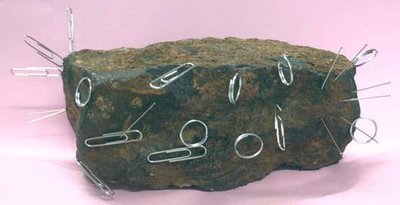
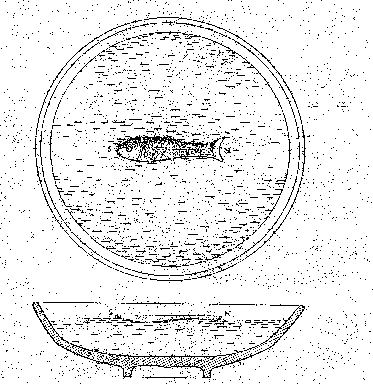
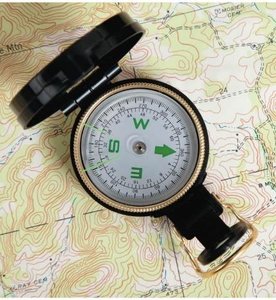
Magnetism has been known for over 2500 years, with early observations of magnetized iron ore near Magnesia. The Chinese developed the compass, using a magnetized iron leaf to indicate direction.
Magnetic Poles
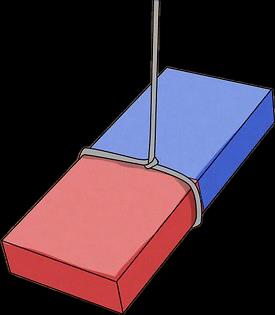
A bar magnet has two poles: the north (N) pole and the south (S) pole. If allowed to rotate freely, the N pole points toward the Earth's geographic north. Permanent magnets generate magnetic fields due to the motion of electrons within atoms.
Atomic Origin of Magnetism
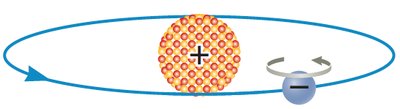
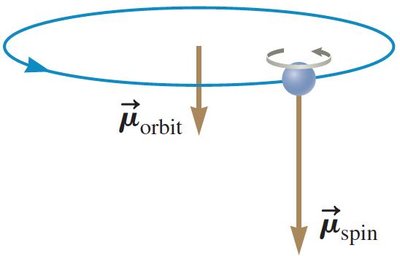
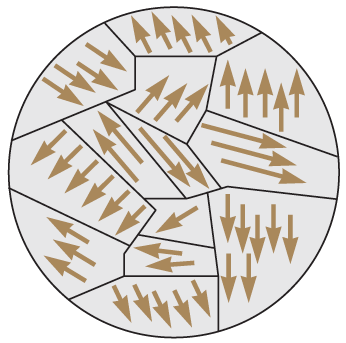
Magnetism arises from the motion of electrons, both from their orbital movement around the nucleus and their intrinsic spin. The net magnetic moment of an atom is the vector sum of these contributions.
Magnetic Moment: The strength and direction of a magnet's ability to produce a magnetic field.
Magnetic Domain: A region within a material where the magnetic moments of atoms are aligned.
Types of Magnetic Materials
Classification by Magnetic Response
Materials are classified based on their response to external magnetic fields:
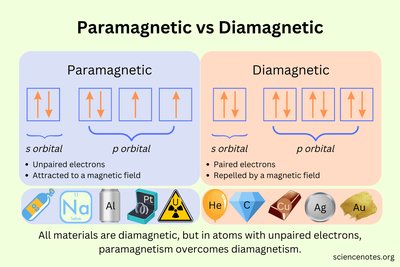
Ferromagnetic: Strongly attracted to magnets (e.g., iron, nickel, cobalt).
Paramagnetic: Weakly attracted to magnets (e.g., aluminum, platinum).
Diamagnetic: Weakly repelled by magnets (e.g., copper, bismuth).
Magnetic Field and Field Lines
Properties of Magnetic Fields
The magnetic field, denoted by B, is a vector field that describes the magnetic influence on moving electric charges, electric currents, and magnetic materials. The SI unit is the Tesla (T).
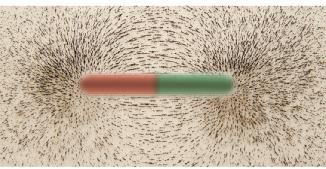
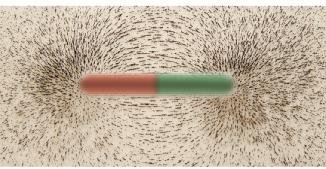
Field Lines: Magnetic field lines emerge from the north pole and enter the south pole outside the magnet, forming closed loops.
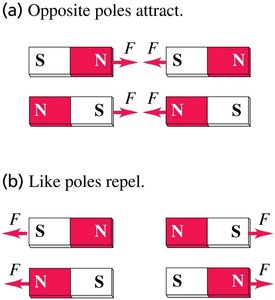
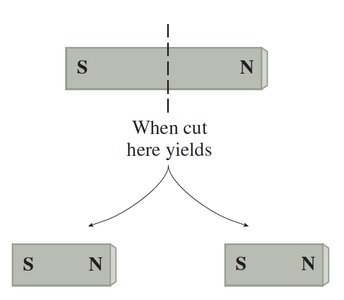
Poles: Like poles repel, opposite poles attract. Magnetic monopoles have not been observed; breaking a magnet always results in two poles.

Earth's Magnetic Field
The Earth itself acts as a giant magnet, with a field strength of about 0.5 Gauss (0.00005 T). The magnetic north pole is near the geographic south pole and vice versa. Devices like compasses align with Earth's magnetic field.
Magnetic Force on Moving Charges
Magnetic Force Equation
A moving charge in a magnetic field experiences a force given by:
Vector Form:
Magnitude:
Where is the charge, is the velocity, is the magnetic field, and is the angle between and .
The force is maximum when the velocity is perpendicular to the field and zero when parallel.
Right-Hand Rule for Cross Product
The direction of the magnetic force is determined by the right-hand rule: point your fingers in the direction of , curl them toward , and your thumb points in the direction of for a positive charge.
Magnetic Flux and Gauss' Law for Magnetism
Magnetic Flux
Magnetic flux () through a surface is a measure of the number of magnetic field lines passing through that surface:
Where is the area and is the angle between and the normal to the surface.
Gauss' Law for Magnetism
The net magnetic flux through any closed surface is zero:
This reflects the absence of magnetic monopoles; magnetic field lines always form closed loops.
Motion of Charged Particles in Magnetic Fields
Circular and Helical Motion
A charged particle moving perpendicular to a uniform magnetic field follows a circular path:
Radius:
Frequency (Cyclotron):
If the velocity has a component parallel to , the path is helical.
Lorentz Force Law
If both electric and magnetic fields are present:
Applications: Velocity Selector and Mass Spectrometer
Velocity Selector: Uses perpendicular electric and magnetic fields to allow only particles with a specific velocity to pass undeflected:
Mass Spectrometer: Separates ions by mass-to-charge ratio using circular motion in a magnetic field.
Magnetic Forces on Currents and Current-Carrying Wires
Force on a Current-Carrying Wire
The force on a straight wire of length carrying current in a magnetic field is:
For wires of arbitrary shape, integrate over the length:
Force Between Parallel Wires
Parallel wires carrying currents exert forces on each other. The force per unit length between two long, parallel wires separated by distance is:
This forms the basis for the definition of the ampere.
Magnetic Forces and Torques on Current Loops
Torque on a Current Loop
A current loop in a uniform magnetic field experiences a torque:
Where is the magnetic moment (area vector is perpendicular to the loop).
The net force on a closed current loop in a uniform field is zero, but the torque can cause rotation.
Magnetic Field Due to Moving Charges and Currents
Magnetic Field of a Moving Charge
A moving point charge creates a magnetic field given by:
Biot-Savart Law
The Biot-Savart Law gives the magnetic field produced by a current element:
For a long straight wire, the field at distance is:
Magnetic Field of a Current Loop
At a point on the axis of a circular loop of radius carrying current :
At the center ():
Ampère’s Law and Applications
Ampère’s Law
The line integral of the magnetic field around any closed path is proportional to the total current enclosed:
This law is especially useful for calculating fields in symmetric situations (e.g., long straight wires, solenoids, toroids).
Solenoids and Toroids
Solenoid: (where is the number of turns per unit length)
Toroid: (where is the total number of turns, is the distance from the center)
Summary Table: Key Magnetic Field Equations
Configuration | Magnetic Field (B) |
|---|---|
Long straight wire | |
Center of circular loop | |
Solenoid (inside) | |
Toroid (inside) |
Additional info:
Some images and examples were inferred to provide context for the applications of magnetic fields in technology and nature.
All equations are presented in LaTeX format with double backslashes for compatibility.
