 Back
BackMagnetic Force on Moving Charges and Current-Carrying Wires
Study Guide - Smart Notes
 Tailored notes based on your materials, expanded with key definitions, examples, and context.
Magnetic Force on Moving Charges
Fundamental Concepts
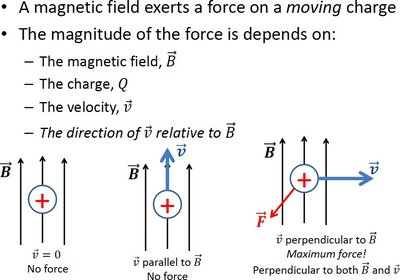
The magnetic force is a fundamental interaction experienced by moving charges in the presence of a magnetic field. The magnitude and direction of this force depend on several factors:
Magnetic field (\( \vec{B} \)): The strength and orientation of the field.
Charge (q): The sign and magnitude of the charge.
Velocity (\( \vec{v} \)): The speed and direction of the moving charge.
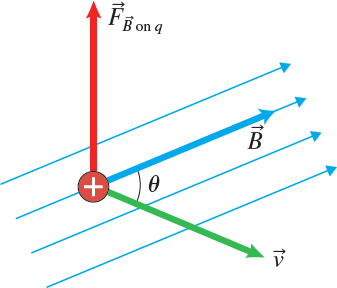
Angle (\( \theta \)): The angle between the velocity and the magnetic field.
The force is given by the vector cross product:
Formula:
Magnitude:
When the velocity is parallel or antiparallel to the magnetic field, the force is zero. The force is maximized when the velocity is perpendicular to the field.
Right-Hand Rule
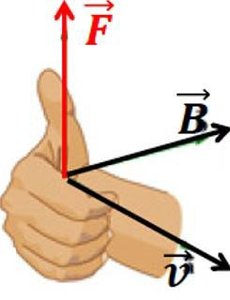
The right-hand rule is used to determine the direction of the magnetic force for a positive charge:
Point your fingers in the direction of velocity (\( \vec{v} \)).
Curl them toward the direction of the magnetic field (\( \vec{B} \)).
Your thumb points in the direction of the force (\( \vec{F} \)).
For negative charges, the force is in the opposite direction.
Comparison with Electric Force
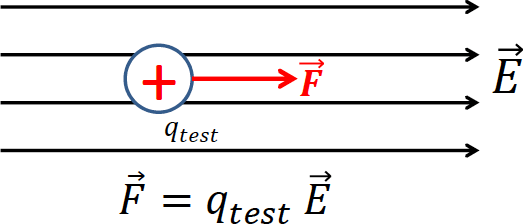
Unlike the magnetic force, the electric force acts directly along the direction of the electric field:
Electric force:
The force is parallel to the field for positive charges and antiparallel for negative charges.
Motion of Charges in Magnetic Fields
Trajectories and Circular Motion
When a charged particle moves perpendicular to a uniform magnetic field, it experiences a constant magnitude force perpendicular to its velocity, resulting in circular motion:
Radius of trajectory:
Speed remains constant (no work is done by the magnetic force).
Kinetic energy remains constant.
Helical Motion
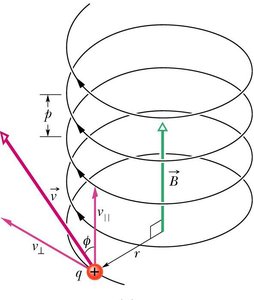
If the velocity has a component parallel to the magnetic field, the particle follows a helical (spiral) path.
Applications: Mass Spectrometry and Cyclotrons
Mass Spectrometer
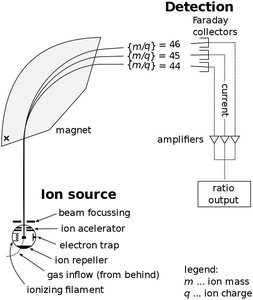
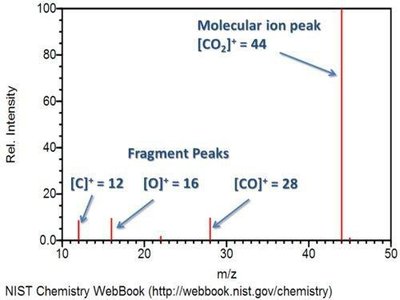
Mass spectrometers use the deflection of charged particles in a magnetic field to determine their mass-to-charge ratio (m/q). The radius of curvature is measured to infer the properties of the particles.
Formula:
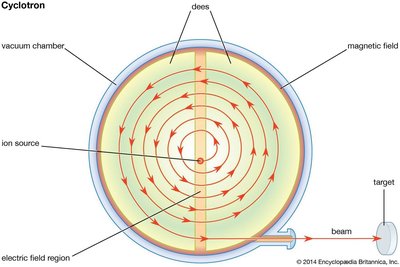
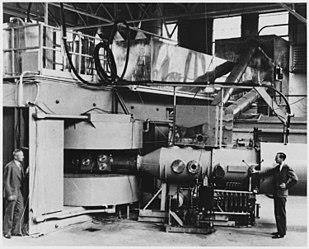
Cyclotron
A cyclotron is a type of particle accelerator that uses a magnetic field to bend the path of charged particles, allowing them to gain energy in a spiral trajectory.
Magnetic Force on Current-Carrying Wires
Force on a Straight Wire
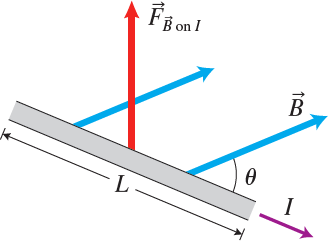
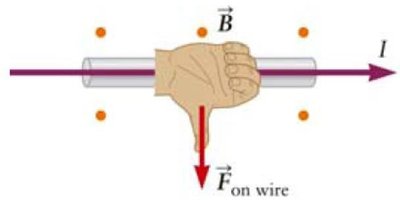
A current-carrying wire in a magnetic field experiences a force given by:
Formula:
Magnitude:
The direction is given by the right-hand rule (point fingers in direction of current, curl toward field, thumb points to force).
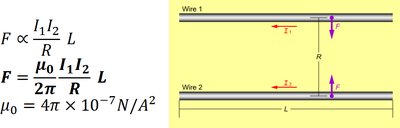
Force Between Parallel Wires
Two parallel wires carrying currents exert forces on each other. The force per unit length is:
Formula:
Parallel currents attract; antiparallel currents repel.

Summary Table: Magnetic vs. Electric Force
Force Type | Formula | Direction |
|---|---|---|
Electric | Parallel to field | |
Magnetic | Perpendicular to both velocity and field |
Key Takeaways
The magnetic force acts only on moving charges and is always perpendicular to their velocity and the magnetic field.
The right-hand rule is essential for determining force direction.
Applications include mass spectrometry, cyclotrons, and the behavior of current-carrying wires.
Additional info: The notes include both conceptual explanations and practical applications, such as particle accelerators and mass spectrometers, which are central to modern physics and engineering.
