 Back
BackMagnetism and Electromagnetic Induction: Solenoids, Ampère’s Law, and Faraday’s Law
Study Guide - Smart Notes
 Tailored notes based on your materials, expanded with key definitions, examples, and context.
Magnetism and Electromagnetic Induction
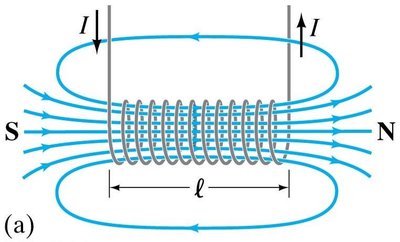
Solenoids and Electromagnets
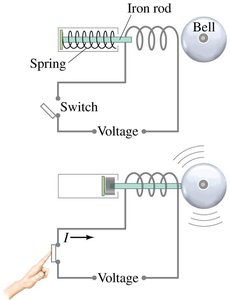
Solenoids are long coils of wire that generate nearly uniform magnetic fields inside their windings. When a ferromagnetic material such as iron is inserted into a solenoid, the magnetic field strength increases significantly, creating an electromagnet. Electromagnets are widely used in devices such as electric bells, relays, and motors.
Solenoid Magnetic Field: The magnetic field inside a solenoid is given by the formula: where is the permeability of free space, is the number of turns, is the length, and is the current.
Electromagnet: Inserting iron increases the field due to the material's high magnetic permeability.
Applications: Electromagnets are used in electric bells, magnetic locks, and industrial lifting devices.
Example: An electric bell uses an electromagnet to move a striker and ring the bell when current flows.
Ampère’s Law
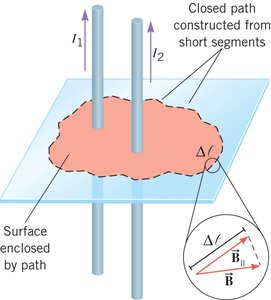
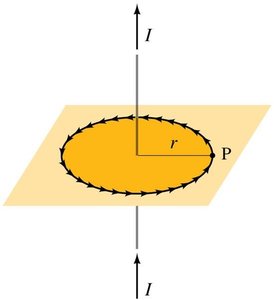
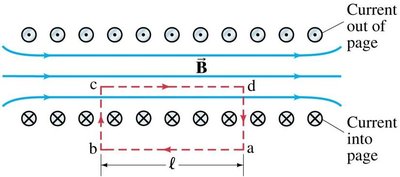
Ampère’s Law relates the magnetic field around a closed loop to the total current passing through the loop. It is a fundamental law in electromagnetism and is especially useful for calculating magnetic fields in situations with symmetry.
Ampère’s Law (General Form): The sum is taken over a closed path, and is the current enclosed by the path.
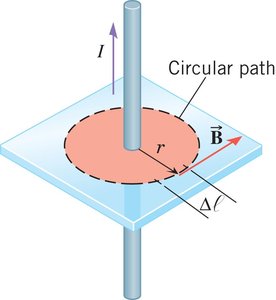
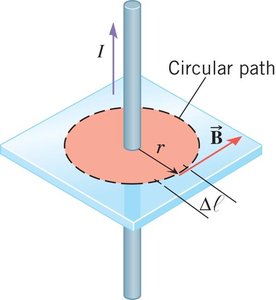
Special Case (Circular Path): Useful for straight wires and coaxial cables.
Conditions: Valid when the magnetic field and current are steady (not changing in time).
Symmetry: Ampère’s Law is most easily applied in cases with high symmetry, such as straight wires or solenoids.
Applications of Ampère’s Law
Ampère’s Law can be used to solve problems involving the magnetic field produced by current-carrying wires and cables.
Parallel Wires: The magnetic field at a distance from two parallel wires depends on the direction and magnitude of the currents.
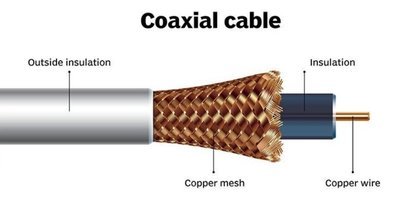
Coaxial Cable: A coaxial cable consists of a central wire and an outer cylindrical braid, separated by insulation. The magnetic field is present in the space between the conductors but cancels outside the cable due to opposing currents.
Example: Calculating the magnetic field at a given distance from two wires carrying different currents.
Electromagnetic Induction and Faraday’s Law
Magnetic Flux
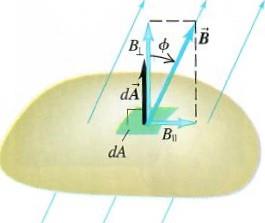
Magnetic flux quantifies the amount of magnetic field passing through a given area. It is analogous to electric flux and is a key concept in electromagnetic induction.
Definition: Magnetic flux is given by: where is the magnetic field, is the area vector, and is the angle between them.
Units: The SI unit of magnetic flux is the weber (Wb), where .
Example: Calculating the magnetic flux through a circular surface with a given field strength and orientation.
Induced EMF and Induced Current
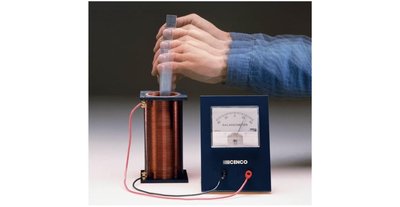
Electromagnetic induction is the process by which a changing magnetic field induces an electromotive force (EMF) and, consequently, a current in a conductor. This phenomenon is described by Faraday’s Law.
Induced EMF: An EMF can be induced without a battery, simply by changing the magnetic field through a coil.
Faraday’s Law: The induced EMF is proportional to the rate of change of magnetic flux: The negative sign indicates the direction of the induced EMF opposes the change in flux (Lenz’s Law).
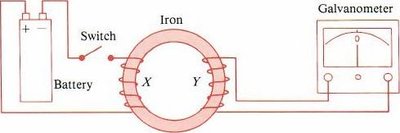
Induced Current: Current is produced in a coil only when the magnetic field through the coil changes.
Example: When a switch is opened or closed in one coil, a changing magnetic field induces a current in a nearby coil.
Summary Table: Key Concepts in Magnetism and Electromagnetic Induction
Concept | Definition | Formula | Unit |
|---|---|---|---|
Solenoid Magnetic Field | Field inside a long coil | Tesla (T) | |
Ampère’s Law | Field around closed loop | Tesla (T) | |
Magnetic Flux | Field passing through area | Weber (Wb) | |
Induced EMF | EMF from changing flux | Volt (V) |
