 Back
BackMagnetism: Foundations, Properties, and Applications
Study Guide - Smart Notes
 Tailored notes based on your materials, expanded with key definitions, examples, and context.
Magnetism: Foundations, Properties, and Applications
Introduction to Magnetism
Magnetism is a fundamental physical phenomenon arising from the motion of electric charges, resulting in attractive and repulsive forces between objects. The study of magnetism has evolved from ancient observations of natural magnets to a sophisticated understanding of electromagnetic fields and their applications.
Historical Development of Magnetism
Natural Magnets and Early Discoveries
Lodestones are naturally occurring magnets containing magnetite, first discovered in the region of Magnesia in ancient Greece.
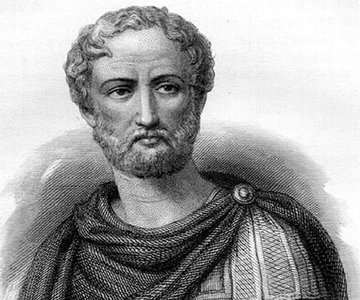
Pliny the Elder documented stones that attracted iron, highlighting early awareness of magnetic phenomena.
Early Use of Magnets
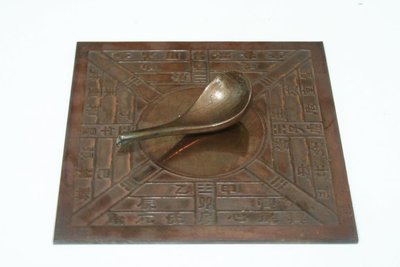
By 121 AD, the Chinese observed that iron rods exposed to lodestones could acquire temporary magnetism and align north-south when suspended.
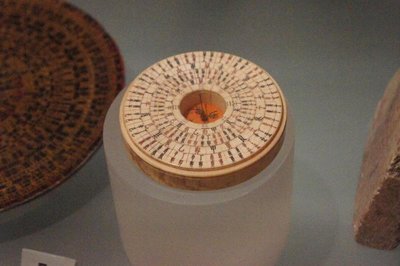
Magnets were used for navigation as early as the eleventh century, leading to the development of the compass.
Scientific Understanding: The Connection to Electricity
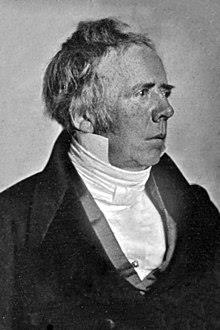
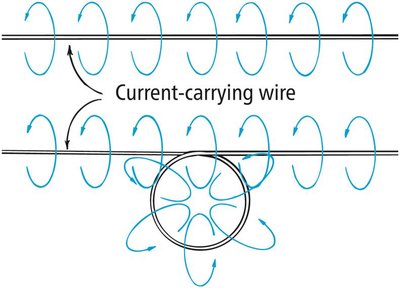
In 1819, Hans Christian Ørsted discovered that electric currents create magnetic fields, as evidenced by the deflection of a compass needle near a current-carrying wire.
In 1831, Michael Faraday demonstrated that moving a magnet near a circuit induces an electric current, establishing the principle of electromagnetic induction.

The Concept of Magnetic Fields
Definition and Properties
A magnetic field is a region of space where magnetic forces can be detected. It is a vector field, meaning it has both magnitude and direction, and is denoted by the symbol B. The SI unit of magnetic field is the Tesla (T), with 1 T = 10,000 Gauss (G).
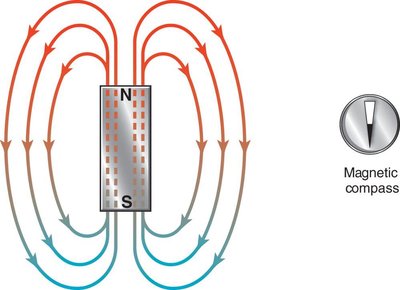
Magnetic field lines emerge from the north pole and enter the south pole of a magnet.
The density of field lines indicates the strength of the magnetic field; they are densest near the poles.


Magnetic Field Lines
Field lines never cross and form closed loops from north to south outside the magnet and south to north inside the magnet.
The direction of the field at any point is tangent to the field line at that point.

Production of Magnetic Fields
Moving Charges and Currents
Magnetic fields are produced by moving electric charges, such as those in an electric current. The field around a straight current-carrying wire forms concentric circles centered on the wire.
The direction of the magnetic field around a wire can be determined by the right-hand rule: if the thumb points in the direction of current, the fingers curl in the direction of the field.

Magnetic Forces
Forces on Moving Charges
A charged particle moving through a magnetic field experiences a force perpendicular to both its velocity and the magnetic field, given by:
F: Magnetic force (N)
q: Charge (C)
v: Velocity (m/s)
B: Magnetic field (T)
θ: Angle between velocity and field

Forces on Current-Carrying Wires
A wire carrying current in a magnetic field experiences a force, which can be described by:
I: Current (A)
L: Length of wire in field (m)

Atomic Origin of Magnetism
Electron Spin and Magnetic Domains
Magnetism arises primarily from the spin of electrons on their axes, not from their orbital motion around the nucleus.
In magnetic materials, groups of atoms called domains have their magnetic moments aligned.
In unmagnetized materials, domains are randomly oriented, resulting in no net magnetic field.
Applying an external magnetic field aligns the domains, enhancing the material's magnetism.
Material Dependence
All atoms exhibit magnetic effects, but the type of material determines the overall magnetic properties.
Ferromagnetic materials (e.g., iron, cobalt, nickel) can be strongly magnetized due to domain alignment.
Key Properties and Laws of Magnetism
Summary of Magnetic Properties
Magnets have north and south poles; like poles repel, unlike poles attract.
Magnetic forces act at a distance and only attract magnetic materials.
Temporary magnets can behave like permanent magnets while magnetized.
Electromagnets are created by passing current through coils of wire; adding iron increases their strength.
Every magnet, when divided, results in smaller magnets each with a north and south pole—magnetic monopoles have not been observed.
Earth’s Magnetic Field
Origin and Behavior
Earth’s magnetic field is generated by electric currents in its molten core.
The geographic north pole corresponds to the magnetic south pole.
The direction of Earth’s magnetic field reverses periodically; the last reversal occurred about 780,000 years ago.
Electromagnetic Induction
Faraday’s Law of Induction
A changing magnetic field induces an electric current in a conductor. This is the principle behind generators and transformers.
Induced voltage depends on the number of loops, the strength of the magnetic field, and the rate of change of the field.
Mutual Induction of Electric and Magnetic Fields
A changing magnetic field induces an electric field, and a changing electric field induces a magnetic field.
This interplay allows electromagnetic waves (such as light) to propagate through space.
Summary Table: Key Concepts in Magnetism
Concept | Description | Key Equation |
|---|---|---|
Magnetic Field (B) | Region where magnetic forces are observed; produced by moving charges | — |
Force on Moving Charge | Force experienced by a charge moving in a magnetic field | |
Force on Current-Carrying Wire | Force on a wire carrying current in a magnetic field | |
Electromagnetic Induction | Induced voltage from changing magnetic field | |
Magnetic Domains | Regions of aligned atomic magnetic moments | — |
Conclusion
Magnetism is a central concept in physics, linking electricity and magnetism through the motion of charges and the interplay of fields. Its principles underpin technologies from electric motors to data storage and are fundamental to our understanding of the natural world.
