 Back
BackMagnetism: Principles, Applications, and Phenomena
Study Guide - Smart Notes
 Tailored notes based on your materials, expanded with key definitions, examples, and context.
Chapter 24: Magnetism
Introduction to Magnetism
Magnetism is a fundamental force arising from the motion of electric charges, and it plays a crucial role in both natural and technological phenomena. The study of magnetism encompasses the behavior of magnetic forces, magnetic fields, and their interactions with materials and electric currents.
Magnetic Forces
Magnetic forces are exerted between charged particles, especially when they are in motion. While Coulomb's law describes the force between stationary charges, moving charges experience an additional force known as the magnetic force.
Magnetic force: Depends on the magnitude of the charge, distance, and relative motion.
When charges move, the force is more complex and includes magnetic effects.
Magnetic force can attract or repel depending on the orientation of magnetic poles.
Magnetic Poles
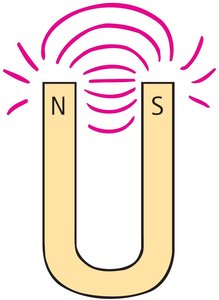
Magnets possess two distinct poles: the north (N) and south (S) poles. The interaction between these poles determines the nature of the magnetic force.
Like poles repel; opposite poles attract.
Every magnet has both a north and a south pole; isolated poles (monopoles) have not been observed.
Examples include bar magnets and horseshoe magnets.
Magnetic Fields
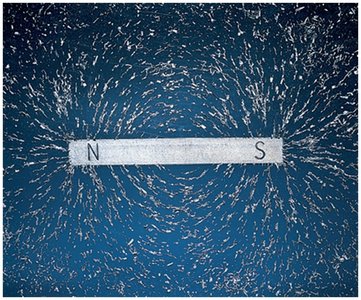
A magnetic field is the region around a magnet where magnetic forces can be detected. The field is visualized by lines that extend from the north pole to the south pole.
Field lines: Indicate the direction and strength of the field.
Closer lines represent stronger fields; lines farther apart indicate weaker fields.
Produced by the motion of electric charges, primarily electrons.
Sources of Magnetism
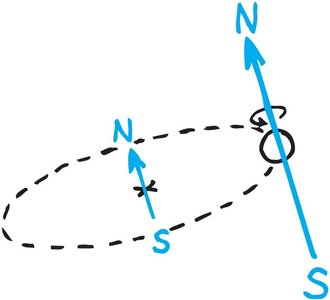
Electron spin: Main contributor to magnetism; paired spins in the same direction enhance magnetism, while opposite spins cancel each other.
Electron revolution: Electrons moving around the nucleus also contribute to magnetic fields.
Magnetic Domains
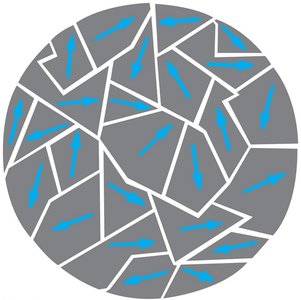
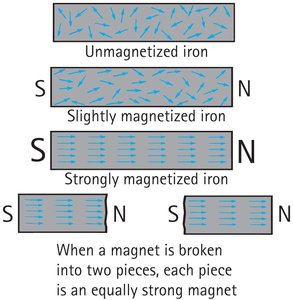
Magnetic domains are clusters of atoms with aligned magnetic moments. The alignment of these domains determines whether a material is magnetized.
Permanent magnets: Domains remain aligned after the external field is removed.
Temporary magnets: Domains return to random orientation when the external field is removed.
Electric Currents and Magnetic Fields
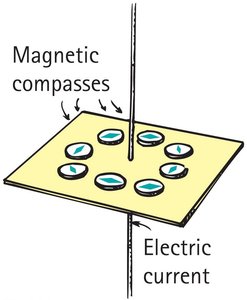
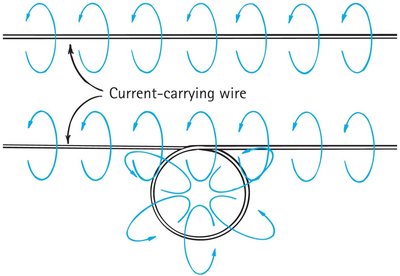
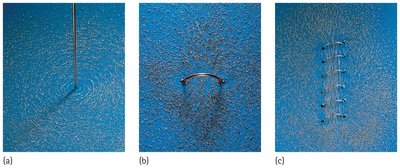
Electric currents generate magnetic fields. The field around a current-carrying wire forms concentric circles, and its direction depends on the direction of the current.
Reversing the current reverses the direction of the magnetic field.
Increasing the number of loops in a coil increases the magnetic field intensity.
Electromagnets
An electromagnet is formed by placing an iron bar inside a current-carrying coil. The strength of an electromagnet can be increased by increasing the current or the number of turns in the coil.
Industrial electromagnets use iron cores to further enhance the field.
Superconducting coils eliminate heat losses and produce extremely strong fields.
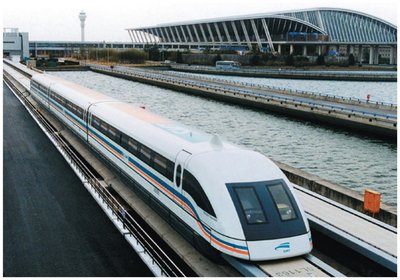
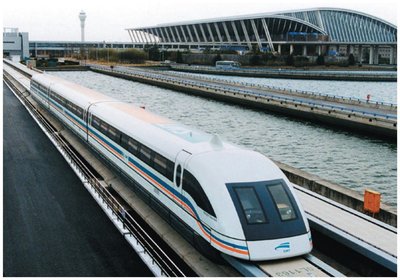
Applications include particle accelerators, lifting heavy objects, and maglev trains.

Magnetic Forces on Moving Charges
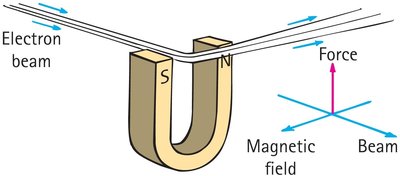
Charged particles moving through a magnetic field experience a force that is perpendicular to both their velocity and the magnetic field.
Maximum force occurs when the motion is perpendicular to the field lines.
No force is exerted if the motion is parallel to the field lines.
The magnetic force changes the direction, not the speed, of the particle.
Magnetic Force on Current-Carrying Wires
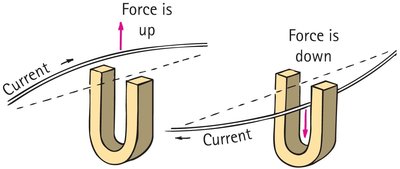
Wires carrying electric current in a magnetic field experience a force perpendicular to both the current and the field.
Strongest when the current is perpendicular to the field lines.
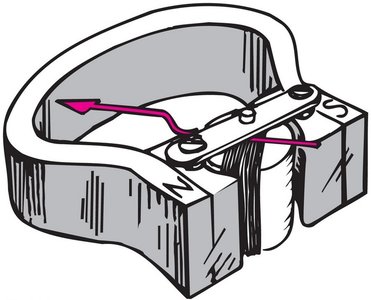
Used in devices such as electric meters and motors.

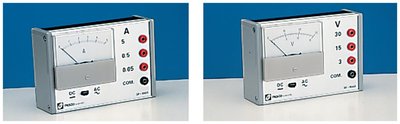
Galvanometers, Ammeters, and Voltmeters
Galvanometer: Measures electric current; named after Luigi Galvani.
Ammeter: Calibrated to measure current in amperes.
Voltmeter: Calibrated to measure electric potential in volts.
Electric Motors
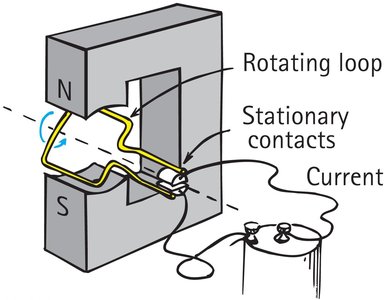
Motors use the magnetic force on current-carrying wires to produce continuous rotation.
Each half rotation reverses the current direction, maintaining motion.
Earth's Magnetic Field
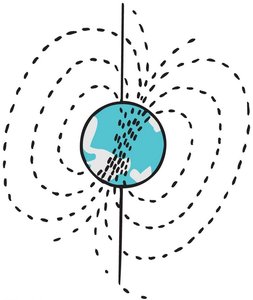
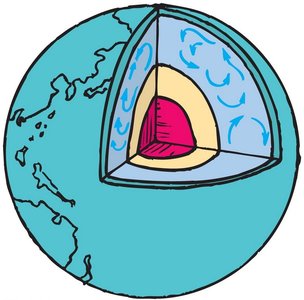
Earth acts as a giant magnet, with its magnetic field generated by electric currents in its molten interior. The magnetic poles are not aligned with the geographic poles, and the field reverses periodically.
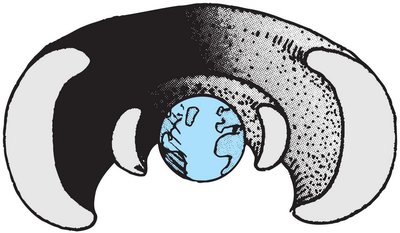
Charged particles from space (cosmic rays) are deflected by Earth's field.
Some particles are trapped in the Van Allen radiation belts.
Auroras
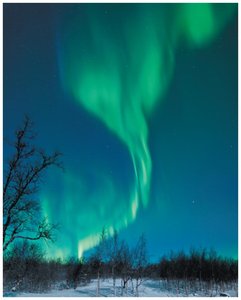
Solar storms send charged particles toward Earth, which are trapped by the magnetic field.
These particles cause the atmosphere to glow, producing auroras (aurora borealis and aurora australis).
Biomagnetism
Biomagnetism refers to the ability of certain organisms to detect and utilize magnetic fields for navigation and orientation.
Bacteria produce magnetite grains for internal compasses.
Pigeons, bees, butterflies, sea turtles, and fish possess magnetic senses for navigation.
Key Formulas and Concepts
Magnetic force on a moving charge:
Magnetic force on a current-carrying wire:
Right-hand rule: Used to determine the direction of magnetic force.
Type of Magnet | Domain Alignment | Behavior After External Field Removed |
|---|---|---|
Permanent Magnet | Aligned | Remains aligned |
Temporary Magnet | Aligned | Returns to random |
Additional info: The notes have been expanded to provide academic context, definitions, and examples for each topic. Images are included only where they directly reinforce the explanation.
