 Back
BackMaxwell’s Equations and Electromagnetic Waves
Study Guide - Smart Notes
 Tailored notes based on your materials, expanded with key definitions, examples, and context.
Maxwell’s Equations: The Foundation of Electromagnetism
Historical Context and Unification of Electromagnetic Theory
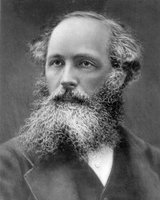
Maxwell’s Equations represent the culmination of 19th-century electromagnetic theory, unifying electric and magnetic phenomena into a single framework. James Clerk Maxwell, building on the concept of fields introduced by Faraday, formulated four equations that describe how electric and magnetic fields are generated and altered by each other and by charges and currents. These equations are as fundamental to electromagnetism as Newton’s laws are to mechanics.
Fields: Physical quantities defined at every point in space, describing the influence of electric charges and currents.
Unification: Maxwell’s equations show that electric and magnetic fields are interrelated and can generate each other under changing conditions.
Changing Fields and Displacement Current
Extension of Ampère’s Law
Maxwell extended Ampère’s Law by proposing that a changing electric field can produce a magnetic field, just as a changing magnetic field can produce an electric field (Faraday’s Law). This led to the introduction of the displacement current, which accounts for the magnetic effects of changing electric fields, especially in regions where no physical current exists, such as between the plates of a charging capacitor.
Displacement Current: A term added by Maxwell to Ampère’s Law to include the effect of a changing electric field.
Physical Current vs. Displacement Current: Physical current is due to moving charges; displacement current arises from changing electric flux.
Maxwell’s Equations: The Four Laws
Summary of the Equations
Maxwell’s Equations can be stated as follows:
I. Gauss’ Law: The electric flux through a closed surface is proportional to the enclosed electric charge.
II. Gauss’ Law for Magnetism: The net magnetic flux through a closed surface is zero (no magnetic monopoles).
III. Faraday’s Law of Induction: A changing magnetic field produces an electric field.
IV. Maxwell-Ampère’s Law: Magnetic fields are produced by electric currents and by changing electric fields.
Electromagnetic Wave Production
Oscillating Charges and Wave Generation
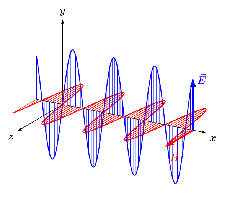
When a charge accelerates, it produces electromagnetic waves—oscillating electric and magnetic fields that propagate through space. These waves are perpendicular to each other and to the direction of propagation. The production of electromagnetic waves is a direct consequence of Maxwell’s equations.
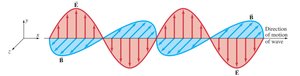
Wave Nature: The electric field (E) and magnetic field (B) oscillate perpendicular to each other and to the direction of wave travel.
Right-Hand Rule: The direction of propagation is given by the right-hand rule: thumb (direction of wave), fingers (E field), palm (B field).
Speed of Electromagnetic Waves
Derivation and Significance
Maxwell’s equations predict that electromagnetic waves travel at a speed determined by the electric constant (permittivity of free space, ) and the magnetic constant (permeability of free space, ):
Speed of Light:
This value matches the measured speed of light, leading to the realization that light is an electromagnetic wave.
The Electromagnetic Spectrum
Wavelength, Frequency, and Types of EM Waves
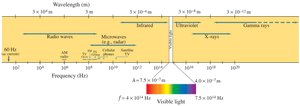
Electromagnetic waves span a broad range of wavelengths and frequencies, collectively known as the electromagnetic spectrum. Visible light is only a small part of this spectrum, which also includes radio waves, microwaves, infrared, ultraviolet, X-rays, and gamma rays.
Wave Equation: where is the speed of light, is frequency, and is wavelength.
Applications: Different regions of the spectrum are used in communication, medicine, and industry.
Production of Electromagnetic Waves by Antennas
Mechanism of EM Wave Generation
Antennas produce electromagnetic waves by accelerating charges back and forth, typically using an alternating voltage. The changing electric field between the antenna elements creates a changing magnetic field, and vice versa, resulting in the emission of EM waves that can be detected by other antennas.
Transmission: Alternating current in the antenna produces time-varying electric and magnetic fields, which propagate as EM waves.
Reception: Incoming EM waves induce currents in a receiving antenna, allowing for signal detection.

Energy and Momentum in Electromagnetic Waves
Energy Density and the Poynting Vector
Electromagnetic waves carry energy and momentum. The energy density () of an EM wave is the energy per unit volume, given by the strengths of the electric and magnetic fields. The Poynting vector () represents the power per unit area carried by the wave and points in the direction of propagation.
Energy Density:
Poynting Vector:
Momentum and Radiation Pressure
Transfer of Momentum by EM Waves
Since EM waves carry energy, they also carry momentum and can exert pressure (radiation pressure) on objects. This pressure depends on whether the wave is absorbed or reflected by the surface.
Momentum of EM Wave: where is the energy and is the speed of light.
Radiation Pressure: For absorption: For reflection: where is the intensity (magnitude of the Poynting vector).
Applications: Radiation pressure is significant in astrophysics (e.g., solar sails) and in optical manipulation of small particles.
