 Back
BackMomentum and Collisions: Conservation Laws in Physics
Study Guide - Smart Notes
 Tailored notes based on your materials, expanded with key definitions, examples, and context.
Momentum and Conservation Laws
Introduction to Conservation Laws
Conservation laws are fundamental principles in physics that allow us to analyze systems without tracking every detail of their motion. If a quantity is conserved, its total value remains constant throughout a process, provided the system is isolated from external influences. This greatly simplifies the analysis of physical systems.
Momentum is a conserved quantity in isolated systems.
Conservation laws enable us to relate the initial and final states of a system without considering the intermediate steps.
Momentum and Newton's Second Law
Momentum, denoted as \( \vec{p} = m\vec{v} \), is the product of an object's mass and velocity. Newton's second law can be expressed in terms of momentum:
\( \vec{F}_{\text{net}} = m\vec{a} = m \frac{d\vec{v}}{dt} = \frac{d(m\vec{v})}{dt} = \frac{d\vec{p}}{dt} \)
If the net external force on a system is zero, then \( \frac{d\vec{p}}{dt} = 0 \), meaning momentum is conserved.
External forces transfer momentum between the system and its surroundings.
Applications of Momentum Conservation
Momentum Conservation in Isolated Systems
Momentum is conserved in any isolated system, or when external forces are negligible compared to internal forces during the time of interest. Common examples include explosions and collisions.
Explosions: An object breaks into pieces, and the total momentum before and after remains the same.
Collisions: Objects interact briefly and strongly, conserving momentum during the interaction.
Example: The Rifle Problem
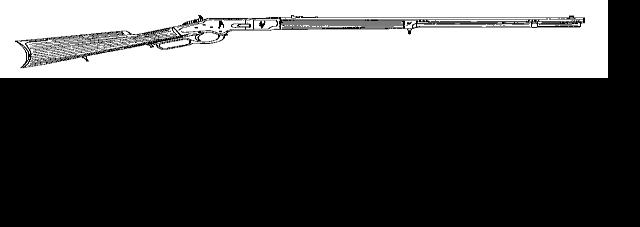
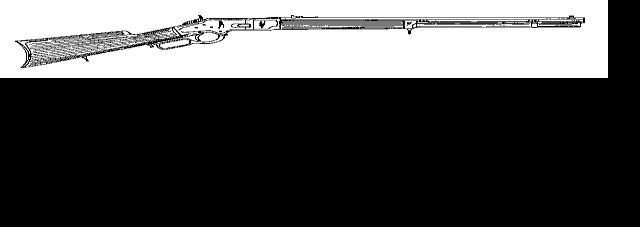
When a rifle fires a bullet, the system (rifle + bullet) is initially at rest. After firing, the bullet and rifle move in opposite directions. Since external forces are much weaker than the force from the expanding gas, they can be neglected, and momentum conservation applies:
Initial momentum: \( p_i = (M + m)v_i = 0 \)
Final momentum: \( p_f = Mv_r + mv_b = 0 \)
\( v_r = -\frac{m}{M}v_b \)
Energy Sharing in the Rifle Problem
Although the rifle and bullet share momentum equally and oppositely, the much lighter bullet moves much faster. The kinetic energy is distributed unevenly:
\( K_r = \frac{1}{2} M v_r^2 = \frac{m}{M} K_b \)
Because \( m \ll M \), the bullet takes almost all the kinetic energy.
Collisions
Types of Collisions
Collisions are classified based on whether kinetic energy is conserved:
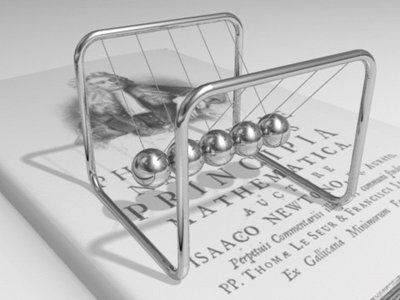
Elastic collisions: Both momentum and kinetic energy are conserved (e.g., billiard balls, Newton's cradle).
Inelastic collisions: Only momentum is conserved; kinetic energy is transformed into other forms (e.g., heat, sound, deformation).
Elastic Collision: Equal Masses
In a head-on elastic collision between two equal masses, one initially at rest, the moving ball transfers all its momentum to the stationary one:
\( m v = m v_1' + m v_2' \)
\( v_2' = v - v_1' \)
Conservation of kinetic energy leads to \( v_1' = 0 \), \( v_2' = v \).
Newton's Cradle
Newton's cradle demonstrates a series of elastic collisions. When one ball strikes the row, the final ball is launched with the same momentum and kinetic energy as the first.

If two balls are lifted and released, two balls on the opposite end move with the same velocity, not one ball with double the velocity. This satisfies both conservation of momentum and kinetic energy.
Elastic Collision: Heavy Target
When a light object collides elastically with a much heavier stationary target (like a wall), the lighter object bounces back with nearly its original speed in the opposite direction:
\( v_1' = -v_1 \) (for \( m_2 \gg m_1 \))
Inelastic Collision: Sticking Together
The most inelastic collision occurs when two objects stick together after colliding. The fraction of kinetic energy lost is:
\( v' = \frac{m_1}{m_1 + m_2} v \)
Fraction lost: \( 1 - \frac{m_1}{m_1 + m_2} \)
If \( m_2 \gg m_1 \), almost all kinetic energy is lost.
Momentum in More Than One Dimension
Vector Nature of Momentum
Momentum is a vector quantity, meaning both its magnitude and direction are conserved. In two-dimensional collisions, each component of the momentum vector is conserved independently.
In glancing collisions, momentum is conserved both along and perpendicular to the initial direction of motion.
Summary
Momentum and its conservation are central to analyzing collisions and explosions.
Elastic collisions conserve both momentum and kinetic energy; inelastic collisions conserve only momentum.
Momentum conservation applies in all directions for isolated systems.
