 Back
BackMotion, Forces, and Energy: Core Concepts and Applications in Physics
Study Guide - Smart Notes
 Tailored notes based on your materials, expanded with key definitions, examples, and context.
Motion and Kinematics
Basic Definitions and Concepts
Motion in physics is described using several key quantities: displacement, velocity, acceleration, and speed. Understanding these is fundamental to analyzing how objects move.
Displacement: The distance and direction from a reference point. It is a vector quantity, measured in metres (m).
Velocity: The rate of change of displacement. It is a vector, measured in metres per second (ms-1).
Acceleration: The rate of change of velocity. Also a vector, measured in metres per second squared (ms-2).
Speed: The rate of change of distance. It is a scalar, measured in metres per second (ms-1).
Key Equations:
These equations are valid for motion with constant acceleration. The sign of each variable (positive or negative) depends on the chosen direction for analysis.
Approach to Solving Motion Problems
Check for constant acceleration.
List known and unknown variables (u, v, a, s, t).
Select the appropriate equation based on available data.
Substitute values and solve.
Check the answer for physical sense.
Vertical Motion Under Gravity
When analyzing vertical motion, gravity provides a constant acceleration (typically ). Directional signs are crucial: upward motion is often taken as positive, so acceleration due to gravity is negative.
At the highest point, vertical velocity is zero.
When returning to the ground, displacement is zero relative to the starting point.
Projectile Motion
Projectile motion involves both horizontal and vertical components. The horizontal velocity remains constant (no acceleration), while the vertical velocity changes due to gravity.
Horizontal component:
Vertical component:
Analyze each component separately using equations of motion.
Experimental Determination of g
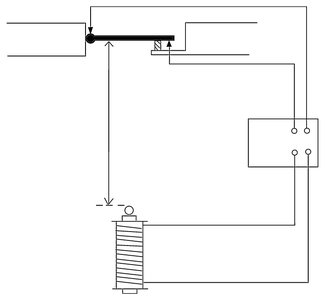
The acceleration due to gravity can be measured by timing the fall of a ball-bearing through a known distance.
Use to solve for .
Accuracy depends on precise timing and measurement.
Graphical Analysis of Motion
Displacement-Time and Velocity-Time Graphs
Graphs are powerful tools for visualizing and analyzing motion.
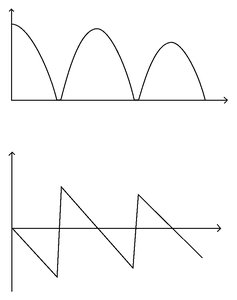
Displacement-Time Graph: The gradient represents velocity. A straight line indicates constant velocity; a curve indicates changing velocity.
Velocity-Time Graph: The gradient represents acceleration. The area under the graph gives displacement.
Instantaneous values are found by drawing tangents to curves and calculating gradients.
Velocity as a Vector
Velocity is a vector quantity, meaning it has both magnitude and direction. Negative values indicate motion in the opposite direction.
Bouncing Ball Graphs
For a bouncing ball, displacement-time and velocity-time graphs show alternating positive and negative gradients, corresponding to upward and downward motion.
Vectors and Forces
Vector and Scalar Quantities
Understanding the distinction between vectors and scalars is essential in physics.
Vector: Has magnitude and direction (e.g., displacement, velocity, force).
Scalar: Has magnitude only (e.g., distance, speed, mass).
Adding and Resolving Vectors
Vectors can be added graphically or analytically. Resolving vectors into perpendicular components simplifies calculations.
Use trigonometry: ,
Resultant vector found using Pythagoras' theorem and direction via trigonometric ratios.
Application to Forces and Equilibrium
A body is in equilibrium if the resultant force is zero. This can be analyzed by resolving all forces and equating their sums to zero in each direction.
Newton's Laws of Motion
Newton's First Law
A body remains at rest or in uniform motion unless acted upon by a resultant force. This law is used to analyze equilibrium situations.
Newton's Second Law
The rate of change of momentum is proportional to the resultant force. For constant mass, .
Newton's Third Law
For every action, there is an equal and opposite reaction. Forces always occur in pairs acting on different bodies.
Work, Energy, and Power
Work
Work is done when a force causes displacement. For a constant force:
If the force is at an angle:
Energy
Kinetic Energy:
Gravitational Potential Energy:
Conservation of Energy
Energy cannot be created or destroyed, only transformed. In the absence of external forces, mechanical energy (KE + GPE) is conserved.
Work-Energy Principle
When external forces act, the increase in mechanical energy equals the work done by those forces plus work done against friction.
Power
Power is the rate of doing work:
For constant velocity:
Young Modulus and Material Properties
Stress and Strain
Stress: (force per unit area)
Strain: (extension per unit length)
Young Modulus
The Young modulus measures material stiffness:
Alternatively:
Stress-Strain Graphs and Material Behavior
Materials obeying Hooke's Law show a linear relationship between stress and strain. The gradient of the stress-strain graph gives the Young modulus.
Brittle materials break suddenly (e.g., glass).
Ductile materials deform plastically before breaking (e.g., metals).
Tables
Common Scalar and Vector Quantities
Scalars | Vectors |
|---|---|
Distance | Displacement |
Speed | Velocity |
Temperature | Acceleration |
Energy | Force |
Power | Momentum |
Pressure | Torque/Moment |
Mass | Impulse |
Stress-Strain Graph Comparison
Material | Gradient (Young Modulus) | Breaking Stress | Behavior |
|---|---|---|---|
A (e.g., glass) | Steep | Lower | Brittle |
B (e.g., metal) | Steeper | Higher | Ductile |
C (e.g., rubber) | Curved | Highest | Highly ductile |
Examples and Applications
Projectile motion: A ball thrown at an angle follows a parabolic path, analyzed by separating horizontal and vertical components.
Experimental determination of g: Using a ball-bearing and timer to measure free fall.
Stress-strain analysis: Calculating Young modulus for wires and comparing material properties.
Images
Relevant images have been included above to illustrate experimental setups, graphs, and material behavior.
