 Back
BackMotion in a Circle: Kinematics and Dynamics of Circular Motion
Study Guide - Smart Notes
 Tailored notes based on your materials, expanded with key definitions, examples, and context.
Motion in Two Dimensions
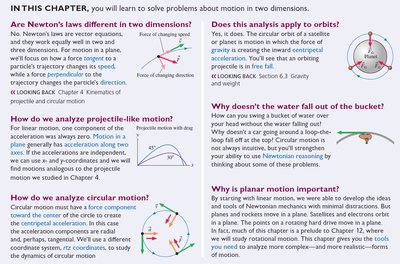
Newton's Laws in Two Dimensions
Newton's laws of motion apply equally in one, two, or three dimensions. In two dimensions, forces and accelerations are treated as vectors, and their components are analyzed along perpendicular axes. The principles of force, mass, and acceleration remain unchanged, but the analysis often requires vector decomposition and careful attention to direction.
Force as a Vector: Forces in two dimensions are added using vector addition, and the net force determines the acceleration vector.
Changing Direction: Even if the speed is constant, a changing direction (as in circular motion) means there is acceleration.
Applications: Projectile motion and circular motion are classic examples of two-dimensional motion.
Circular Motion
Uniform Circular Motion
Uniform circular motion occurs when an object moves in a circle at constant speed. Although the speed is constant, the velocity vector changes direction continuously, resulting in a nonzero acceleration directed toward the center of the circle (centripetal acceleration).
Period (T): The time taken for one complete revolution.
Angular Position (\(\theta\)): The angle, in radians, that locates the object on the circle.
Angular Velocity (\(\omega\)): The rate of change of angular position. (units: rad/s)
Relationship:
Centripetal Acceleration:
rtz-Coordinate System
To analyze circular motion, the rtz-coordinate system is used:
r-axis: Points from the particle to the center (radial direction).
t-axis: Tangent to the circle, in the direction of motion (tangential direction).
z-axis: Perpendicular to the plane of motion.
This system helps resolve vectors into radial and tangential components, which is essential for analyzing forces and accelerations in circular motion.
Velocity and Acceleration in Circular Motion
In uniform circular motion:
Velocity: Always tangent to the circle;
Radial (Centripetal) Acceleration: Points toward the center;
Tangential Acceleration: Zero for uniform motion; nonzero if speed changes (non-uniform motion).
Dynamics of Circular Motion
Newton's Second Law applies to circular motion, with the net force providing the required centripetal acceleration:
(toward the center)
For non-uniform motion, the net acceleration is
Vertical Circles
When an object moves in a vertical circle (e.g., a pendulum or a bucket of water), the forces acting on it (gravity and tension) vary in direction and magnitude throughout the motion. At the top and bottom of the circle, the analysis simplifies:
At the bottom: (normal force is greatest)
At the top: (normal force is least; if , the object is at critical speed and may lose contact)
Circular Orbits and Gravitation
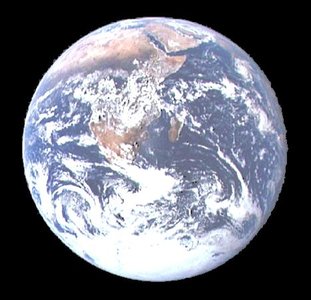
Satellites and planets move in (approximately) circular orbits due to the gravitational force, which provides the necessary centripetal force:
For a stable orbit: , so
The period of orbit:
Newton's Law of Universal Gravitation
Any two masses attract each other with a force proportional to the product of their masses and inversely proportional to the square of the distance between them:
N m2/kg2
Variation of g with Height
The acceleration due to gravity decreases with altitude above Earth's surface:
At sea level, m/s2; at higher altitudes, decreases.
Inertial and Gravitational Mass
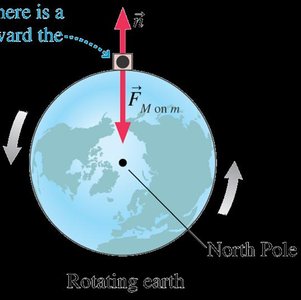
Inertial mass (resistance to acceleration) and gravitational mass (source of gravitational attraction) are experimentally indistinguishable. This equivalence is a cornerstone of Einstein's general theory of relativity.
Summary Table: Useful Astronomical Data
The following table summarizes key astronomical data for the Sun and planets:
Planetary body | Mean distance from sun (m) | Period (years) | Mass (kg) | Mean radius (m) |
|---|---|---|---|---|
Sun | — | — | 1.99 × 1030 | 6.96 × 10⁸ |
Moon | 3.84 × 10⁸* | 27.3 days | 7.36 × 10²² | 1.74 × 10⁶ |
Mercury | 5.79 × 10¹⁰ | 0.241 | 3.30 × 10²³ | 2.44 × 10⁶ |
Venus | 1.08 × 10¹¹ | 0.615 | 4.88 × 1024 | 6.06 × 10⁶ |
Earth | 1.50 × 10¹¹ | 1.00 | 5.98 × 1024 | 6.37 × 10⁶ |
Mars | 2.28 × 10¹¹ | 1.88 | 6.42 × 10²³ | 3.39 × 10⁶ |
Jupiter | 7.78 × 10¹¹ | 11.9 | 1.90 × 1027 | 7.15 × 10⁷ |
Saturn | 1.43 × 10¹² | 29.5 | 5.68 × 1026 | 6.03 × 10⁷ |
Uranus | 2.87 × 10¹² | 84 | 8.68 × 1025 | 2.56 × 10⁷ |
Neptune | 4.50 × 10¹² | 165 | 1.03 × 1026 | 2.21 × 10⁷ |
Additional info: Table entries inferred from standard astronomical data.
