 Back
BackNewton’s Laws of Motion and Forces: Structured Study Notes
Study Guide - Smart Notes
 Tailored notes based on your materials, expanded with key definitions, examples, and context.
Newton’s Laws of Motion and Forces
Uniform and Non-uniform Circular Motion
Circular motion describes the movement of an object along a circular path. The acceleration and velocity characteristics differ depending on whether the motion is uniform or non-uniform.
Uniform Circular Motion: The speed is constant, and the acceleration is always directed toward the center of the circle (centripetal acceleration).
Non-uniform Circular Motion: The speed changes, so there is both a radial (centripetal) and a tangential component of acceleration.
Key Equations:
Radial acceleration () always points inward, toward the center.
Tangential acceleration () is zero for uniform motion and nonzero for non-uniform motion.
Relative Velocity
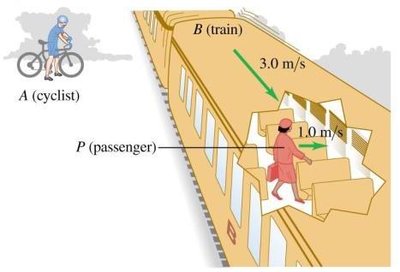
Relative velocity is the velocity of an object as observed from a particular reference frame. It is crucial for understanding motion in different frames, such as a passenger walking inside a moving train.
Equation:
Forces and Types of Forces
Definition and Properties of Force
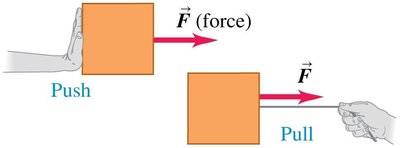
A force is a push or pull acting upon an object as a result of its interaction with another object. It is a vector quantity, meaning it has both magnitude and direction.
SI Unit: Newton (N), where
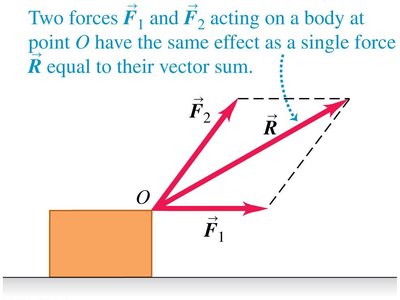
Vector Addition: The net force is the vector sum of all individual forces acting on an object.
Types of Forces in Mechanics
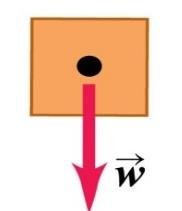
Gravitational Force (): The pull due to gravity, directed toward the center of the Earth.
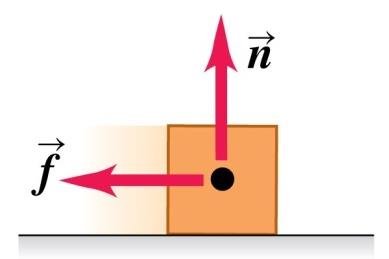
Normal Force (): The perpendicular contact force exerted by a surface on an object.
Friction Force (): The force parallel to the surface, opposing motion.
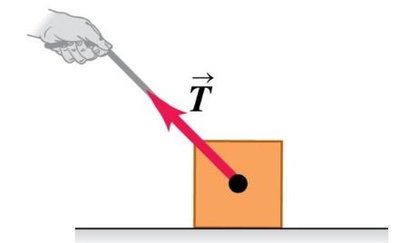
Tension Force (): The pulling force transmitted by a string, rope, or cable.
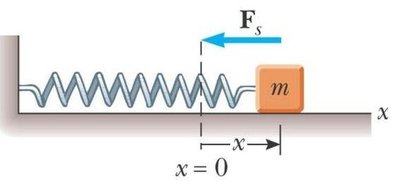
Spring Force (): The force exerted by a compressed or stretched spring, directed toward equilibrium.
Free Body Diagrams (FBD)
Constructing Free Body Diagrams
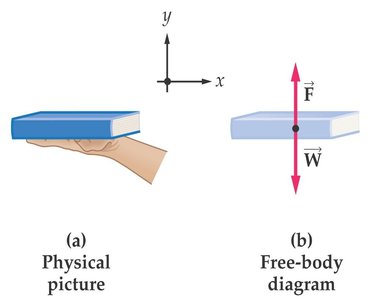
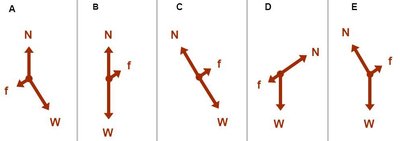
Free body diagrams are essential tools for visualizing the forces acting on an object. Each force is represented as a vector arrow pointing in the direction the force acts.
Model the object as a point particle.
Draw all forces acting on the object, with their tails at the particle.
Do not include forces the object exerts on other objects.
Newton’s Laws of Motion
Newton’s First Law (Law of Inertia)
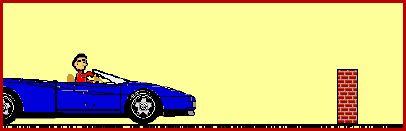
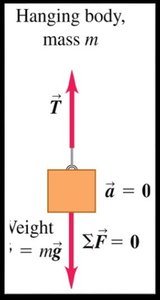
Newton’s First Law states that an object at rest remains at rest, and an object in motion continues in motion with constant velocity unless acted upon by a net external force.
Inertia: The tendency of an object to resist changes in its state of motion.
Mass: A measure of inertia.
Translational Equilibrium: If , then and velocity is constant.

Newton’s Second Law
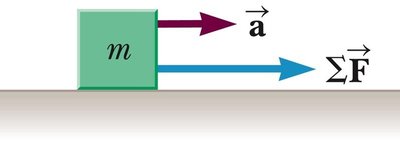
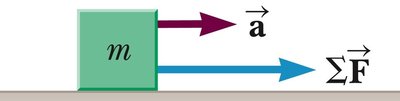
Newton’s Second Law quantifies the relationship between net force, mass, and acceleration. The acceleration of an object is directly proportional to the net force and inversely proportional to its mass.
Vector Formulation: The net force and acceleration vectors point in the same direction.
Component Form:

Units of Force
SI Unit: Newton (N)
US Customary Unit: Pound (lb)
Note: Pounds measure force, not mass.
Mass vs. Weight
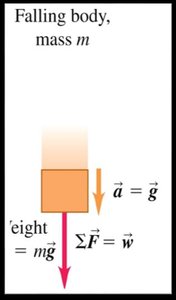
Mass is the amount of matter in an object and is location-independent. Weight is the gravitational force acting on an object and varies with the local gravitational field.
Weight Equation:
Example: A person with mass 82 kg has a weight of 804 N on Earth but only 134 N on the Moon.
Gravitational Force
The gravitational force is always directed toward the center of the Earth (or other massive body) and is responsible for the weight of objects.
Equation:
Newton’s Third Law
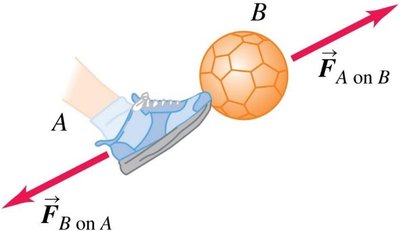
Newton’s Third Law states that for every action, there is an equal and opposite reaction. If object A exerts a force on object B, then B exerts a force of equal magnitude and opposite direction on A.
Applications and Problem Solving
Free Body Diagram Example: Block on an Incline
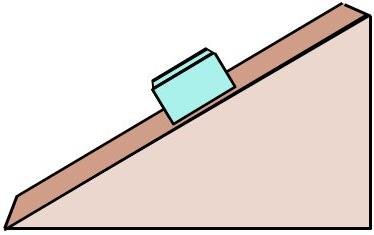
When analyzing a block on an inclined plane, identify all forces: gravity (downward), normal force (perpendicular to the surface), and friction (parallel to the surface, opposing motion).
Example: Crate Pulled with Constant Velocity
A crate of mass 20.0 kg is pulled with a force of 100.0 N at an angle of 30° above the horizontal. If the crate moves with constant velocity, the force of friction balances the horizontal component of the pulling force.
Horizontal force balance:
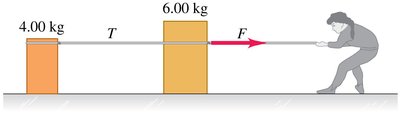
Example: Two Crates Connected by a Rope
When two crates are connected by a light rope and pulled on a frictionless surface, the net force on each crate can be analyzed using Newton’s Second Law. The tension in the rope ensures both crates accelerate together.
Inertial Reference Frames
An inertial reference frame is one in which Newton’s laws hold true. Non-accelerating frames (such as the ground) are inertial, while accelerating frames (such as a moving bus) are not.
In a non-inertial frame, fictitious forces appear to act on objects.
Newton’s Second Law applies only in inertial frames.
Summary Table: Types of Forces
Force Type | Symbol | Description |
|---|---|---|
Gravitational | Pull toward Earth’s center | |
Normal | Perpendicular to contact surface | |
Friction | Parallel to surface, opposes motion | |
Tension | Pull along a string or rope | |
Spring | Restoring force by a spring |
Key Equations
Net Force:
Newton’s Second Law:
Weight:
Relative Velocity:
Additional info: This guide covers the core concepts of Newton’s Laws, types of forces, free body diagrams, and their application to problem solving in introductory mechanics. It is suitable for exam preparation and foundational understanding in college-level physics.
