 Back
BackNewton’s Laws of Motion and Forces: Structured Study Notes
Study Guide - Smart Notes
 Tailored notes based on your materials, expanded with key definitions, examples, and context.
Force and Newton’s Laws of Motion
Introduction to Forces
Forces are fundamental to understanding motion in physics. A force is a push or pull that arises from interactions between objects and can cause changes in motion or deformation. Forces are measured in newtons (N) and are vector quantities, meaning they have both magnitude and direction.
Contact Forces: Forces that arise from physical contact between objects, such as friction, normal force, and tension.
Non-contact Forces: Forces that act at a distance, such as gravity, electric, and magnetic forces.
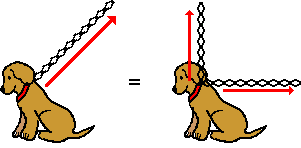
Force Decomposition: Forces can be decomposed into components along and perpendicular to surfaces (e.g., friction and normal force).
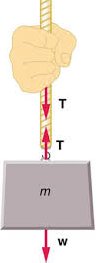
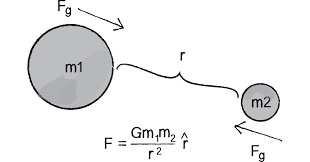

Example: The tension in a rope pulling an object is a contact force, while gravity pulling an object toward Earth is a non-contact force.
Units of Force
The SI unit of force is the newton (N), defined as the force required to accelerate a 1 kg mass by 1 m/s2. Other units include the pound (lb) in the British system, which is also a unit of force.
1 N = 1 kg × 1 m/s2
Superposition of Forces
When multiple forces act on a body, the net force is the vector sum of all individual forces. This principle is called the superposition of forces.
Net Force: Determines the acceleration of the object according to Newton’s second law.
Component Analysis: Forces are often decomposed into x, y, and z components for easier calculation.
Newton’s Laws of Motion
Newton’s First Law (Law of Inertia)
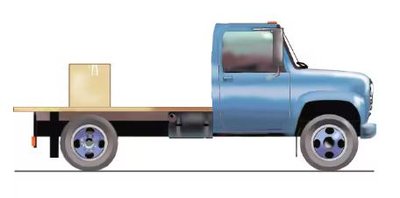
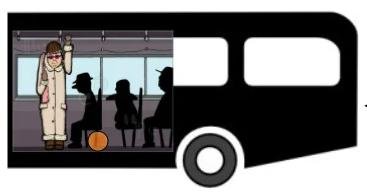
An object at rest remains at rest, and an object in motion continues in motion with constant velocity unless acted upon by a net external force. This law defines inertial reference frames, where Newton’s laws hold true.
Inertia: Resistance to changes in motion.
Net Force Zero:
Newton’s Second Law
The acceleration of an object is directly proportional to the net force acting on it and inversely proportional to its mass. This law provides the quantitative relationship between force and motion.
Vector Equation:
Component Form: , ,
Mass: The measure of an object’s inertia; SI unit is kilogram (kg).
Newton’s Third Law
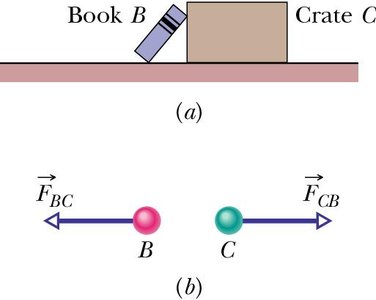
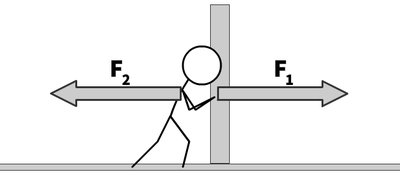
For every action, there is an equal and opposite reaction. When two bodies interact, the forces they exert on each other are equal in magnitude and opposite in direction.
Action-Reaction Pair:
Forces act on different bodies: Only one force from the pair affects the acceleration of a given body.
Types of Forces
Contact Forces
Contact forces arise from physical interaction between objects. The most common are friction, normal force, and tension.
Friction: Acts parallel to the surface, opposes motion.
Normal Force: Acts perpendicular to the surface, supports the object.
Tension: Force exerted by a string, rope, or cable when it pulls on an object.
Gravitational Force
Gravity is a non-contact force of attraction between masses. Near Earth’s surface, it causes objects to accelerate downward at .
Weight:
Free Fall: Motion under the influence of gravity alone.
Solving Dynamics Problems
Free Body Diagrams (FBD)
Free body diagrams are essential tools for analyzing forces acting on an object. They help visualize and organize all forces to apply Newton’s laws correctly.
Steps:
Choose the object/system to analyze.
Draw all forces acting ON the object.
Disregard forces the object exerts on others.
Choose coordinate axes and write Newton’s second law for each axis.
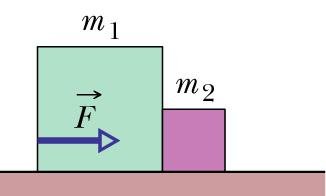
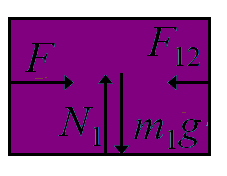
Example Problem: Two Blocks on a Frictionless Table
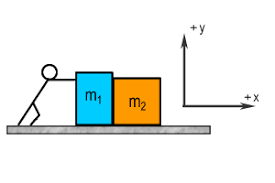
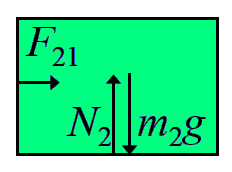
Two blocks, and , sit on a frictionless table. A force pushes $m_1$ to the right. Find the acceleration and the force between the blocks.
Equations:
For :
For :
Solution: Combine equations to solve for and .
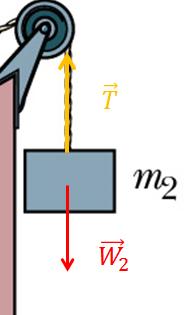
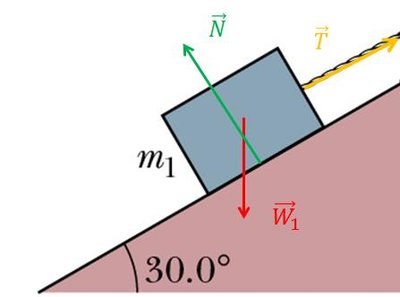
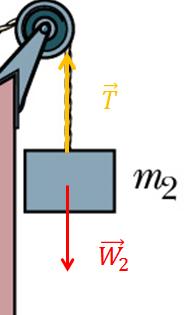
Example Problem: Two Blocks Connected by a Pulley
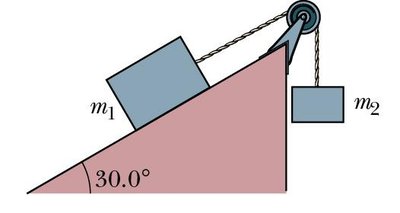
One block sits on a frictionless inclined plane, the other hangs vertically. Both are connected by a massless cord over a massless, frictionless pulley. Find the acceleration and tension.
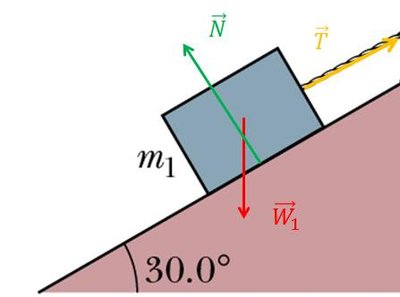
Force Inventory: Weight, normal force, tension.
Equations:
For (on incline):
For (hanging):
Solution: Add equations to solve for and .
Mass, Weight, and Apparent Weight
Mass vs. Weight
Mass is the measure of an object’s inertia, while weight is the force of gravity acting on the mass. Weight can change depending on the gravitational field, but mass remains constant.
Mass: Scalar quantity, measured in kilograms (kg).
Weight: Vector quantity, .
Apparent Weight
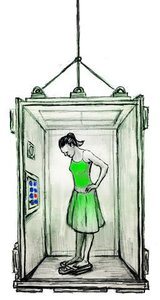
Apparent weight is the normal force experienced by an object, which can differ from true weight in accelerating systems (e.g., elevators).
Normal Force: can be greater or less than depending on acceleration.
Combining Kinematics and Dynamics
Example: Free Fall with Air Resistance
Problems often require combining kinematics (motion equations) and dynamics (force analysis) to solve for unknowns such as acceleration, force, or displacement.
Equation of Motion:
Force Analysis:
Summary Table: Types of Forces
Type | Example | Contact? | Direction |
|---|---|---|---|
Friction | Sliding block | Yes | Parallel to surface |
Normal Force | Block on table | Yes | Perpendicular to surface |
Tension | Rope pulling object | Yes | Along rope |
Gravity | Falling object | No | Toward Earth |
Electric | Charged particles | No | Along field lines |
Magnetic | Moving charges | No | Perpendicular to velocity and field |
Additional info: Academic context was added to clarify the distinction between mass and weight, the importance of free body diagrams, and the process of solving dynamics problems. Images were included only when directly relevant to the explanation of forces, Newton’s laws, and problem-solving steps.
