 Back
BackNewton’s Laws of Motion: Forces and Dynamics
Study Guide - Smart Notes
 Tailored notes based on your materials, expanded with key definitions, examples, and context.
Newton’s Laws of Motion
Introduction to Forces and Motion
Newton’s laws of motion form the foundation of classical mechanics, describing the relationship between forces and the motion of objects. These laws explain how and why objects move, and are essential for understanding dynamics in physics.
Kinematics: Describes how objects move (position, velocity, acceleration).
Dynamics: Explains why objects move (the role of forces).
Force: Any interaction that, when unopposed, changes the motion of an object.
Types of Forces
Contact and Field Forces
Forces can be classified into two main categories: contact forces and field forces.
Contact Forces: Require physical contact between objects.
Normal force
Friction
Tension
Air resistance
Applied force (push or pull)
Spring force
Field Forces: Act at a distance without physical contact.
Gravitational force
Electrostatic force
Magnetic force
Newton’s First Law of Motion (Law of Inertia)
Statement and Explanation
Newton’s First Law states that an object will remain at rest or in uniform motion in a straight line unless acted upon by a net external force. This property is called inertia.
Inertia: The tendency of an object to resist changes in its state of motion.
If the net force (F) on an object is zero, its velocity (v) remains constant (could be zero or nonzero).

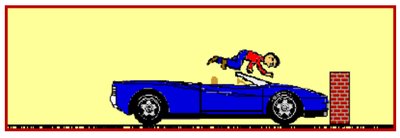
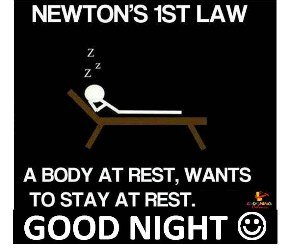
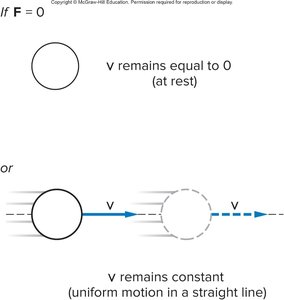
Example: A passenger in a car not wearing a seatbelt continues moving forward when the car suddenly stops, demonstrating inertia.
Newton’s Second Law of Motion
Mathematical Formulation and Applications
Newton’s Second Law quantifies the effect of force on motion. It states that the acceleration (a) of an object is directly proportional to the net external force (F_{net}) acting on it and inversely proportional to its mass (m).
The law is expressed as:
Unit of force: Newton (N), where
Acceleration is in the direction of the net force.
Mass is a measure of inertia (resistance to acceleration).
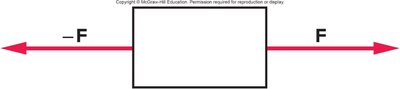
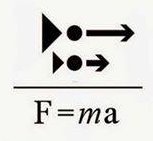
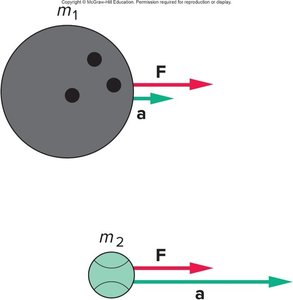
Example: If a 5 kg object is acted on by a net force of 20 N, its acceleration is .
Mass and Weight
Definitions and Differences
Mass is the measure of an object’s inertia, while weight is the gravitational force acting on the object. Weight depends on the local gravitational acceleration (g), while mass is constant everywhere.
Weight formula:
On Earth,
Unit of mass: kilogram (kg); unit of weight: Newton (N)
In the absence of gravity, an object has mass but no weight.
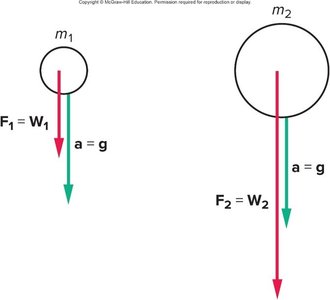
Example: A 50-kg person weighs on Earth, but only on the Moon.
Newton’s Third Law of Motion
Action and Reaction Forces
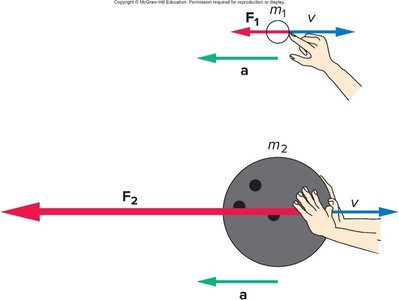
Newton’s Third Law states that for every action, there is an equal and opposite reaction. Forces always occur in pairs, acting on different objects.
If object A exerts a force on object B, then B exerts an equal and opposite force on A:
There are no isolated forces in nature.
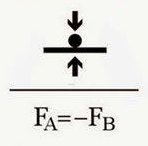
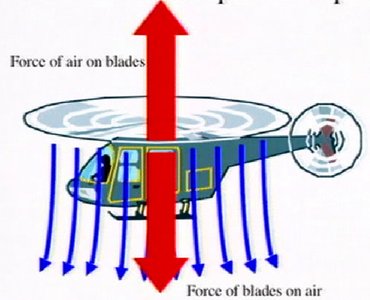
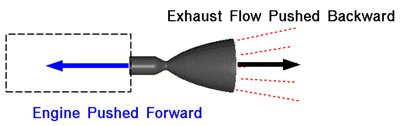
Example: When a rocket expels exhaust gases backward, the rocket is pushed forward (action-reaction pair).
Frictional Forces
Nature and Effects of Friction
Friction is a contact force that opposes the relative motion of two surfaces in contact. It is always present when objects interact and is a direct consequence of Newton’s Third Law.
Static friction: Prevents motion up to a maximum value.
Kinetic friction: Opposes motion once sliding begins.
Frictional force acts in the direction opposite to motion.

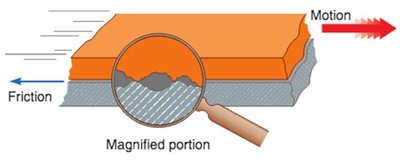
Example: Pushing a heavy box across the floor requires overcoming friction between the box and the floor.
Net Force and Vector Addition
Calculating Net Force
The net force on an object is the vector sum of all external forces acting on it. The direction and magnitude of the net force determine the object’s acceleration.
Forces must be added as vectors, considering both magnitude and direction.
If the net force is zero, the object remains at rest or moves with constant velocity.

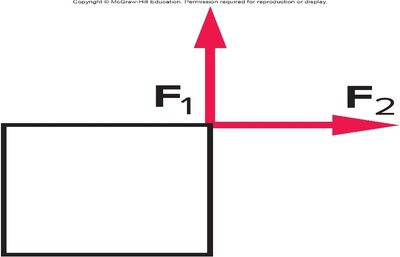
Example: If a 5 kg box is pulled to the right with 10 N and to the left with 2 N, the net force is to the right, so .
Applications and Problem Solving
Multi-Object Systems and Tension
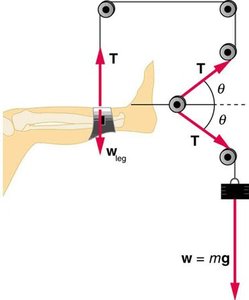
Newton’s laws can be applied to systems of objects connected by strings or pulleys. The net force on each object and the system as a whole can be analyzed to find acceleration and tension forces.
Draw free-body diagrams for each object.
Apply to each object or the system.
Consider all forces: applied, friction, tension, gravity.
Example: Two blocks (2 kg and 4 kg) are pulled by a 30 N force with frictional forces of 6 N and 8 N. The net acceleration is .
Summary Table: Newton’s Laws of Motion
Law | Statement | Key Concept | Equation |
|---|---|---|---|
First Law | An object remains at rest or in uniform motion unless acted on by a net force. | Inertia | |
Second Law | The acceleration of an object is proportional to the net force and inversely proportional to its mass. | Force and acceleration | |
Third Law | For every action, there is an equal and opposite reaction. | Action-reaction pairs |
Key Takeaways
Newton’s laws describe the fundamental principles of motion and force.
Forces cause changes in motion; inertia resists changes.
Mass measures inertia; weight is the force of gravity on mass.
All forces occur in equal and opposite pairs.
Friction opposes motion and must be considered in real-world problems.
