 Back
BackNewton’s Laws of Motion: Forces and Their Applications
Study Guide - Smart Notes
 Tailored notes based on your materials, expanded with key definitions, examples, and context.
Newton’s Laws of Motion
Introduction to Forces
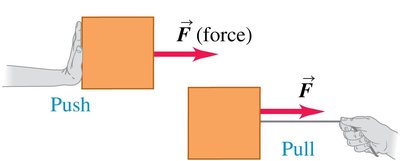
Forces are fundamental interactions that cause changes in the motion of objects. In physics, a force is defined as a push or pull acting upon an object as a result of its interaction with another object or its environment. Forces are vector quantities, meaning they have both magnitude and direction.
Force as a Vector: The direction and magnitude of a force are represented by arrows in diagrams.
Types of Forces: Forces can be classified as contact forces (arising from physical contact) or long-range forces (acting at a distance).

Common Types of Forces
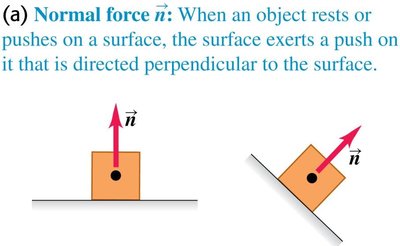
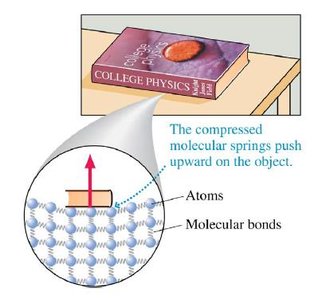
Normal Force (\( \vec{n} \)): The force exerted by a surface perpendicular to the object resting on it. It prevents objects from passing through each other.
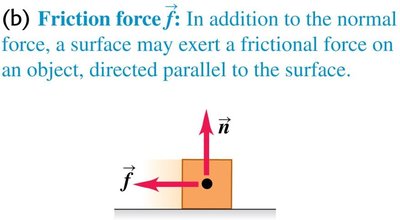
Friction Force (\( \vec{f} \)): The force exerted by a surface as an object moves across it or makes an effort to move across it. It acts parallel to the surface and opposes motion.
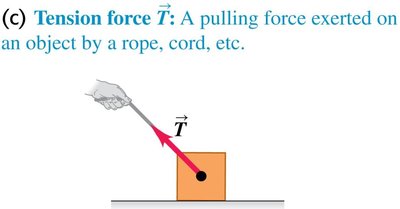
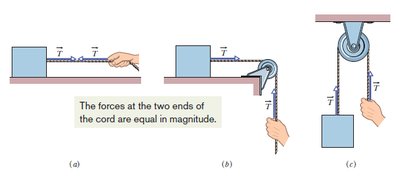
Tension Force (\( \vec{T} \)): The pulling force transmitted through a string, rope, cable, or similar object when it is pulled tight by forces acting from opposite ends.
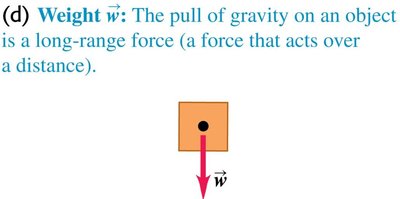
Weight (\( \vec{w} \)): The force of gravity acting on an object’s mass. It is a long-range force directed toward the center of the Earth (or another massive body).
Measuring and Representing Forces
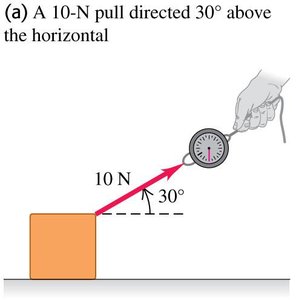
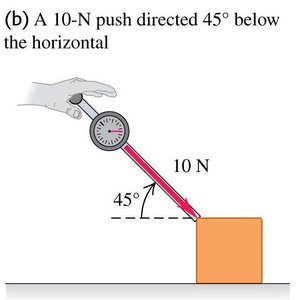
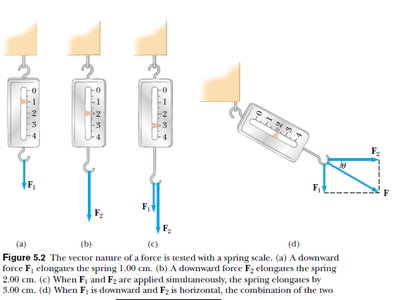
Forces are measured in Newtons (N), where 1 N is the force required to accelerate a 1 kg mass by 1 m/s2. Forces are often measured using spring scales and represented as vectors in diagrams.
Superposition and Components of Forces
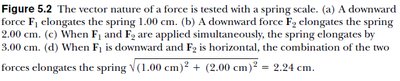
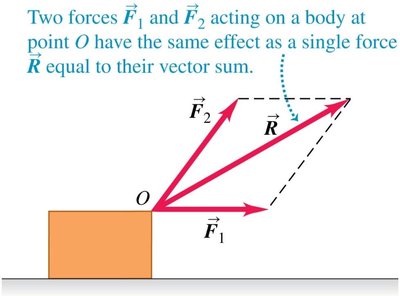
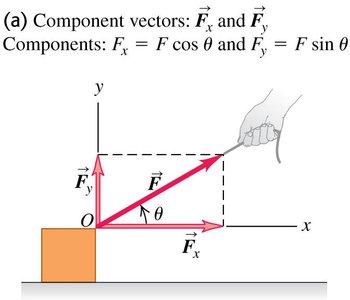
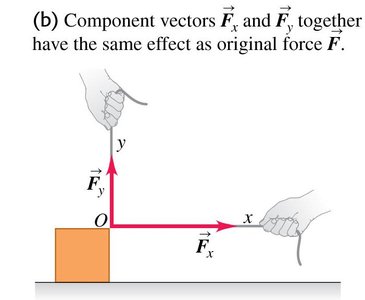
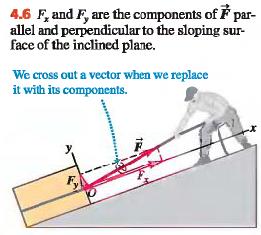
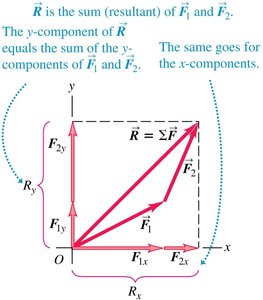
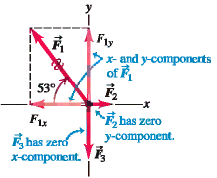
When multiple forces act on an object, their vector sum (the resultant force) determines the net effect. Forces can be decomposed into perpendicular components, typically along the x and y axes, using trigonometry:
\( F_x = F \cos \theta \)
\( F_y = F \sin \theta \)
Newton’s First Law of Motion (Law of Inertia)
Statement and Implications
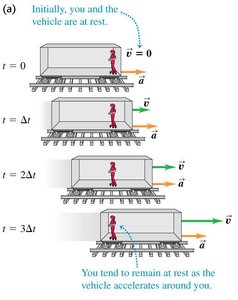
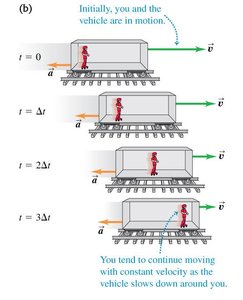
Newton’s First Law states: "An object at rest remains at rest, and an object in motion continues in motion with constant velocity unless acted upon by a net external force." This law introduces the concept of inertia—the tendency of objects to resist changes in their state of motion.
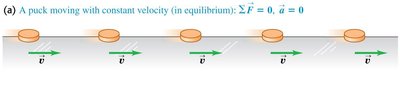
If the net force (\( \sum \vec{F} \)) on an object is zero, its velocity remains constant (including the possibility of zero velocity).
In the absence of a net force, acceleration is zero: \( a = 0 \).
Inertial Frames of Reference
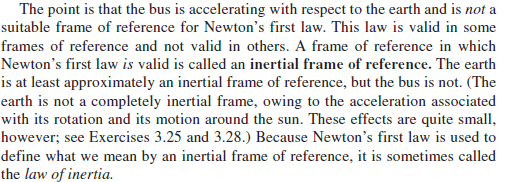
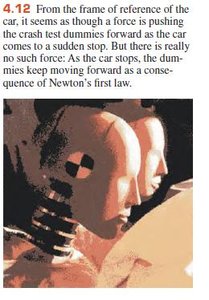
Newton’s First Law is valid only in inertial frames of reference—frames that are either at rest or move with constant velocity. Non-inertial (accelerating) frames require the introduction of fictitious forces to explain observed motion.
Examples and Applications
Objects in a car continue moving forward when the car stops suddenly (seat belts provide the unbalanced force needed to stop the passengers).
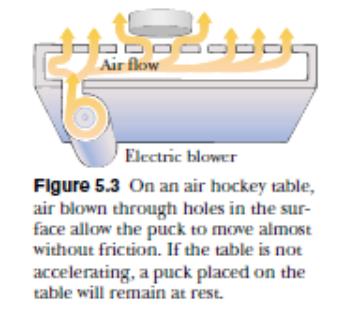
On an air hockey table, a puck remains at rest or moves at constant velocity if no net force acts on it.
Newton’s Second Law of Motion
Statement and Mathematical Formulation
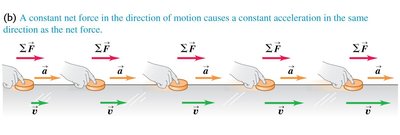
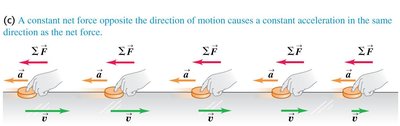
Newton’s Second Law quantifies the relationship between force, mass, and acceleration: The acceleration of an object is directly proportional to the net force acting on it and inversely proportional to its mass.
Mathematically:
Where is the vector sum of all forces (net force), is mass, and is acceleration.
Examples and Applications
If the net force is zero, acceleration is zero (object moves at constant velocity or remains at rest).
If a net force acts, the object accelerates in the direction of the net force.
Newton’s Third Law of Motion
Statement and Implications
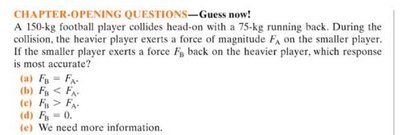
Newton’s Third Law states: "For every action, there is an equal and opposite reaction." This means that forces always occur in pairs—if object A exerts a force on object B, then object B exerts an equal and opposite force on object A.
Action and reaction forces act on different objects.
These forces are equal in magnitude and opposite in direction.
Summary Table: Types of Forces
Type of Force | Symbol | Description | Direction | Contact/Long-range |
|---|---|---|---|---|
Normal Force | \( \vec{n} \) | Exerted by a surface perpendicular to the object | Perpendicular to surface | Contact |
Friction Force | \( \vec{f} \) | Resists sliding motion between surfaces | Parallel to surface, opposite motion | Contact |
Tension Force | \( \vec{T} \) | Pulling force through a rope or cable | Along the rope, away from object | Contact |
Weight | \( \vec{w} \) | Gravitational pull on mass | Toward center of Earth | Long-range |
Key Concepts and Problem-Solving Strategies
Free-Body Diagrams: Draw all forces acting on an object to analyze its motion.
Vector Addition: Add forces using components to find the net force.
Equilibrium: If , the object is in equilibrium (no acceleration).
Units: Force is measured in Newtons (N), mass in kilograms (kg), acceleration in meters per second squared (m/s2).
Sample Problems and Conceptual Questions
Football Collision: When a 150-kg player collides with a 75-kg player, the force each exerts on the other is equal in magnitude and opposite in direction (Newton’s Third Law).
Constant Velocity: Two cars moving at constant speeds have zero net force acting on them, regardless of their speed (Newton’s First Law).
Quick Quiz: It is possible for an object to move in the absence of forces (if it was already moving), and it is possible for forces to act on an object at rest (if the forces balance).
Additional info: This guide covers the foundational concepts of Newton’s Laws of Motion, including the nature of forces, their types, and the mathematical relationships governing motion. It also introduces the importance of inertial frames and the use of free-body diagrams in problem-solving.
