 Back
BackOscillations and Vibrations: Physics of Periodic Motion and Damping
Study Guide - Smart Notes
 Tailored notes based on your materials, expanded with key definitions, examples, and context.
Oscillations and Vibrations
Introduction to Oscillations
Oscillations, or vibrations, are repetitive deviations of a system from its reference state, typically the static equilibrium position. Oscillatory motion is fundamental in physics and engineering, describing phenomena from mechanical systems to biological processes.
Definition: An oscillation is a periodic motion about an equilibrium position.
Examples in the Human Body: Many organs naturally vibrate, such as the heart, lungs, and vocal cords.


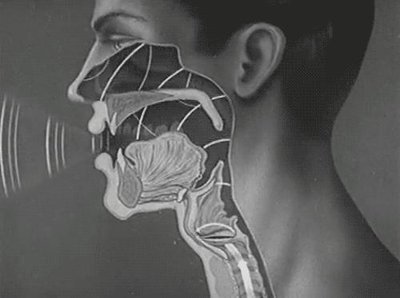
Pathological Vibrations: Vibrations can occur in the human body due to fear, fever, or diseases like Parkinson’s.
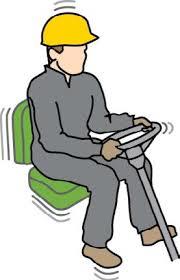
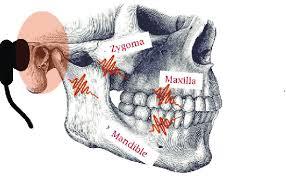
Types: Local (e.g., hand-arm) vs. whole-body vibrations.

Oscillations in Industry and Engineering
Oscillations are not limited to biological systems; they are prevalent in industrial and engineering contexts, where they can be both useful and detrimental.
Industrial Vibrations: Machinery and structures can experience vibrations that may lead to material fatigue and reduced service life.
Examples: Motors, conveyors, and bridges are common sites of oscillatory phenomena.



Linear Vibration Modeling
Key Components of a Mass-Spring-Damper System
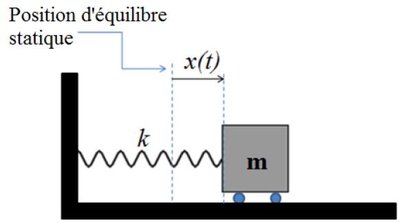
The simplest model for oscillatory motion is the mass-spring-damper system, which captures the essential physics of many mechanical oscillators.
Mass (m): Represents the inertia of the system.
Spring (k): Provides the restoring force proportional to displacement.
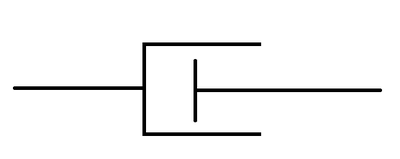
Viscous Damper (c): Models energy dissipation (damping) proportional to velocity.
Elastic Potential Energy:
Applications of Oscillatory Systems
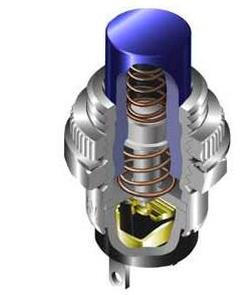
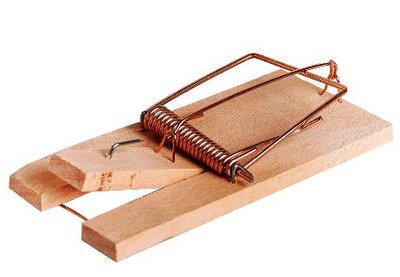
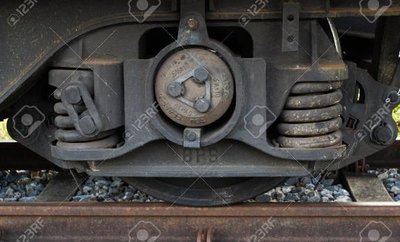
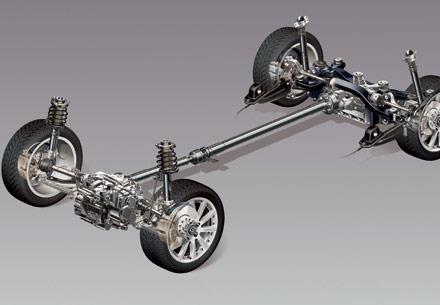
Oscillatory systems are found in everyday objects and engineering designs, such as push buttons, pens, staplers, rat traps, and vehicle suspensions.

Mathematical Model: Free Undamped Vibration
Equation of Motion and Solution
The standard model for a single degree-of-freedom (1-DOF) undamped oscillator is governed by Newton’s second law:
Equation of Motion:
General Solution:
Natural Frequency:
Mechanical Energy:
Period and Frequency: ,
Time and Frequency Domain
The oscillatory motion can be analyzed in both the time domain (history) and the frequency domain (spectrum).
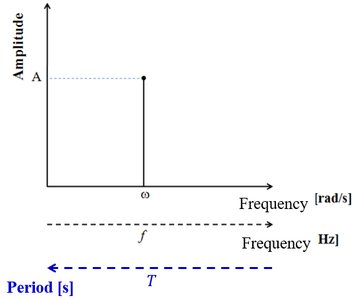
Superposition Principle: The sum of two cosines with different frequencies may or may not be periodic, depending on the ratio of their frequencies.
Example: Simple Pendulum
The simple pendulum is a classic example of a mechanical oscillator. For small angles, its motion can be linearized and modeled as a simple harmonic oscillator.
Equation of Motion:
Natural Frequency:

Equivalent Stiffness of Springs
Parallel and Series Combinations
When multiple springs are connected, their equivalent stiffness depends on the configuration:
Parallel:
Series:
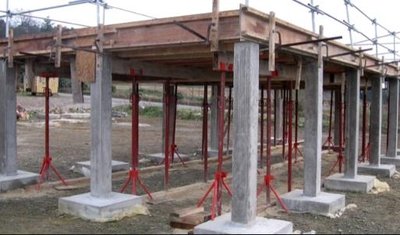
Example Calculation
To find the undamped natural frequency of a system with combined springs, first group parallel springs, then series, and use .
Damped Oscillations
Viscous Damping
Damping is the mechanism by which energy is dissipated in an oscillatory system, often modeled as a force proportional to velocity:
Damping Force:
Power Dissipated:
Equation of Motion for Damped Oscillator
General Equation:
Standard Form:
Damping Ratio:
Regimes of Damped Motion
Overdamped (): No oscillation, system returns slowly to equilibrium.
Critically Damped (): Fastest return to equilibrium without oscillation.
Underdamped (): Oscillatory motion with exponentially decaying amplitude.
Damped Natural Frequency:
Solution (Underdamped):
Logarithmic Decrement and Damping Ratio
The logarithmic decrement quantifies the rate of amplitude decay in a damped oscillator:
Logarithmic Decrement:
Damping Ratio from Decrement:
Example Problem
Given a mass-spring-damper system with N/m and measured vibration data, calculate:
Damped natural frequency
Damping ratio
Undamped natural frequency
Mass
Damping coefficients and
Experimental and Computational Methods
Least-Square Method
The least-square method is used to fit models to experimental data by minimizing the sum of squared errors. For damped oscillations, it can estimate the damping ratio by fitting an exponential decay to the amplitude envelope.
Best Fit Function:
Identification:
Measuring Vibrations with Images
Digital Image Analysis
Vibrations can be measured using image processing techniques, where displacement is tracked in pixel units and converted to physical units using a reference scale.
Vector Displacement:
Average Velocity:
Example: Pohl’s Pendulum
Pohl’s pendulum is a laboratory apparatus for studying damped oscillations, where eddy currents in a copper disk provide a resistive torque. Image tracking software can be used to analyze its motion.
Additional info: This guide covers the essential physics of oscillations, including free and damped vibrations, mathematical modeling, and practical applications. It also introduces experimental and computational methods for analyzing oscillatory systems.
