 Back
BackPHY 114: First Course in Physics – Study Guide and Syllabus Overview
Study Guide - Smart Notes
 Tailored notes based on your materials, expanded with key definitions, examples, and context.
Introduction to PHY 114
Overview of Physics and Course Structure
Physics is the study of the fundamental principles underlying nature, ranging from sub-atomic particles to the structure of galaxies. This course, PHY 114, provides a calculus-based introduction to classical mechanics, waves, optics, and heat, laying the foundation for advanced studies in physics. The course emphasizes both mathematical analysis and intuitive understanding, requiring consistent effort and active participation.
Course Content and Structure
Main Topics Covered
Mathematical Background (LS Ch. 1, 2, 3): Essential mathematics for physical sciences, including calculus and vectors.
Units and Measurements (HRW12: Ch. 1): Understanding physical quantities, SI units, and measurement techniques.
Waves (HRW12: Ch. 16 & 17): Study of wave phenomena, properties, and sound.
Geometrical and Physical Optics (HRW12: Ch. 33–36): Exploration of light, lenses, mirrors, interference, and diffraction.
Heat and Thermodynamics (HRW12: Ch. 18): Introduction to thermal processes and the laws of thermodynamics.
Kinematics (HRW12: Ch. 2–4): Motion in one, two, and three dimensions, including vectors and vector operations.
Force and Motion (HRW12: Ch. 5 & 6): Newton’s laws, friction, and circular motion.
Work, Energy, and Power (HRW12: Ch. 7 & 8): Concepts of work, energy conservation, and power.
Systems of Particles and Collisions (HRW12: Ch. 9): Linear momentum and collisions.
Rotational Motion (HRW12: Ch. 10–12): Rotational kinematics, dynamics, and equilibrium.
Additional info: The course does not follow the textbook chapters sequentially; refer to the course outline for the order of topics.
Assessment and Academic Expectations
Assessment Structure
Continuous Assessment: Includes quizzes, clicker participation, tutorials, class tests, and semester tests.
Practicals: Compulsory laboratory sessions to develop experimental skills and link theory with observation.
Final Examination: Covers all theory and problem-solving skills developed during the semester.
Assessment emphasizes clear, logical reasoning, correct use of units, and the ability to solve problems from first principles. Plagiarism and academic dishonesty are strictly prohibited.
Module Outcomes and Prerequisites
Learning Outcomes
Understand and apply fundamental concepts in classical mechanics, waves, optics, and heat.
Develop problem-solving skills using calculus and mathematical reasoning.
Demonstrate proficiency in experimental techniques and data analysis.
Prerequisites: Proficiency in high school mathematics and physics is essential. Concurrent registration in mathematics modules (WTW 114 and WTW 124) is strongly recommended.
Study Materials and Resources
Prescribed Textbooks and Tools
Mathematics for Physical Science by L. Strauss (LS)
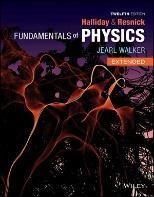
Fundamentals of Physics: Extended, 12th Edition by Halliday, Resnick, and Walker (HRW12)
Access to WileyPLUS for e-book and exercises
Internet-enabled device for online resources and clicker participation
Course Schedule and Notional Hours
Time Allocation
Total Credits: 16 credits (160 notional hours)
Weekly Commitment: Approximately 11.5 hours per week, including lectures, tutorials, practicals, and independent study.
Students are expected to prepare before lectures, participate actively, and review material regularly to keep up with the course pace.
Administrative and Support Information
Contact Details and Support Services
Lecturer, administrator, and student advisor contact information provided for academic support.
Support services include academic counselling, health services, IT helpdesk, and crisis support.
All course administration, announcements, and resources are managed via ClickUP (university online platform).
Code of Conduct and Anti-Discrimination Policy
Professionalism and Inclusivity
Respectful communication and adherence to university policies are required.
The course is committed to inclusivity, anti-discrimination, and supporting all students’ academic success.
Summary Table: Main Physics Topics in PHY 114
Topic | Textbook Reference | Key Concepts |
|---|---|---|
Units and Measurements | HRW12: Ch. 1 | SI units, measurement, uncertainty |
One- and Multi-Dimensional Kinematics | HRW12: Ch. 2–4 | Displacement, velocity, acceleration, vectors |
Newton’s Laws and Forces | HRW12: Ch. 5 & 6 | Force, friction, circular motion |
Work, Energy, and Power | HRW12: Ch. 7 & 8 | Work, kinetic and potential energy, conservation |
Momentum and Collisions | HRW12: Ch. 9 | Linear momentum, impulse, collisions |
Rotational Motion and Dynamics | HRW12: Ch. 10–12 | Angular velocity, torque, equilibrium |
Waves and Sound | HRW12: Ch. 16 & 17 | Wave properties, sound, Doppler effect |
Optics | HRW12: Ch. 33–36 | Reflection, refraction, interference, diffraction |
Heat and Thermodynamics | HRW12: Ch. 18 | Thermal processes, first law of thermodynamics |
