 Back
BackPhysics 211: Forces, Motion, Work, Energy, and Momentum – Comprehensive Study Notes
Study Guide - Smart Notes
 Tailored notes based on your materials, expanded with key definitions, examples, and context.
Forces and Motion
Newton's Laws of Motion
Newton's laws form the foundation for classical mechanics, describing the relationship between forces and the motion of objects.
Newton's First Law (Law of Inertia): An object remains at rest or in uniform motion unless acted upon by a net external force.
Newton's Second Law: The acceleration of an object is proportional to the net force acting on it and inversely proportional to its mass.
Newton's Third Law: For every action, there is an equal and opposite reaction.
Example: A hanging weight attached to a wall and ceiling by ropes requires analyzing the tension in each rope using equilibrium conditions and force components.
Normal Force
The normal force is the perpendicular contact force exerted by a surface on an object in contact with it. It is a reaction force described by Newton's Third Law and acts at the point of contact.

Newton's Third Law in Everyday Life
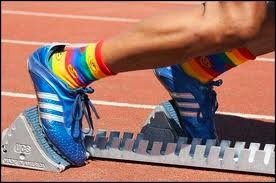
Everyday activities such as walking or running involve pushing against the ground, which pushes back with an equal and opposite force, propelling us forward.

Horse and Cart Example
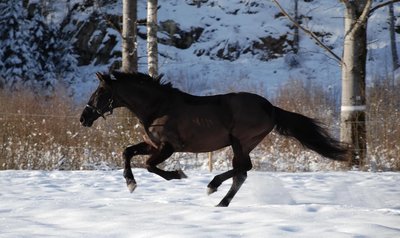
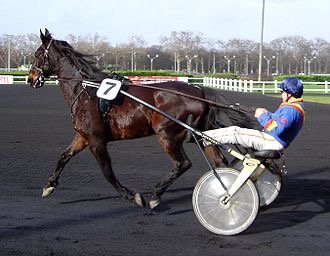
When a horse pulls a cart, the ground pushes the horse forward, while the horse pulls the cart. The forces between the horse and cart make them move together as a system.
Free-Body Diagrams
A free-body diagram isolates a single object and shows all external forces acting on it. Action-reaction pairs are not shown together since they act on different objects.
Momentum and Collisions
Conservation of Momentum
In the absence of external forces, the total momentum of a system remains constant. This principle is crucial in analyzing collisions and explosions.
Momentum:
Conservation Law:
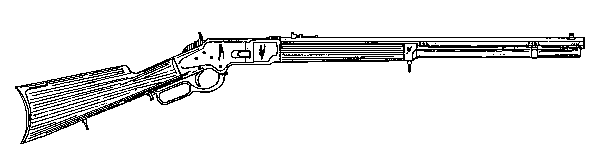
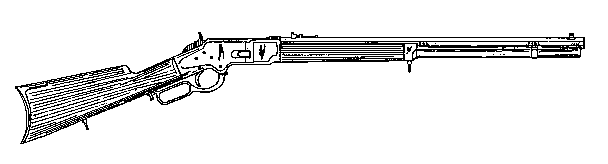
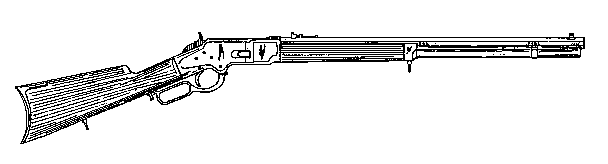
Example: In the rifle problem, the rifle and bullet move in opposite directions after firing, sharing equal and opposite momentum.
Energy Sharing in Collisions
Although momentum is shared equally, kinetic energy is not. The lighter object (bullet) receives most of the kinetic energy due to its smaller mass.
Cart and Ball Example
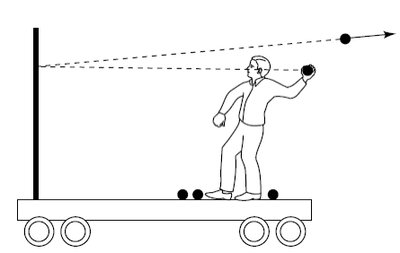
When a person on a cart throws a ball, the cart moves in the opposite direction to conserve momentum. After the ball bounces back, the cart's motion changes again.
Elastic and Inelastic Collisions
Elastic Collision: Both momentum and kinetic energy are conserved. For a light ball bouncing off a heavy wall, the ball reverses direction with nearly the same speed.
Inelastic Collision: Objects stick together after collision, and some kinetic energy is transformed into other forms (e.g., heat, deformation).
Work and Kinetic Energy
Definition of Work
Work is done when a force causes displacement. Only the component of force in the direction of displacement contributes to work.
Example: Carrying a heavy object horizontally does no work against gravity since the force and displacement are perpendicular.
Work-Energy Theorem
The net work done on an object equals the change in its kinetic energy:
Pulling a Box with and without Friction
When pulling a box, the work done by the applied force increases the box's kinetic energy. If friction is present, it does negative work, reducing the net energy gained by the box.
Stopping Distance from Energy
The stopping distance of a car can be calculated using the work done by friction to bring the car to rest:
Friction and Inclined Planes
Static and Kinetic Friction
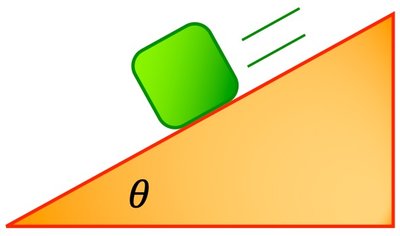
Friction opposes the relative motion of surfaces. The maximum static friction force determines when an object starts to slide:
On an inclined plane, the box starts sliding when the downslope component of gravity exceeds maximum static friction:
Mechanical Energy and Conservation
Potential and Kinetic Energy
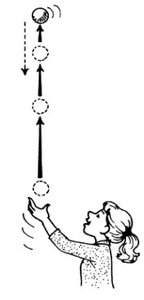
Mechanical energy is the sum of kinetic and potential energy. In the absence of non-conservative forces (like friction), mechanical energy is conserved:
Kinetic Energy:
Gravitational Potential Energy:
Energy Conservation Applications
Energy conservation allows calculation of velocities and heights without considering the details of the motion path.
Roller Coaster Example
For a roller coaster starting at rest, the velocity at a lower point can be found using energy conservation:
Friction, Work, and Energy on an Incline
When friction is present, the work done by friction reduces the mechanical energy available for motion:
Potential Energy in Springs
Elastic Potential Energy
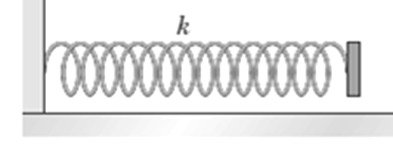
A spring stores potential energy when compressed or stretched. The work done by the spring is:
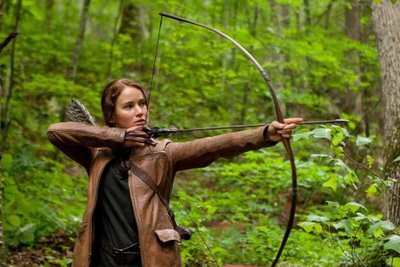
Bow and Arrow Example
Drawing a bow stores elastic potential energy, which is converted to kinetic energy of the arrow upon release:
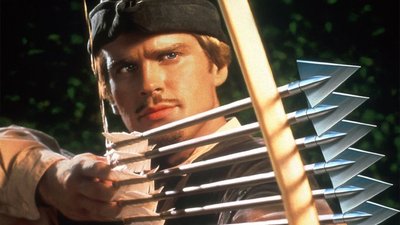
Shooting Multiple Arrows
If multiple arrows are shot at once, the energy is divided among them, so each arrow receives less kinetic energy and travels a shorter distance.
Elastic Collision with a Spring
When a moving mass strikes a spring, its kinetic energy is converted into elastic potential energy at maximum compression, then back to kinetic energy as the spring recoils.
