 Back
BackPhysics 2212 Principles of Physics II: Course Syllabus and Structure
Study Guide - Smart Notes
 Tailored notes based on your materials, expanded with key definitions, examples, and context.
Course Overview
Introduction
This syllabus outlines the structure, policies, and learning outcomes for Physics 2212 — Principles of Physics II at Middle Georgia State University. The course covers foundational topics in electromagnetism, optics, and modern physics, and is designed to build essential STEM competencies.
Course Structure
Topics Covered
Electric Charge and Electric Field (Ch. 21)
Gauss's Law (Ch. 22)
Electric Potential (Ch. 23)
Capacitance, Dielectrics, Electric Energy, Storage (Ch. 24)
Electric Current and Resistance (Ch. 25)
DC Circuits (Ch. 26)
Magnetism (Ch. 27)
Sources of Magnetic Field (Ch. 28)
Electromagnetic Induction and Faraday's Law (Ch. 29)
Inductance, Electromagnetic Oscillations, and AC Circuits (Ch. 30)
Maxwell's Equations and Electromagnetic Waves (Ch. 31)
Additional info: The course may include selected topics from modern physics and optics, as indicated by the textbook and catalog description.
Textbook
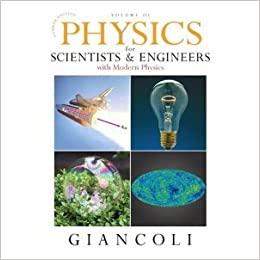
Physics for Scientists & Engineers with Modern Physics 4e by Giancoli
Pearson Mastering Access (online homework platform)
Learning Outcomes
Core Competencies
Inquiry and Analysis: Develop scientific questions and use data, mathematics, and technology to understand physical phenomena.
Problem-Solving: Apply mathematical and computational methods to analyze data and solve physics problems.
Teamwork: Collaborate effectively in laboratory and project settings.
Specific Outcomes
Use simplifying assumptions, approximations, and estimations in physics.
Translate among graphic, analytic, and verbal representations of physical phenomena.
Demonstrate sound problem-solving strategies using multiple representations.
Apply Newton’s Laws and kinematics to model forces and motion.
Apply conservation of energy and momentum to predict motion.
Assessment and Grading
Grading Breakdown
The following table summarizes the grading components for the course:
Item | Number | Points Each | Points Total |
|---|---|---|---|
Concept Quiz | 26 | 20 | 520 |
In class quiz | 26 | 10 | 260 |
Homework | 26 | 20 | 520 |
Extended Problems | 2 | 100 | 200 |
Project | 3 | 100 | 300 |
Exam | 4 | 200 | 800 |
Final | 1 | 400 | 400 |
Lab | - | - | 1000 |
Total | - | - | 4000 |
Grade thresholds:
A: 3600+
B: 3200+
C: 2800+
D: 2400+
Course Policies
Attendance and Participation
Attendance is mandatory and recorded.
Participation is graded via prequizzes and in-class quizzes.
Group work is encouraged, but all submitted work must be individual.
Academic Integrity
Cheating and plagiarism are strictly prohibited, with a three-strike system.
AI-generated work is not allowed for assignments.
Late Work and Missed Exams
No make-ups for quizzes or in-class activities.
Labs may be made up as schedule permits.
No late penalty for homework, but grading standards may differ.
Weekly Schedule
Lecture Topics by Week
Weeks 1-2: Electric Charge, Point Charges, Distributed Charges
Weeks 3-4: Electric Field, Gauss’ Law
Weeks 5-6: Electric Potential, Capacitors, Capacitor Energy
Weeks 7-9: Electricity, Resistance, Power, DC Circuits, Kirchoff’s Laws, RC Circuits
Weeks 10-12: Magnetic Field and Force, Magnetic Effects, Amperes Law, Biot-Savart Law
Weeks 13-14: Induction, Induced Power, Inductors, AC Circuits, LRC Circuits
Weeks 15-16: Maxwell’s Equations, Properties of EM Waves, Spectrum
Additional info: Exams are scheduled after major topic blocks, with a comprehensive final at the end of the semester.
Student Support and Accessibility
Tutoring and academic workshops are available through the Student Success Center.
ADA accommodations are provided via the Office of Accessibility Services.
Additional Policies
Withdrawal, campus carry, delayed opening, and COVID-19 policies are outlined for student reference.
All syllabus information is subject to change by the instructor.
