 Back
BackPhysics 2305 Study Guide: Motion, Kinematics, Vectors, and Dynamics
Study Guide - Smart Notes
 Tailored notes based on your materials, expanded with key definitions, examples, and context.
Chapter 1: Concepts of Motion
Introduction to Physics
Physics is the study of natural phenomena such as motion, thermodynamics, and electricity. It involves describing these phenomena using words, diagrams, and equations. Unlike mathematics, physics emphasizes understanding concepts rather than just solving equations.
Displacement vs. Distance
Displacement and distance are fundamental concepts in describing motion:
Distance: The total length of the path traveled, regardless of direction.
Displacement: The straight-line vector from the initial to the final position, including direction.
Example: Walking 400 m east and then 300 m north yields a total distance of 700 m, but displacement is the vector sum of these two segments.
Scalars and Vectors
Physical quantities are classified as scalars or vectors:
Scalar: Has only magnitude (e.g., mass, temperature, speed).
Vector: Has both magnitude and direction (e.g., position, velocity).
Vector Operations
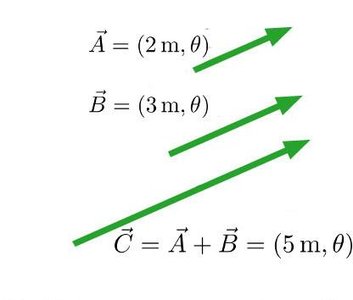
Addition: Place vectors tip-to-tail and draw the resultant from the tail of the first to the tip of the last.
Multiplication by Scalar: Changes magnitude, keeps direction.
Negative of a Vector: Same magnitude, opposite direction.
Subtraction: Add the negative of the vector.
Motion Diagrams
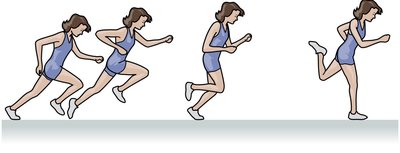
Motion diagrams show an object's position at successive, equally spaced time intervals, helping visualize speed and direction changes.
Chapter 2: Kinematics in One Dimension
Position, Displacement, and Motion Diagrams
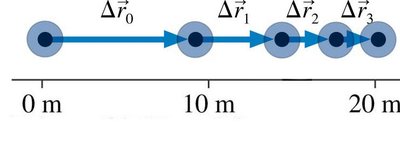
Position vectors are drawn from the origin to the object's location. Displacement vectors represent the change in position.
Average Speed and Velocity
Average Speed: Scalar, total distance divided by elapsed time.
Average Velocity: Vector, displacement divided by elapsed time.
Position vs. Time Graphs
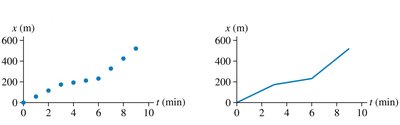
Graphs are abstract representations of motion. The slope of a position vs. time graph gives velocity.
Acceleration
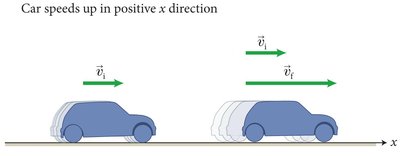
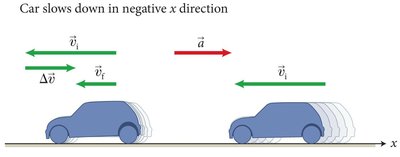
Acceleration: Rate of change of velocity.
Units:
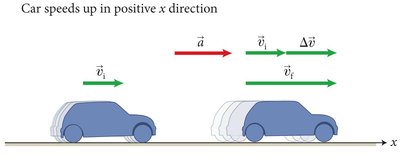
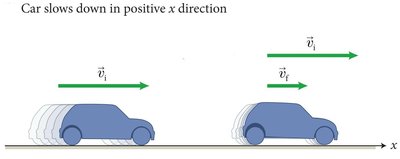
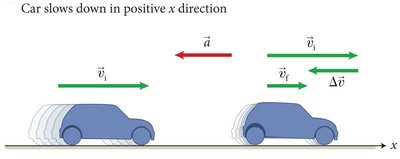
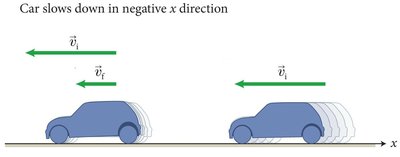
Chapter 2: Uniform and Non-Uniform Motion
Uniform Motion
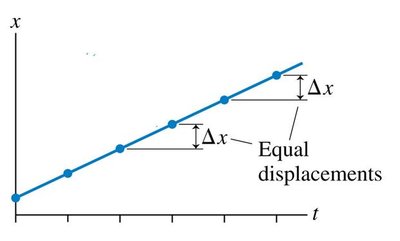
Uniform motion occurs when an object moves at constant velocity. The position vs. time graph is a straight line.

Non-Uniform Motion
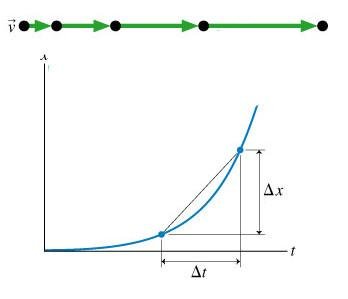
Non-uniform motion involves changing velocity. The slope of the tangent to the position vs. time graph gives instantaneous velocity.
Velocity from Position
Velocity is the derivative of position with respect to time:
Position from Velocity
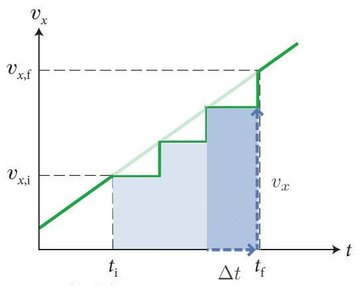
Displacement is the integral of velocity over time:
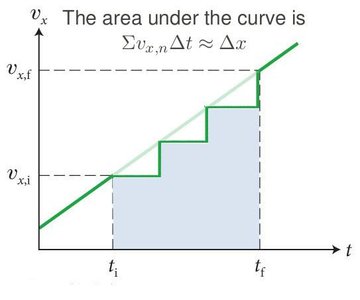
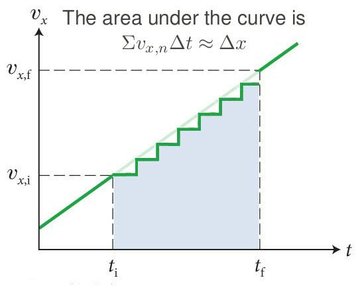
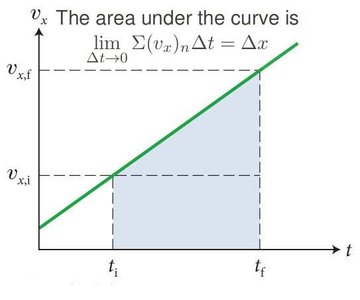
Chapter 2: Constant Acceleration Motion
Formulas for Constant Acceleration
Problem Solving Strategy
Sketch and Translate: Convert real-world scenario to physics quantities.
Simplify and Diagram: Choose useful representations (motion diagram, graph).
Represent Mathematically: Select equations consistent with the scenario.
Solve and Evaluate: Solve symbolically, substitute values, check reasonableness.
Chapter 2: Free Fall and Inclined Planes
Free Fall
Objects in free fall experience constant acceleration due to gravity: downward.
Equations: , ,
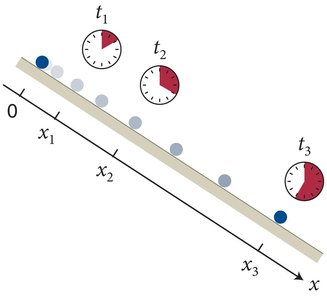
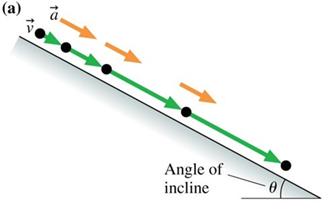
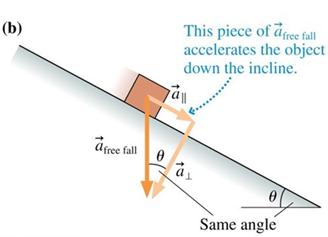
Motion Along an Inclined Plane
Acceleration down an incline:
Chapter 3: Vectors and Coordinate Systems
Vector Addition and Components
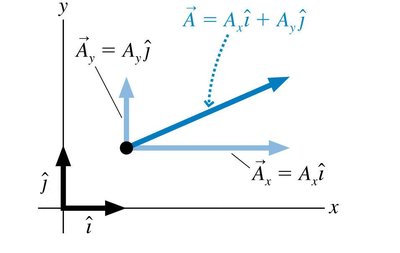
Vectors can be added graphically or using components.
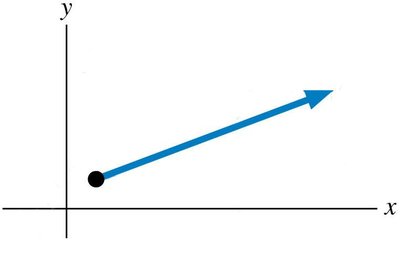
Component vectors are parallel to coordinate axes.
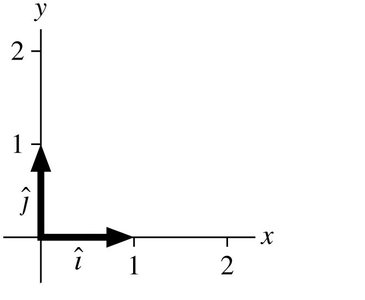
Unit vectors: (x-direction), (y-direction).
Trigonometry relates components to magnitude and direction: ,
Chapter 4: Kinematics in Two Dimensions
1D vs. 2D Motion
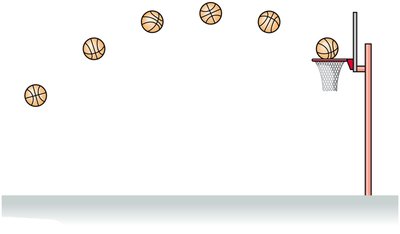
In 2D motion, velocity and acceleration vectors are not necessarily parallel or anti-parallel. Examples include projectile motion and turning vehicles.
Projectile Motion
Consists of independent horizontal (constant velocity) and vertical (constant acceleration) motions.
Equations: , ; , ,
Speed:
Relative Motion and Reference Frames
Velocity depends on the observer's reference frame.
Galilean transformation:
Chapter 4: Uniform Circular Motion
Uniform Circular Motion
Object moves at constant speed in a circle; velocity direction changes continuously.
Radial acceleration points toward the center:
Period : Time for one revolution. ,
Chapter 4: Rotational Kinematics
Angular Position and Velocity
Angular position: in radians ($1= 2\pi$ radians).
Angular velocity:
Relationship:
Chapter 5: Dynamics and Forces
Kinematics vs. Dynamics
Kinematics: Describes how things move.
Dynamics: Explains why motion changes, due to forces.
Forces
A force is a vector describing the push or pull on an object.
Contact forces: Require physical contact (normal, friction, tension).
Long-range forces: Act at a distance (gravity).
System and Environment
System: The object(s) being analyzed.
Environment: Everything else that interacts with the system.
Balanced vs. Unbalanced Forces
Balanced: Net force is zero; no change in velocity.
Unbalanced: Net force is nonzero; causes acceleration.
Newton's Second Law
Unbalanced force causes acceleration:
Unit: Newton ($1= 1\cdot^2$)
Types of Contact Forces
Normal Force: Perpendicular to surface.
Friction: Parallel to surface; opposes motion.
Tension: Pulling force by rope or cord.
Force Identification Strategy
Isolate the system.
Identify agents in the environment.
Locate contact points and long-range agents.
List possible forces.
Draw acceleration vector and force diagram.
Table: Types of Forces
Type | Agent | Direction |
|---|---|---|
Normal | Surface | Perpendicular |
Friction | Surface | Parallel, opposes motion |
Tension | Rope/Cord | Along rope, away from object |
Gravity | Earth | Downward |
Additional info: Academic context and examples have been added to clarify and expand brief points from the original materials.
