 Back
BackPhysics Foundations: Measurement, Units, and Vectors
Study Guide - Smart Notes
 Tailored notes based on your materials, expanded with key definitions, examples, and context.
Stage 1: The Science of Measurements and Motion
Introduction to Physics
Physics is the branch of science that studies matter, energy, space, time, and their interactions. It encompasses a wide range of phenomena, from the motion of everyday objects to the behavior of subatomic particles and celestial bodies.
Classical Physics: Developed from ancient times through the 19th century, focusing on macroscopic phenomena and based on sensory observation and experimentation.
Modern Physics: Emerged in the late 19th century, dealing with phenomena at speeds close to light and at microscopic scales (e.g., relativity and quantum mechanics).
Branches of classical physics include mechanics, optics, thermodynamics, acoustics, and electromagnetism. Modern physics includes relativistic, quantum, atomic, nuclear, and particle physics.
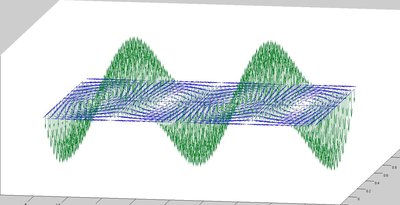
History of Physics
The development of physics can be traced through several key models:
Aristotelian Model: Proposed a logical universe with a geocentric view, where objects have a natural place and motion is determined by their composition.
Classical/Mechanistic/Newtonian Model: Introduced the scientific method, emphasizing experimentation and the search for mechanical causes of phenomena (Galileo, Newton, etc.).
Modern Model: Focuses on the microscopic world and relativistic effects, where quantities like mass, length, and time can vary at high speeds or small scales.


Key Concepts in Physics
Order: Ancient science focused on classifying and ordering phenomena (Aristotle).
Mechanical Cause: Classical physics sought mechanical explanations for observable phenomena (Galileo, Newton).
Probabilistic Behavior: Modern physics recognizes the probabilistic nature of microscopic phenomena and relativistic effects.
Measurement and Physical Quantities
Physical Magnitude, Measurement, and Physical Quantity
Physical Magnitude: A measurable property or characteristic (e.g., length, mass).
Unit of Measure: The reference standard used to quantify a magnitude (e.g., meter, kilogram).
Measurement: The process of comparing a physical magnitude to a standard, yielding a numerical value (physical quantity).
Types of Physical Quantities
Fundamental Quantities: Measured directly and independent of other quantities (e.g., length, mass, time, temperature, electric current, amount of substance, luminous intensity).
Derived Quantities: Formed by combining fundamental quantities (e.g., area, volume, velocity, acceleration, force).
Systems of Units
International System (SI): Meter (m), kilogram (kg), second (s), kelvin (K), etc.
English System: Foot, pound, second, etc.
CGS System: Centimeter (cm), gram (g), second (s).
Multiples and Submultiples of SI Units
SI units use prefixes to indicate multiples and submultiples (e.g., kilo-, centi-, milli-, micro-).
Prefix | Factor | Symbol |
|---|---|---|
kilo | 103 | k |
centi | 10-2 | c |
milli | 10-3 | m |
micro | 10-6 | µ |
nano | 10-9 | n |
mega | 106 | M |
Unit Conversion Using Conversion Factors
To convert between units, use the conversion factor method:
Write the quantity with its units.
Select the equivalence between the given and desired units.
Form the appropriate conversion factor.
Multiply and cancel units as needed.
Example: Convert 38 inches to centimeters (1 inch = 2.54 cm):
Example: Convert 52 km to miles (1 mile = 1.609 km):
Measurement Instruments
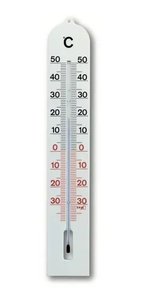
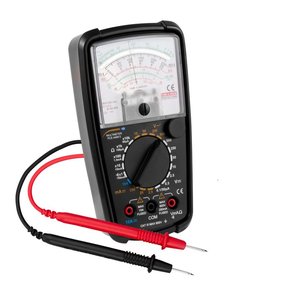
Length, Mass, and Time Measuring Instruments
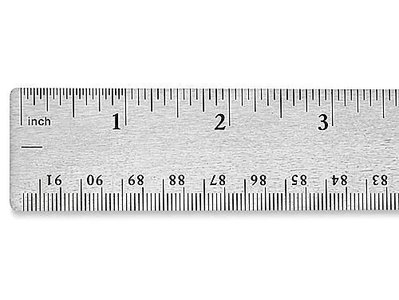
Length: Rulers, measuring tapes, calipers.
Mass: Balances and scales.
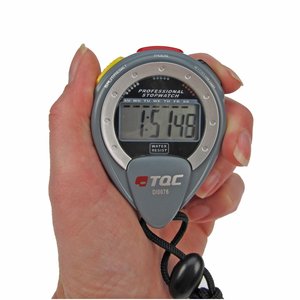
Time: Clocks, stopwatches, hourglasses.

Scalar and Vector Quantities
Classification of Physical Quantities
Scalar Quantities: Defined by magnitude and unit only (e.g., mass, temperature, speed).
Vector Quantities: Defined by magnitude, unit, and direction (e.g., velocity, force, displacement).

Characteristics of Vector Quantities
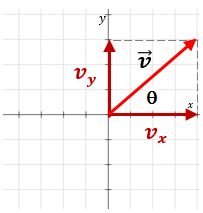
Magnitude (Module): The size or length of the vector.
Direction: The angle or orientation of the vector, usually measured from the positive x-axis.
Application Point: The origin or starting point of the vector (often at the coordinate system's origin).

Rectangular Components of a Vector
A vector can be decomposed into its x and y components using trigonometric functions:
Example: For a velocity vector of 50 km/h at 78°:


Polar Components of a Vector
Given the rectangular components and , the magnitude and direction (polar coordinates) can be found as:
Example: If and :
(adjusted for quadrant)
Vector Addition: Method of Components
Vectors are added by summing their respective components:
Find the x and y components of each vector.
Sum all x components to get .
Sum all y components to get .
The resultant vector's magnitude and direction are found using the Pythagorean theorem and tangent function:
Example: Given at , at , at :
Force (F) | Angle (𝛳) | Fx | Fy |
|---|---|---|---|
10 N | 30° | 8.66 N | 5 N |
15 N | 120° | -7.5 N | 12.99 N |
8 N | 170° | -7.88 N | 1.39 N |
ΣFx | -6.72 N | ||
ΣFy | 19.38 N |
Resultant vector: at
Additional info: This guide covers the foundational concepts of measurement, units, and vectors, which are essential for further study in physics, including kinematics, dynamics, and other branches.
