 Back
BackPhysics I: Work, Energy, Momentum, and Collisions – Guided Study Notes
Study Guide - Smart Notes
 Tailored notes based on your materials, expanded with key definitions, examples, and context.
Q1. Multiple Choice: Work, Energy, and Vectors
Background
Topic: Basic concepts in work, energy, and vector operations.
This question tests your understanding of physical units, vector dot products, potential energy, and the work done by forces in different scenarios.
Key Terms and Formulas:
Watt (W): The SI unit of power, not work or energy. Work and energy are measured in Joules (J).
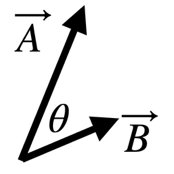
Dot Product: For vectors and , the dot product is .
Potential Energy: Can be negative depending on the reference point chosen.
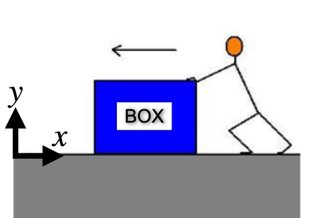
Normal Force: Acts perpendicular to the surface; work done by it is often zero if there is no displacement in its direction.
Work by Gravity: , where is the angle between force and displacement.
Step-by-Step Guidance
Review the definition of a Watt and recall which physical quantities it is used to measure.
Recall the formula for the dot product of two vectors and match it to the options given.
Think about what it means for potential energy to be negative and whether this is possible in physics.
Consider the direction of the normal force relative to the displacement of the box to determine the work done by the normal force.
For the elevator question, recall the direction of gravity relative to the elevator's motion to determine the sign of the work done by gravity.
Try solving on your own before revealing the answer!
Q2. Basketball Thrown Upward – Conservation of Energy
Background
Topic: Conservation of Mechanical Energy
This problem involves using the conservation of mechanical energy to find the maximum height reached by a basketball, the gravitational potential energy at that height, and the work done by gravity.
Key Terms and Formulas:
Kinetic Energy (KE):
Gravitational Potential Energy (PE): (with measured from the reference point where PE = 0)
Conservation of Mechanical Energy:
Work by Gravity: (if upward is positive)
Step-by-Step Guidance
Write the conservation of energy equation for the ball from the moment it leaves the player's hand to its maximum height.
Set the kinetic energy at the maximum height to zero (since the ball stops rising at that point).
Express the change in potential energy using the given heights and solve for the maximum height.
For the gravitational potential energy at maximum height, use with the calculated height.
To find the work done by gravity, use the change in height and the formula for work by gravity.
Try solving on your own before revealing the answer!
Q3. Freight Car and Spring – Energy Conservation
Background
Topic: Conservation of Energy with Springs
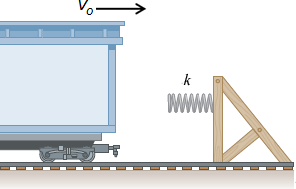
This question involves a freight car compressing a spring and asks about the energy stored in the spring, the car's initial kinetic energy, and its initial speed.
Key Terms and Formulas:
Spring Potential Energy:
Kinetic Energy:
Energy Conservation: (if no friction)
Step-by-Step Guidance
Calculate the potential energy stored in the spring using the compression distance and spring constant.
Set the car's initial kinetic energy equal to the spring's potential energy at maximum compression.
Rearrange the kinetic energy formula to solve for the car's initial speed.
Try solving on your own before revealing the answer!
Q4. Work and Power: Pulling a Wagon
Background
Topic: Work and Power in Physics
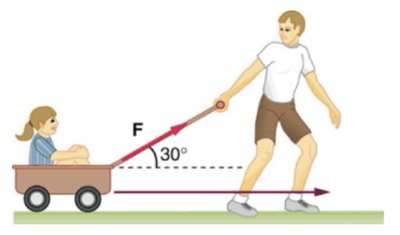
This problem asks you to calculate the work done by a force applied at an angle and the power output over a given time.
Key Terms and Formulas:
Work:
Power:
Unit Conversions: 1 cm = 0.01 m, 1 min = 60 s
Step-by-Step Guidance
Convert the distance from centimeters to meters.
Calculate the work done using the force, distance, and angle provided.
Convert the time from minutes to seconds for the power calculation.
Set up the formula for power using the work and time values.
Try solving on your own before revealing the answer!
Q5. Collisions and Conservation of Momentum: Ice Skaters
Background
Topic: Conservation of Momentum and Collisions
This question involves a collision between two skaters and asks about the type of collision, initial momentum, and final speed after they move together.
Key Terms and Formulas:
Momentum:
Conservation of Momentum: (for perfectly inelastic collisions)
Perfectly Inelastic Collision: Objects stick together after collision.
Step-by-Step Guidance
Draw a before-and-after diagram showing the skaters' positions and velocities.
Identify the type of collision based on the description (do they stick together?).
Calculate the initial momentum of the moving skater using .
Set up the conservation of momentum equation to solve for the final speed of both skaters together.
Try solving on your own before revealing the answer!
Q6. Impulse and Momentum: Car Crash
Background
Topic: Impulse, Momentum, and Forces in Collisions
This problem involves calculating the change in momentum, impulse, and average force exerted on a driver during a car crash.
Key Terms and Formulas:
Momentum:
Impulse:
Average Force:
Step-by-Step Guidance
Calculate the initial and final momentum of the driver to find the change in momentum.
Recognize that the impulse delivered by the seatbelt equals the change in momentum.
Use the impulse and the time interval to set up the equation for average force.
Try solving on your own before revealing the answer!
