 Back
BackPhysics Study Guide: Kinematics, Vectors, and Newton's Laws
Study Guide - Smart Notes
 Tailored notes based on your materials, expanded with key definitions, examples, and context.
Describing Motion: Kinematics in One Dimension
Reference Frames and Motion
Kinematics is the branch of mechanics that describes the motion of objects without considering the forces that cause the motion. Understanding motion requires specifying a reference frame, which is a stationary point or object used for comparison.
Reference Frame: A place or object used to determine if something is in motion.
Motion Diagram: A series of images showing positions of a moving object at equal time intervals, useful for visualizing displacement and velocity.
Particle Model: Simplifies motion diagrams by representing the object as dots at each time interval.
Vectors: Quantities with both magnitude and direction (e.g., displacement, velocity, force).
Scalars: Quantities with magnitude only, no direction (e.g., distance, speed, temperature).
Average Velocity and Speed
Speed and velocity are fundamental concepts in describing motion. Speed is a scalar, while velocity is a vector.
Speed:
Average Speed:
Velocity:
Average Velocity:
Uniform Motion: Motion in a straight line with constant velocity.
Instantaneous Velocity
Instantaneous velocity is the velocity at a specific instant in time. For constant speed, instantaneous and average speed are equal.
Instantaneous Velocity: The velocity at a particular moment.
Instantaneous Speed: The magnitude of instantaneous velocity.
Acceleration
Acceleration describes how velocity changes over time. It is a vector quantity.
Acceleration:
Unit: m/s2
Direction and sign of acceleration depend on the direction of motion and whether the object is speeding up or slowing down.
Motion at Constant Acceleration
Uniformly accelerated motion occurs when acceleration is constant in magnitude and direction.
Uniformly Accelerated Motion: Constant acceleration.
Instantaneous Acceleration: Equals average acceleration for constant acceleration.
Circular motion is not considered constant acceleration due to changing direction.
Motion Not at Constant Acceleration
Average Acceleration: Slope between two points on a velocity-time graph.
Instantaneous Acceleration: Slope of the tangent at a point on the graph.
Special Formulas for Linear Motion
Falling Objects and Free Fall
Free fall describes the motion of objects under gravity alone, neglecting air resistance.
Free Fall: Motion under gravity, m/s2 toward Earth's center.
Galileo's Hypothesis: All objects fall with the same constant acceleration in the absence of air resistance.
Graphical Analysis of Linear Motion
Graphs are essential tools for analyzing motion.
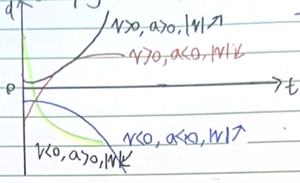
Position-Time Graph (d-t): Shows position versus time. Slope gives average velocity.
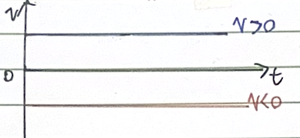
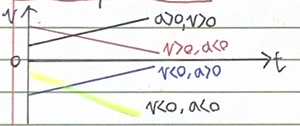
Velocity-Time Graph (v-t): Slope gives acceleration; area under the curve gives displacement.
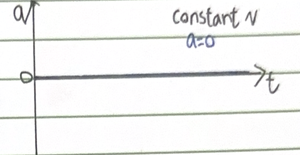
Acceleration-Time Graph (a-t): Area under the curve gives change in velocity.
Position-Time Graph Examples
Horizontal line: No motion (v = 0).
Slanted line: Uniform motion (constant velocity).
Curved line: Varying acceleration.
Velocity-Time Graph Examples
Horizontal line: Constant velocity (a = 0).
Slanted line: Uniform acceleration.
Curved line: Changing acceleration.

Acceleration-Time Graph Examples
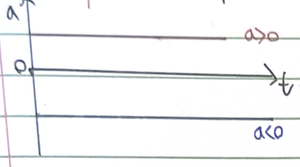
Horizontal line: Uniform acceleration.
Multiple lines: Different acceleration values.

Kinematics in Two Dimensions and Vectors
Representing a Vector
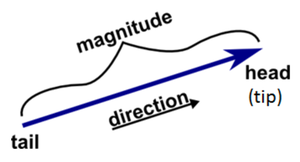
Vectors are represented by arrows, where the length indicates magnitude and the direction indicates the vector's direction.
Magnitude: Length of the arrow.
Direction: Arrow points in the direction of the vector.
Addition and Subtraction of Vectors
Tip-to-Tail Method: Place the tail of one vector at the head of another; the resultant vector points from the tail of the first to the head of the last.
Parallelogram Method: Place vectors tail-to-tail and construct a parallelogram; the diagonal is the resultant.
Subtraction: Adding a negative vector is equivalent to subtracting the vector.
Multiplication of Vectors by a Scalar
If scalar > 0: Same direction, magnitude scaled.
If scalar < 0: Opposite direction, magnitude scaled.
Adding by Components
Vector Resolution: Breaking down vectors into components along coordinate axes.
Law of Sines:
Law of Cosines:
Projectile Motion
Projectile motion is the motion of an object launched into the air, subject only to gravity.
Trajectory: Curved path followed by a projectile.
Horizontal Motion: Constant velocity.
Vertical Motion: Constant acceleration (gravity).
Projectile Launched Horizontally
No initial vertical velocity.
Horizontal range:
Vertical height:
Velocity magnitude:
Velocity direction:
Projectile Launched at an Angle
Horizontal component:
Vertical component:
Maximum height:
Time to highest point:
Total flight time:
Range:
Relative Velocity
Relative Velocity: Velocity of one body relative to another.
Formula:
Opposite direction:
Dynamics: Newton's Laws of Motion
Force and Types of Forces
Force is a push or pull exerted by one object on another. It is a vector quantity.
Unit: Newton (N),
Measurement: Spring scale.
Fundamental Forces: Gravitational, electromagnetic, strong, weak.
Contact Forces: Friction, tension, normal force, spring force, applied force.
Field Forces: Gravitational, electric, magnetic.
Spring Force and Hooke's Law
Formula:
: Spring constant (N/cm)
: Displacement from equilibrium
Hooke's Law: Force is proportional to displacement within elastic limit.
Friction
Sliding Friction: Two surfaces slide over each other.
Static Friction: No relative motion; tendency to resist motion.
Kinetic Friction: Relative motion present.
Rolling Friction: Object rolls over a surface; smaller than sliding friction.
Fluid Friction: Object moves through a fluid.
Formulas for Friction
Balanced and Unbalanced Forces
Equilibrium: ; object at rest or uniform motion.
Unbalanced Forces: ; object accelerates.
Newton's First Law of Motion
Objects remain at rest or in uniform motion unless acted upon by a net force.
Inertia: Tendency to maintain current state of motion.
Inertial reference frames: Newton's first law holds.
Noninertial reference frames: Law does not hold.
Mass
Inertial Mass:
Gravitational Mass:
Principle of Equivalence: Inertial and gravitational mass are equal.
Newton's Second Law of Motion
Acceleration is proportional to net force and inversely proportional to mass.
Formula:
Apparent Weight
Measured by spring scale; can differ from actual weight in accelerating systems (e.g., elevator).
Equilibrium:
Upward acceleration: (overweight)
Downward acceleration: (underweight)
Free fall: (weightlessness)
Example:
In an elevator accelerating upward, the apparent weight is greater than the actual weight.
Additional info: Academic context and formulas have been expanded for clarity and completeness. Only images directly relevant to the explanation have been included.
