 Back
BackPotential, Electric Field, and Capacitors: Study Notes for College Physics
Study Guide - Smart Notes
 Tailored notes based on your materials, expanded with key definitions, examples, and context.
Potential, Electric Field, and Capacitors
Introduction
This study guide covers the fundamental concepts of electric potential, electric fields, and capacitors, as outlined in Chapter 26: Potential and Field. These topics are essential for understanding the behavior of electric circuits and the storage of electrical energy.
Electric Potential and Field
Electric Potential Difference
The electric potential difference (ΔV) between two points is the work done per unit charge to move a charge between those points in an electric field. It is related to the electric field (E) and the distance (d) between the points:
Formula:
Conservative Field: The electric field is conservative, so the potential difference is path-independent.
Equipotential Surfaces: Movement perpendicular to equipotential surfaces changes potential; movement parallel does not.
Kirchhoff’s Loop Law
Definition and Application
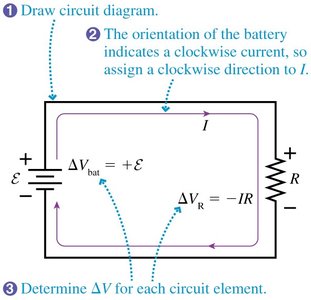
Kirchhoff’s Loop Law states that the sum of potential differences around any closed loop in a circuit is zero. This is a consequence of the conservative nature of the electric field.
Formula:
Application: Used to analyze complex circuits and determine unknown voltages or currents.
Example: In a simple loop with a battery and resistor, the voltage drop across the resistor equals the battery voltage.

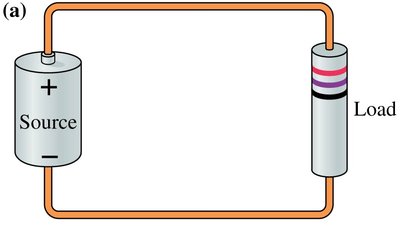
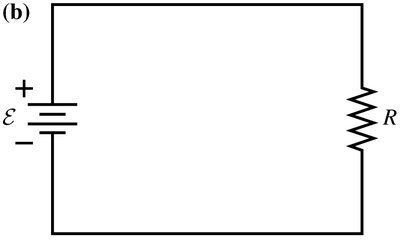
Elements of Electric Circuits
Basic Components
Electric circuits are composed of several key elements, each with a specific function:
Battery: Provides electromotive force (EMF).
Resistor: Limits current flow.
Capacitor: Stores electrical energy.
Switch: Controls circuit connectivity.
Bulb, Ammeter, Voltmeter: Indicate circuit status and measure current/voltage.

Capacitors and Capacitance
Definition and Structure
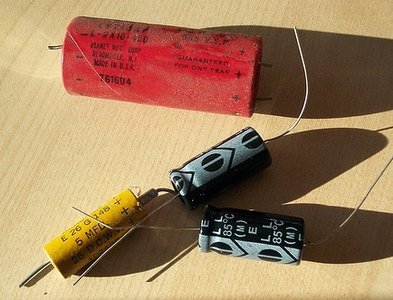
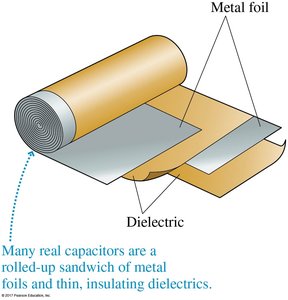
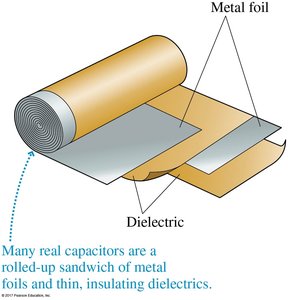
A capacitor is a device that stores electrical energy in an electric field, typically consisting of two conductive plates separated by an insulating material (dielectric).
Capacitance (C): The ability to store charge per unit potential difference.
Formula:
Units: Farads (F)
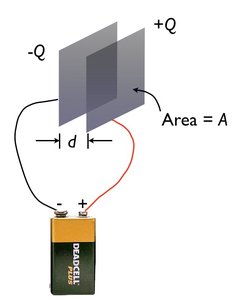
Parallel-Plate Capacitor: , where is plate area and is separation.

Charging and Discharging Capacitors
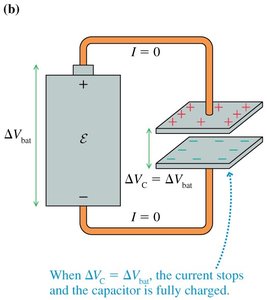
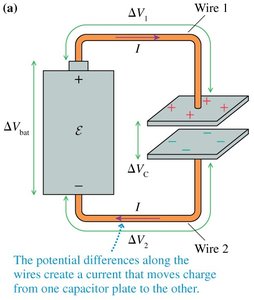
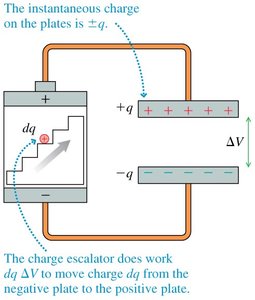
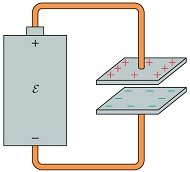
When a capacitor is connected to a battery, it charges until the potential difference across its plates equals the battery voltage. The charging process involves the movement of charge and the buildup of an electric field.
Charging:
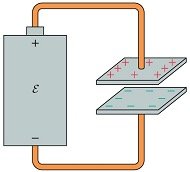
Discharging: The stored energy is released rapidly.

Spherical Capacitors
A spherical capacitor consists of two concentric spherical conductors. The capacitance depends on the radii of the spheres:
Formula:
Application: Used in specialized electronic devices.

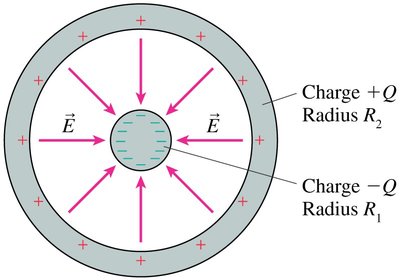
Capacitance Comparison Table
The following table compares the calculation of capacitance for parallel-plate, cylindrical, and spherical capacitors:
Capacitors | Parallel-plate | Cylindrical | Spherical |
|---|---|---|---|
Figure |
|
|
|
Identify E field direction | Perpendicular to plates | Radial from axis | Radial from center |
Calculate E field | |||
Compute ΔV |

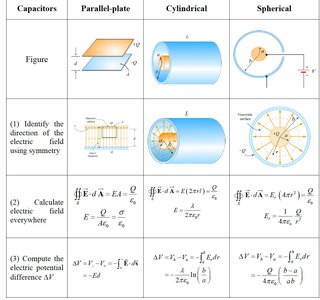
Combining Capacitors
Parallel and Series Configurations
Capacitors can be combined in circuits to achieve desired capacitance values:
Parallel: (same ΔV, different Q)
Series: (same Q, different ΔV)

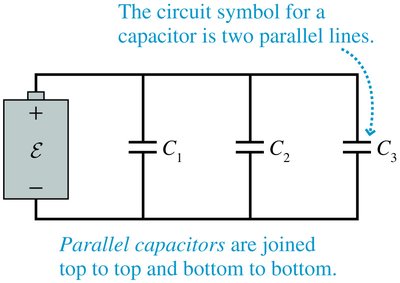
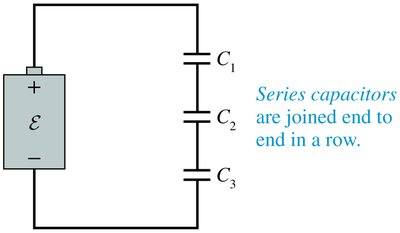
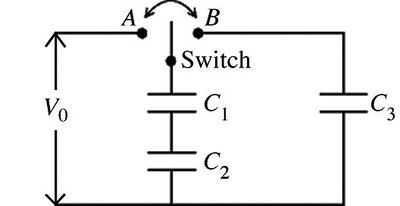
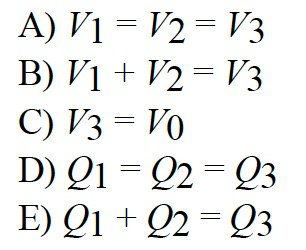
Capacitor Circuit Example
In circuits with multiple capacitors and switches, the distribution of charge and potential difference depends on the configuration and the position of the switch.
Example: When the switch is moved, the charges and voltages across capacitors change according to conservation laws.
Energy Stored in a Capacitor
Energy Formula
The energy stored in a capacitor is given by:
Formula:
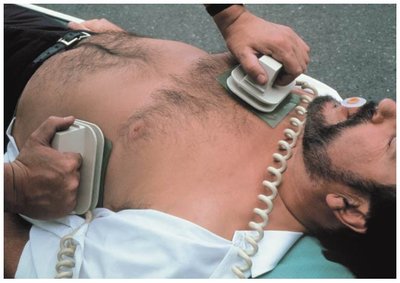
Application: Used in devices like defibrillators, which release energy rapidly.

Example: Storing Energy in a Capacitor
Calculate the energy stored and power dissipation for a capacitor charged to a high voltage and discharged quickly.
Example: A 2.0 μF capacitor charged to 5000 V stores .

Energy in the Electric Field
Energy Density
The energy stored in a capacitor is actually stored in the electric field between its plates. The energy density (energy per unit volume) is:
Formula:
Application: Important for understanding energy storage in materials.

Dielectric Materials
Definition and Properties
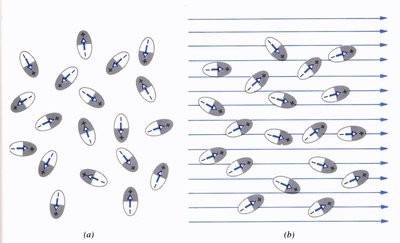
A dielectric is an insulating material placed between the plates of a capacitor to increase its capacitance. Dielectrics are characterized by their dielectric constant (κ), which measures their ability to be polarized by an electric field.
Dielectric Constant: κ > 1 for all materials except vacuum (κ = 1).
Dielectric Strength: Maximum electric field a material can withstand without breakdown.
Formula:

Properties of Dielectrics Table
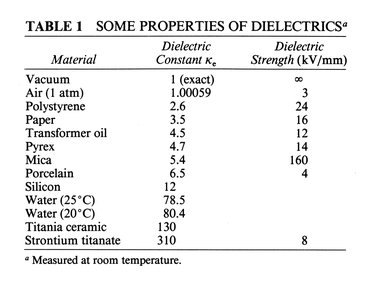
The following table summarizes the dielectric constants and strengths of common materials:
Material | Dielectric Constant (κ) | Dielectric Strength (kV/mm) |
|---|---|---|
Vacuum | 1 (exact) | ∞ |
Air (1 atm) | 1.00059 | 3 |
Polystyrene | 2.6 | 24 |
Paper | 3.5 | 16 |
Transformer oil | 4.5 | 12 |
Pyrex | 4.7 | 14 |
Mica | 5.4 | 160 |
Porcelain | 6.5 | 4 |
Silicon | 12 | 12 |
Water (25°C) | 78.5 | — |
Titania ceramic | 130 | 8 |
Strontium titanate | 310 | 8 |
Dielectric Effect on Capacitance
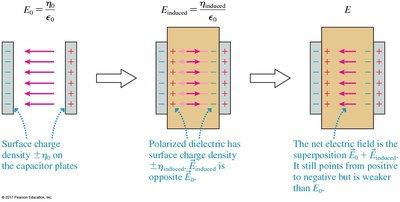
Filling a capacitor with a dielectric increases its capacitance by a factor equal to the dielectric constant:
Formula:
Polarization: Dielectrics reduce the electric field and potential difference, allowing more charge to be stored.

Examples and Applications
Water-Filled Capacitor
Using water as a dielectric greatly increases the capacitance due to its high dielectric constant.


Energy Density of a Defibrillator
Capacitors are used in medical devices like defibrillators to store and release energy rapidly, restoring normal heart rhythm.

Additional info: These notes expand on brief points from the original slides, providing academic context, definitions, formulas, and examples for self-contained study.
