 Back
BackPotential Energy and Energy Conservation: Gravitational and Mechanical Energy
Study Guide - Smart Notes
 Tailored notes based on your materials, expanded with key definitions, examples, and context.
Potential Energy and Energy Conservation
Introduction to Potential Energy
Potential energy is the energy stored in a system due to its position or configuration. In physics, two primary forms of potential energy are gravitational potential energy and elastic potential energy. This chapter focuses on the role of gravitational potential energy in vertical motion, the use of elastic potential energy in systems involving springs, and the principles of energy conservation in mechanical systems.
Gravitational Potential Energy
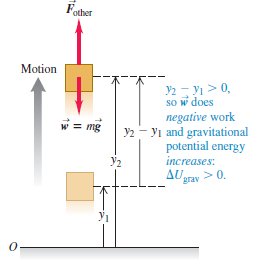
Gravitational potential energy (Ugrav) is the energy an object possesses due to its position in a gravitational field. It is defined relative to a reference level, typically the ground or another chosen point.
Definition: where m is mass, g is the acceleration due to gravity, and y is the height above the reference point.
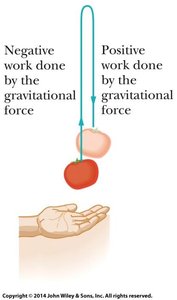
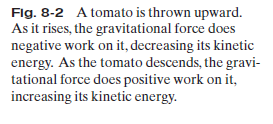
Change in Potential Energy: The change in gravitational potential energy is the negative of the work done by gravity: .
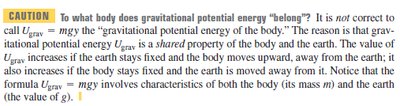
Shared Property: Gravitational potential energy is a property of the system (object and Earth), not just the object alone.
Work-Energy Theorem and Gravitational Potential Energy
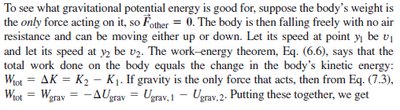
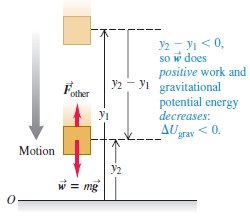
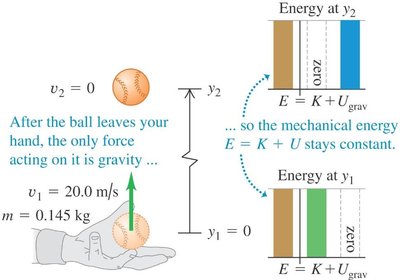
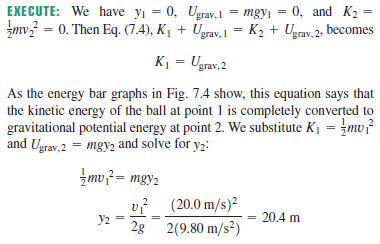
The work-energy theorem relates the work done by forces to changes in kinetic and potential energy. When gravity is the only force acting, the change in kinetic energy equals the negative change in gravitational potential energy.
Work-Energy Theorem:
Gravity Only:
Conservation Equation:
Conservation of Mechanical Energy
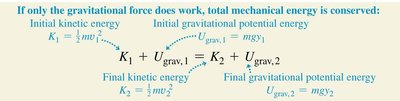
Mechanical energy is the sum of kinetic and potential energy in a system. When only conservative forces (such as gravity) act, the total mechanical energy is conserved.
Mechanical Energy:
Conservation Principle: If only gravity does work,
Conservative Force: Gravity is a conservative force; it allows conversion between kinetic and potential energy without loss.
Examples and Applications
Various physical scenarios illustrate the principles of energy conservation and gravitational potential energy:
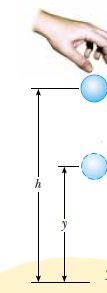
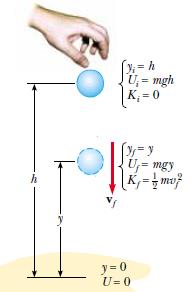
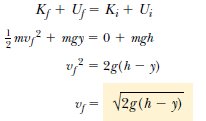
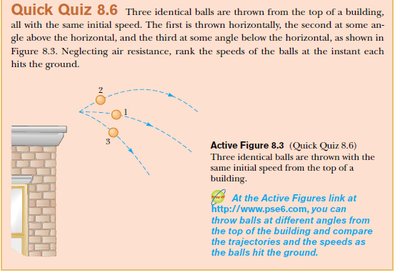
Vertical Drop: The speed of a falling object depends only on the change in height, not the path taken.
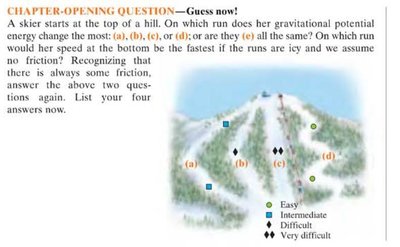
Multiple Paths: For objects released from the same height, the final speed is the same regardless of the path if friction is neglected.
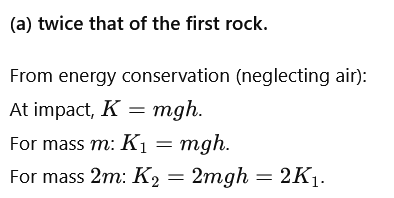
Mass Dependence: The kinetic energy at impact is proportional to mass; doubling the mass doubles the kinetic energy.
Energy Conservation in Pendulum Motion
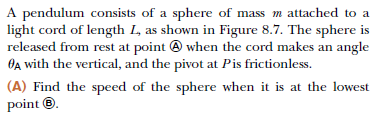
A pendulum demonstrates energy conservation as gravitational potential energy is converted to kinetic energy at the lowest point.
Speed at Lowest Point:
Tension at Lowest Point:
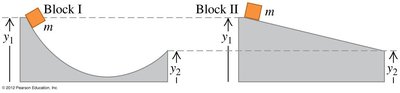
Work and Energy Along a Curved Path
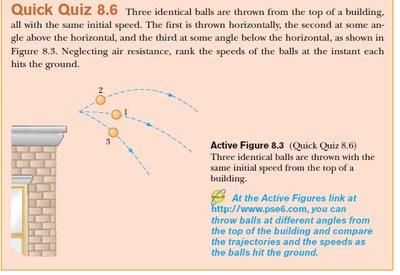
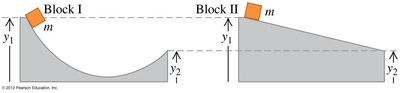
The work done by gravity depends only on the vertical displacement, not the path taken. This principle allows the use of the same potential energy expression for curved or straight paths.
Path Independence: depends only on .
Conservation: Mechanical energy is conserved for frictionless motion.


Conservative and Nonconservative Forces
Forces are classified as conservative or nonconservative based on their effect on mechanical energy.
Conservative Forces: Gravity, spring force, and electrical force. Work done is path-independent and can be expressed as a potential energy function.
Nonconservative Forces: Friction and dissipative forces. Work done depends on the path and results in energy loss from the system.
Energy Conservation with Other Forces:
Force and Potential Energy Functions
The relationship between force and potential energy is fundamental in physics. In one dimension, the force is the negative derivative of the potential energy function.
One Dimension:
Two Dimensions: ,
Three Dimensions: The force is the negative gradient of the potential energy function.
Equilibrium: Where the slope of is zero, the force is zero (equilibrium point).
Summary Table: Conservative vs. Nonconservative Forces
Force Type | Path Dependence | Potential Energy Function | Energy Conservation |
|---|---|---|---|
Conservative | No | Yes | Mechanical energy conserved |
Nonconservative | Yes | No | Mechanical energy not conserved |
Key Formulas
Gravitational Potential Energy:
Conservation of Mechanical Energy:
Work-Energy Theorem:
Force from Potential Energy:
Examples and Applications in Sports and Nature
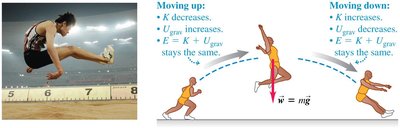
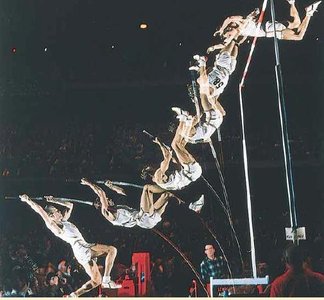
Energy conservation principles are observed in various real-world scenarios, such as pole vaulting, bungee jumping, and skateboarding on ramps. These examples illustrate the conversion between kinetic and potential energy and the effect of gravity as a conservative force.

Additional info: The notes expand on brief points by providing full academic explanations, definitions, and relevant formulas. Real-world examples and sports applications are included to reinforce understanding of energy conservation and potential energy concepts.
