 Back
BackRotational Motion: Principles, Equations, and Applications
Study Guide - Smart Notes
 Tailored notes based on your materials, expanded with key definitions, examples, and context.
Rotational Motion
Rotational Position & Displacement
Rotational motion refers to the movement of an object around a fixed point or axis, following a circular path. The rotational equivalent of linear position (x) is angular position (θ), and the rotational equivalent of linear displacement (Δx) is angular displacement (Δθ).
Angular Position (θ): Describes how far an object is from the reference axis, measured in radians. The origin is always at the axis of rotation, and direction is indicated as clockwise (CW) or counterclockwise (CCW).
Angular Displacement (Δθ): The change in angular position, measured in radians. Related to linear displacement by the equation: where r is the radius.
Radians and Degrees: One radian ≈ 57°. To convert between radians and degrees:
Example: An object moves along a circle of radius 10 m from 30° to 120°. Calculate angular and linear displacement.
Displacement in Multiple Revolutions
When an object completes full revolutions:
One revolution: radians = 360°
N revolutions: radians
Linear displacement:
To find the number of revolutions:
Example: If you make 2.2 revolutions around a circle of radius 20 m, calculate the angular displacement in degrees, the final angular position, and the linear displacement.
Rotational Velocity & Acceleration
The rotational equivalents of linear velocity and acceleration are angular velocity (ω) and angular acceleration (α):
Average angular velocity: [rad/s]
Angular acceleration: [rad/s²]
Other units: 1 RPM = rad/s; 1 Hz = rad/s
Rotational equations apply to both point masses in circular paths and rigid bodies rotating about an axis.
Example: A 30-kg disc of radius 2 m rotates at 120 RPM. Calculate its period and angular speed.
Motion Equations for Rotation
Rotational motion equations are analogous to linear kinematics:
Example: A wheel accelerates from rest at 4 rad/s² to 80 rad/s. Find the angle rotated and the time taken.
Converting Between Linear and Rotational Quantities
Linear (tangential) and rotational (angular) variables are linked:
For a rotating rigid body, all points share the same angular quantities, but linear speed depends on the distance from the axis.
Example: A wheel of radius 8 m spins at 10 rad/s. Find angular and linear speeds at the center, halfway, and at the edge.
Types of Acceleration in Rotation
There are four types of acceleration in rotational motion:
Tangential acceleration (a_T):
Radial (centripetal) acceleration (a_C):
Total linear acceleration:
Angular acceleration (α):
Example: A carousel of radius 10 m completes one cycle every 45 s. Find tangential velocity, angular acceleration, radial acceleration, tangential acceleration, and total linear acceleration for a point at the edge.
Rolling Motion (Free Wheels)
When a rigid body both rotates and translates (e.g., a rolling wheel), the velocity at different points varies:
At the center of mass:
At the top:
At the bottom:
For rolling without slipping:
Example: A wheel of radius 0.30 m rolls at 10 m/s. Find its angular speed and the speed of a point at the bottom relative to the floor.
Connected Wheels and Gears
When two wheels or gears are connected by a chain or belt, their angular velocities and radii are related:
For wheels of radii and :
Linear speed at the rim is the same for both:
Example: Two gears (R1 = 2 m, R2 = 3 m) are connected. If the smaller spins at 40 rad/s, find the angular speed of the larger.
Torque
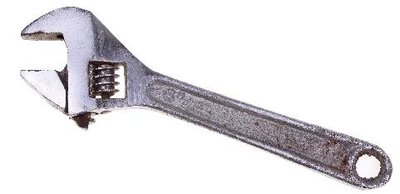
Torque (τ) is the rotational equivalent of force, causing angular acceleration about an axis:
[N·m]
r: distance from axis to point of force application
θ: angle between r and F
Maximum torque when force is perpendicular to r (θ = 90°)
Example: Calculate the torque produced by a 10 N force applied at different points and angles on a 3-m wide door.
Net Torque and the Sign of Torque
The sign of torque depends on the direction of rotation it causes:
Clockwise (CW): negative
Counterclockwise (CCW): positive
Net torque: (algebraic sum)
Example: Two forces act on a door. Calculate the net torque, indicating direction with signs.
Torque Due to Weight
An object's weight acts at its center of mass, producing torque if not aligned with the axis of rotation. For uniform objects, the center of mass is at the geometric center.
Example: Calculate the net torque on a rod with a person standing at one end, considering both the rod's and person's weights.
Torque & Acceleration (Rotational Dynamics)
Torque causes angular acceleration, analogous to force causing linear acceleration:
Newton's Second Law (linear):
Rotational form:
I: moment of inertia (rotational equivalent of mass)
Example: A solid disc is pushed tangentially. Derive and calculate its angular acceleration.

Moment of Inertia
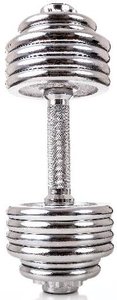
The moment of inertia (I) quantifies an object's resistance to angular acceleration, depending on mass and its distribution relative to the axis:
Point mass:
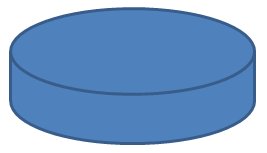
Solid disc (about center):
Rod (about center):
Rod (about end):
The total moment of inertia for a system is the sum of the moments of its parts.
Example: Calculate the moment of inertia for a rod with masses at its ends, or for the Earth spinning about its axis and around the Sun.
Rotational Kinetic Energy
Rotational kinetic energy is the energy due to an object's rotation:
Linear kinetic energy:
Rotational kinetic energy:
Total kinetic energy (if both rotating and translating):
Example: Calculate the kinetic energy of a spinning basketball or a rolling sphere.
Conservation of Energy with Rotation
When analyzing systems where speed, height, or spring compression changes, use conservation of energy, including both linear and rotational kinetic energy:
Total energy: (U = potential energy)
For rolling without slipping:
Example: A disc is pulled by a rope; use conservation of energy to find its angular speed after a certain distance.
Angular Momentum
Angular momentum (L) is the rotational analog of linear momentum:
Linear:
Rotational:
For a point mass:
Angular momentum is conserved if no external torque acts on the system.
Example: Calculate the angular momentum of a spinning disc or the Earth.
Conservation of Angular Momentum
If the net external torque on a system is zero, its angular momentum remains constant:
Applications: ice skater pulling in arms, star collapsing, astronauts spinning in space
Example: An ice skater spins faster when pulling in her arms due to reduced moment of inertia.

Angular Collisions
When objects collide and at least one is rotating, use conservation of angular momentum:
For a point mass striking a rotating object:
For two rotating objects: (if they stick together)
Example: Two discs spinning together after collision; a bird colliding with a rotating door.
Parallel Axis Theorem
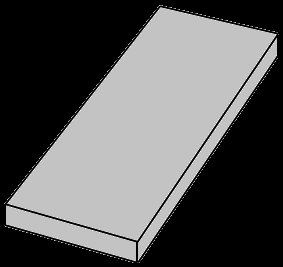
The parallel axis theorem allows calculation of the moment of inertia about any axis parallel to one through the center of mass:
d: distance between axes
Example: Find the moment of inertia of a disk about an axis at its rim.
Finding Moment of Inertia by Integration
For objects with non-uniform mass distribution, the moment of inertia can be found by integration:
Example: Calculate the moment of inertia for a ring or disk with uniform or non-uniform mass distribution.
Rotational Dynamics with Two Motions
Some systems involve both rotational and linear motion (e.g., pulleys, rolling objects). Write equations for both types of motion and relate them using .
Example: Derive the acceleration of a block attached to a rotating pulley.
Summary Table: Common Moments of Inertia
Object | Axis | Moment of Inertia (I) |
|---|---|---|
Point mass | Distance r from axis | |
Solid disc | Center | |
Thin rod | Center | |
Thin rod | End | |
Solid sphere | Center |
Additional info: This guide covers the core concepts, equations, and applications of rotational motion, including practice problems and examples relevant for college-level physics. For more advanced derivations or specific problem solutions, refer to your course textbook or instructor guidance.
