 Back
BackSimple Pendulum, Power, and Impulse: Study Notes for College Physics
Study Guide - Smart Notes
 Tailored notes based on your materials, expanded with key definitions, examples, and context.
Simple Pendulum
Introduction to the Simple Pendulum
The simple pendulum is a classic example of periodic motion, consisting of a mass (called the bob) attached to a string of length L that swings under the influence of gravity. The motion is governed by the restoring force due to gravity, which causes the pendulum to oscillate back and forth about its equilibrium position.
Key Terms: Length (L), Angle (\theta), Height (h), Period (T), Frequency (f).
Equation of Motion: For small angles, the restoring force leads to simple harmonic motion.
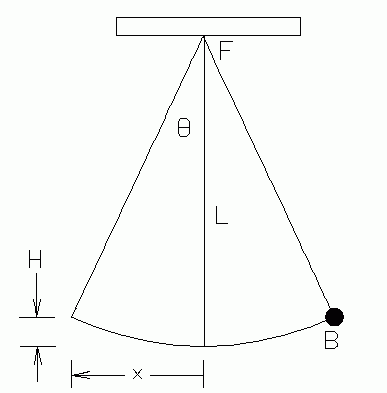
Energy in a Simple Pendulum
The total mechanical energy of a simple pendulum (ignoring air resistance and friction) is conserved and is the sum of its potential and kinetic energies:
Conservation of Energy:
Maximum Speed: At the lowest point, all potential energy is converted to kinetic energy:
Equation of Motion and Small Angle Approximation
The motion of the pendulum can be described by the following differential equation:
For small angles (\theta in radians), (small angle approximation).
This simplifies the equation to simple harmonic motion:
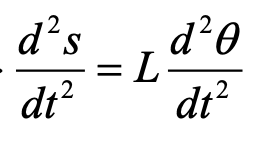
Period of a Simple Pendulum
The period is the time taken for one complete oscillation. For small angles, the period is independent of mass and amplitude:
Example: For L = 1.00 m, T ≈ 2.01 s.
Applications: Pendulum clocks use this property for accurate timekeeping.


Power
Definition and Importance of Power
Power is the rate at which work is done or energy is transferred. It is a crucial concept for understanding the efficiency and performance of machines and biological systems.
Definition:
Units: 1 watt (W) = 1 joule/second (J/s)
Instantaneous Power:
Average Power:
Examples and Applications of Power
Example 1: A 60-kg jogger runs up a 4.5 m high flight of stairs in 4.0 s. Calculate the power output.

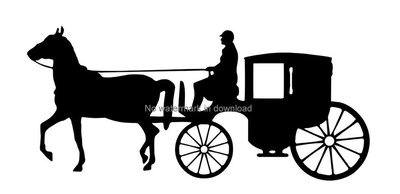
Example 2: How many horses are needed to pull a 700 kg buggy at 3 m/s against a 400 N friction force? (1 hp = 746 W)
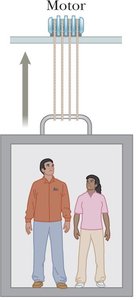
Example 3: Power required to lift an elevator (1800 kg total) at 3.00 m/s against a 4000 N friction force.
Impulse and Momentum
Momentum and Impulse
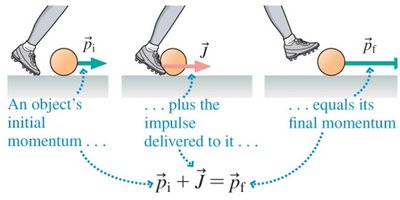
Momentum is the product of an object's mass and velocity. Impulse is the product of the net force and the time interval over which it acts, and it equals the change in momentum.
Momentum:
Impulse:
Units: N·s or kg·m/s
Impulse-Momentum Theorem
The impulse-momentum theorem states that the impulse delivered to an object is equal to its change in momentum:
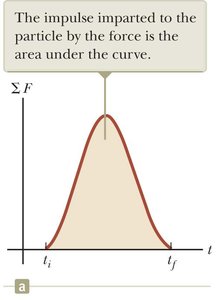
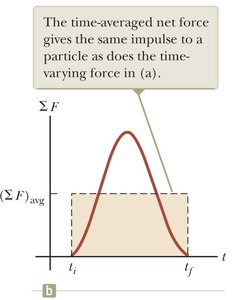
Graphical Interpretation: The impulse is the area under the force vs. time curve.
Impact Force and Stopping Time
For a given change in momentum, increasing the time of impact reduces the average force experienced. This principle is crucial in safety engineering (e.g., airbags, crumple zones).
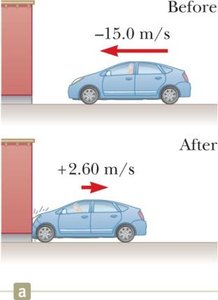
Example: A 2000 kg car changes velocity from -15.0 m/s to +2.60 m/s. Calculate the average force for stopping times of 0.05 s and 0.5 s.
For s: N
For s: N
Applications: Airbags and Safety
Airbags increase the stopping time during a collision, thereby reducing the force on passengers. This significantly improves safety in car accidents.
Key Point: Force by dashboard (shorter stopping time) is much greater than force by airbag (longer stopping time).

Summary Table: Key Equations and Concepts
Concept | Equation | Units |
|---|---|---|
Period of Pendulum | s | |
Power | , | W (J/s) |
Impulse | N·s or kg·m/s | |
Momentum | kg·m/s | |
Impulse-Momentum Theorem | N·s or kg·m/s |
