 Back
BackStars: Properties, Classification, and Measurement
Study Guide - Smart Notes
 Tailored notes based on your materials, expanded with key definitions, examples, and context.
Stars: Properties and Classification
Definition and Basic Properties
A star is a hot ball of gas, primarily composed of hydrogen and helium, held together by its own gravity. Stars generate energy through nuclear fusion in their cores, radiating this energy outward as light and heat.
Composition: Mostly hydrogen and helium.
Energy Generation: Nuclear fusion converts hydrogen into helium, releasing energy.
Radiation: Energy is emitted as electromagnetic radiation (light and heat).
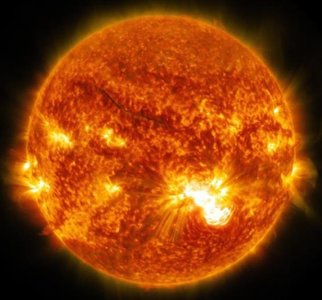
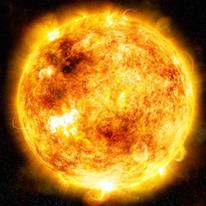
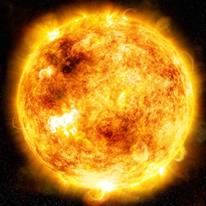
Example: The Sun is the star at the center of our solar system.
Diversity of Stars
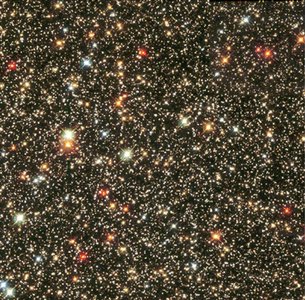
Stars vary in brightness, color, temperature, mass, and size. The differences are observable in star clusters and clouds, such as the Sagittarius star cloud.
Brightness: Intrinsic luminosity varies greatly among stars.
Color: Indicates surface temperature.
Mass and Size: Range from small red dwarfs to massive blue giants.
Brightness and Luminosity
Luminosity
Luminosity is the total amount of light energy released by a star every second. It is also called absolute luminosity and is a fundamental property of stars.
Formula: The luminosity of a star is given by Stefan-Boltzmann Law:
Where: = luminosity = radius of the star = Stefan-Boltzmann constant = surface temperature
High Luminosity: Indicates a large, hot star.
Low Luminosity: Indicates a small, cool star.
Apparent Brightness and Distance
The apparent brightness of a star is how bright it appears from Earth, which depends on both its intrinsic luminosity and its distance from us.
Inverse Square Law: Apparent brightness decreases with the square of the distance:
Example: Two bulbs of the same wattage will appear brighter if closer to the observer.
Absolute and Apparent Luminosity
The relationship between a star's absolute luminosity and its apparent brightness is:
The Magnitude Scale
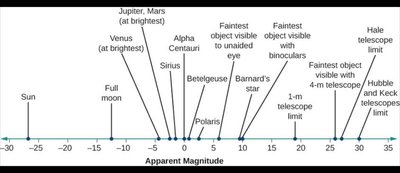
Photometry is the process of measuring the apparent brightness of stars. The magnitude scale, developed by Hipparchus, categorizes stars by brightness:
First-magnitude stars: Brightest, about 100 times brighter than sixth-magnitude stars.
Magnitude difference: Five magnitudes correspond to a brightness ratio of 100:1.
Formula:
Larger magnitude: Fainter object.
Apparent and Absolute Magnitude
Apparent Magnitude: Number representing the apparent brightness as seen from Earth.
Absolute Magnitude: Apparent magnitude if the star were placed at 10 parsecs from the observer.
Color and Temperature of Stars
Color Indices and Filters
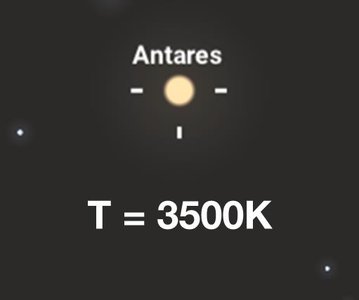
The color of a star is closely related to its surface temperature and is measured using filters (U, B, V) that transmit specific wavelength bands.
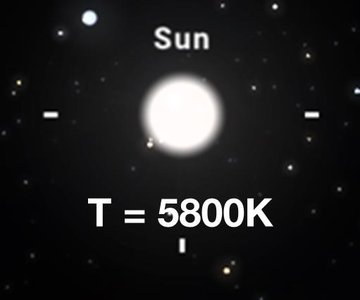
B-V Index: Difference between blue and visual magnitudes; ranges from -0.4 (bluest, ~40,000 K) to +2.0 (reddest, ~2,000 K).
Sun's B-V Index: About +0.65.


Stellar Spectra
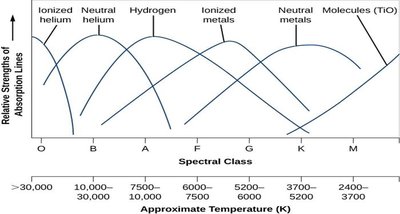
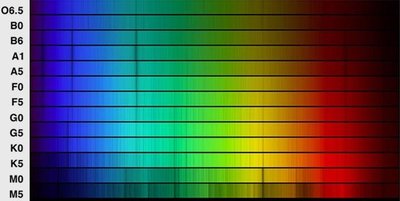
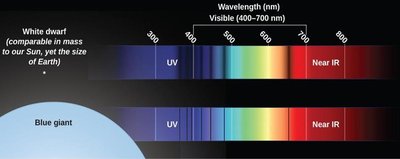
Stellar spectra are analyzed using a spectrograph, revealing absorption lines produced by elements in the star's atmosphere. The primary reason spectra differ is temperature, not composition.
Absorption Lines: Indicate presence of elements.
Temperature: Determines which lines are visible.
Classification of Stellar Spectra
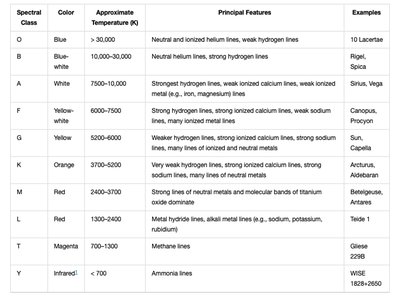
Stars are classified by spectral type based on their absorption lines and temperature. The modern sequence is O, B, A, F, G, K, M (from hottest to coolest).
O type: Only helium, too hot for neutral hydrogen.
B type: Helium and some hydrogen.
A type: Strong hydrogen lines.
F, G, K, M types: Increasingly cooler, more neutral metals and molecules.
Brown Dwarfs and Extended Spectral Classes
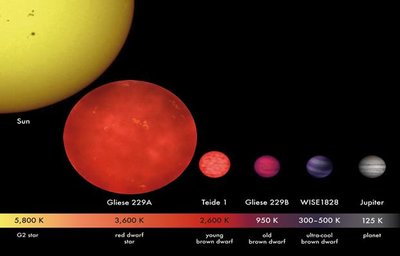
If a star's mass is less than 7.5% of the Sun's, nuclear fusion never starts, resulting in a brown dwarf. Brown dwarfs are classified as L, T, and Y types based on temperature and spectral features.
L type: 2400–1300 K
T type: 1300–700 K
Y type: 300–500 K (ammonia lines)
Stellar Spectra and Element Abundances
Element Abundances
Absorption lines in spectra indicate the presence of elements. All stars have similar composition: 96–99% hydrogen and helium, with the rest called "metals" by astronomers.
Metallicity: Fraction of mass composed of elements heavier than helium.
Sun's metallicity: 0.02 (2% of mass).
Stellar Motion and Measurement
Radial Velocity and Proper Motion
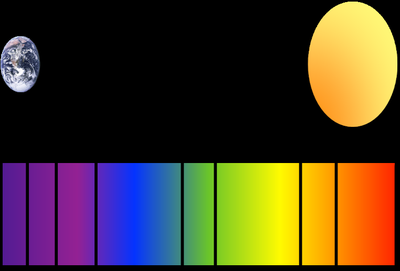
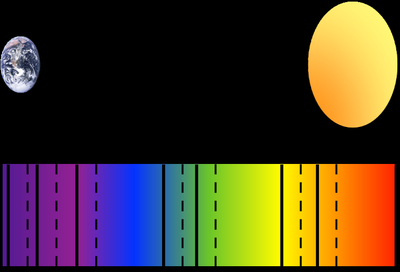
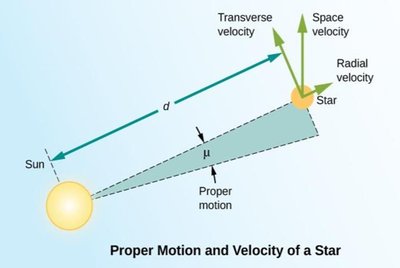
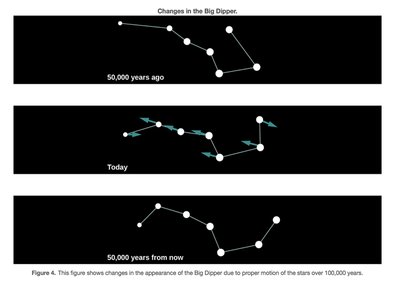
Stellar motion is measured in two ways: radial velocity (toward/away from Earth, detected by Doppler shift) and proper motion (transverse, across the line of sight).
Radial velocity: Blue shift (toward), red shift (away).
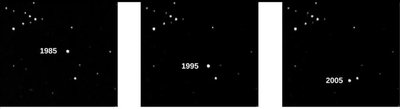
Proper motion: Cannot be detected with spectra; measured by changes in position over time.
True space velocity: Combination of radial velocity, proper motion, and distance.
Rotation and Line Broadening
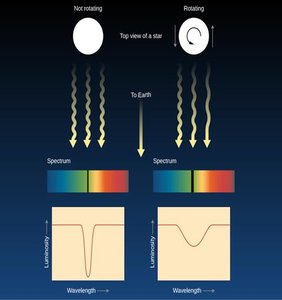
Rotation of stars causes broadening of spectral lines. Faster rotation results in broader lines.


Stellar Census and Mass Measurement
Stellar Census
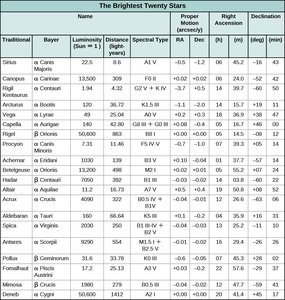
Most stars in our neighborhood are low-luminosity, low-mass stars. Only a few are more massive and luminous than the Sun.
Binary Stars and Mass Measurement
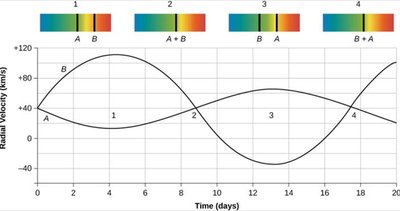
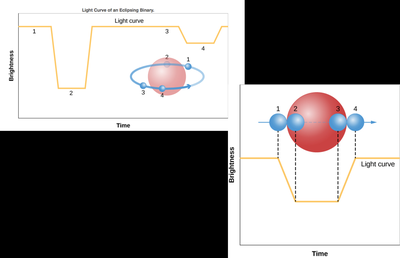
About half of stars are in binary systems. Masses can be measured by observing their orbits.
Visual binary: Both stars visible.
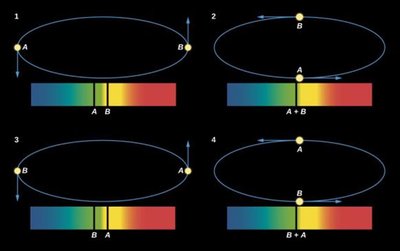
Spectroscopic binary: Detected by composite spectra.
Eclipsing binary: One star eclipses another, causing changes in brightness.
Optical double: Not gravitationally bound.
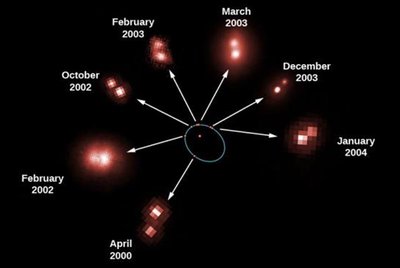
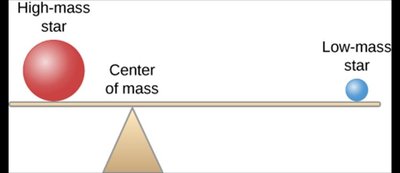
For binary systems, the period () and semimajor axis () relate to the total mass ():
Mass-Luminosity Relation
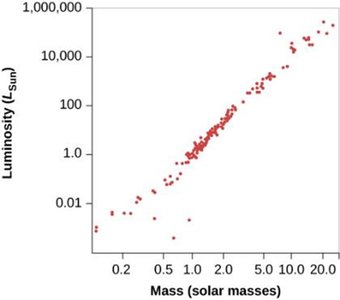
For most stars, higher mass means higher luminosity. This is known as the mass-luminosity relation:
Stellar Diameters and the H-R Diagram
Stellar Diameters
Diameters can be determined using Stefan-Boltzmann’s law and relative luminosities. Most nearby stars are similar in size to the Sun, with a few very luminous stars being enormous.
The H-R Diagram
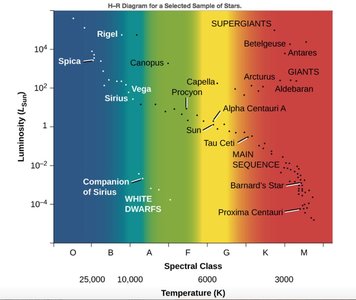
The Hertzsprung-Russell (H-R) diagram plots stellar temperature against luminosity. Most stars lie along the main sequence, with giants, supergiants, and white dwarfs occupying other regions.
Main sequence: 90% of stars, follow mass-luminosity relation.
Supergiants: Upper right, cool but very luminous.
White dwarfs: Bottom left, hot but low luminosity.
Measuring Celestial Distances
Triangulation and Parallax
Triangulation uses a baseline and angular measurements to determine distance. Parallax is the apparent shift in position of a star due to Earth's movement.
Parallax angle: Smaller for more distant objects.
Formula: (D in parsecs, p in arcseconds)
1 parsec: Distance at which parallax is 1 arcsecond; 1 parsec = 3.26 light years.
Nearby Stars and Parallax Measurement
Proxima Centauri: 4.25 ly
Alpha Centauri: 4.4 ly
Barnard’s star: 6 ly
Sirius: 8 ly
Space-Based Parallax
Space missions like Hipparchos and Gaia have measured distances to thousands of stars with high accuracy.
Variable Stars and Distance Measurement
Cepheid and RR Lyrae Variables
Variable stars change brightness periodically. Cepheid and RR Lyrae variables are important for measuring cosmic distances.
Cepheid variables: Large, yellow, pulsating stars; period-luminosity relation.
RR Lyrae stars: Less luminous, periods less than a day.
Henrietta Leavitt's Discovery
Leavitt discovered the period-luminosity relation for Cepheid variables, enabling astronomers to measure distances to faraway galaxies.
RR Lyrae Stars
RR Lyrae stars have nearly constant luminosity (~50 Lsun) and are used to measure distances within our galaxy.
Distances from Spectral Types and Luminosity Classes
H-R Diagram and Spectroscopic Parallax
If a star's spectral and luminosity class are known, its position on the H-R diagram and luminosity can be determined, allowing calculation of its distance.
Spectroscopic parallax: Uses spectral and luminosity class to estimate distance.
Distance formula:
Cosmic Distance Measurement Ladder
A variety of methods are used to measure distances in the universe, forming a "cosmic distance ladder" that extends from nearby stars to distant galaxies.
Method | Distance Range | Objects |
|---|---|---|
Parallax | Up to hundreds of light years | Nearby stars |
Variable stars (Cepheids, RR Lyrae) | Thousands to millions of light years | Galaxies, globular clusters |
Spectroscopic parallax | Up to tens of thousands of light years | Stars in clusters |
Additional info: Other methods (e.g., supernovae, redshift) extend the ladder further. |
