 Back
BackSymmetry, Harmony, and Mathematical Patterns in Physics: The Golden Ratio, Fibonacci, and Oscillatory Motion
Study Guide - Smart Notes
 Tailored notes based on your materials, expanded with key definitions, examples, and context.
Symmetry and Harmony in Mathematics, Art, and Physics
Mathematics and Aesthetics
Mathematics is often perceived as precise and logical, while art and music are seen as emotional and less defined. However, both disciplines share deep connections through concepts of symmetry, harmony, and proportion. The ancient philosopher Plato noted the intrinsic link between beauty and proportion, a theme echoed in mathematical and physical patterns.
Euler’s Equation and Mathematical Constants
Euler’s equation is a fundamental result in mathematics, connecting the constants e (the base of natural logarithms), i (the imaginary unit), π (pi, an irrational number), and the real numbers 0 and 1. The equation is:
Euler's Equation:
This equation incorporates elements of calculus, linear algebra, and geometry, and is important in quantum physics.
The Golden Ratio (Phi, Φ) and Its Properties
Definition and Mathematical Formulation
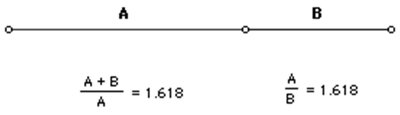
The Golden Ratio, denoted by Φ (phi), is a special number approximately equal to 1.618. It is defined by dividing a line segment into two parts such that the ratio of the whole segment to the longer part is equal to the ratio of the longer part to the shorter part:
Mathematical Definition:
Golden Rectangle and Its Properties
A Golden Rectangle is a rectangle whose side lengths are in the golden ratio. If a square is removed from a golden rectangle, the remaining rectangle is also a golden rectangle, allowing this process to continue indefinitely.
Visual Pleasure: The golden rectangle is considered aesthetically pleasing and appears in art, architecture, and nature.
Golden Ratio in Music
The golden ratio also appears in music, particularly in the frequency ratios of pleasing intervals:
Unison: 1:1 (square)
Octave: 2:1 (rectangle)
Major sixth: 8:5 (golden rectangle)
Fibonacci Numbers and Their Connection to the Golden Ratio
Fibonacci Sequence and Formula
The Fibonacci Sequence is a series of numbers where each term is the sum of the two preceding terms:
Sequence: 0, 1, 1, 2, 3, 5, 8, 13, 21, ...
Recursive Formula:
Convergence to the Golden Ratio
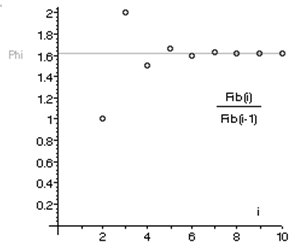
As the sequence progresses, the ratio of consecutive Fibonacci numbers approaches the golden ratio:
Examples: 5/3 = 1.67, 8/5 = 1.6, 13/8 = 1.63, ...
Fibonacci in Nature
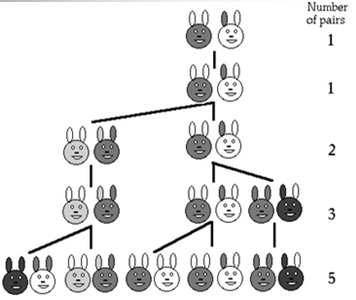
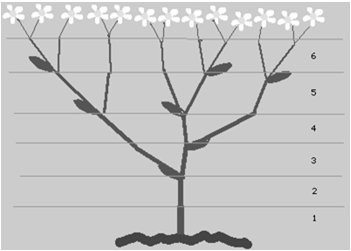
Fibonacci numbers describe growth patterns in nature, such as rabbit populations and plant branching.
Rabbits: The original Fibonacci problem modeled rabbit pairs over time.
Plants: Branching patterns in plants often follow Fibonacci numbers.
Golden Spirals in Nature
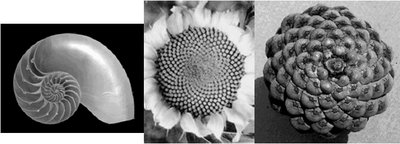
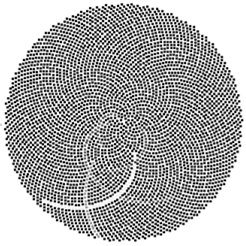
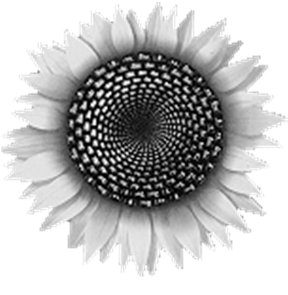
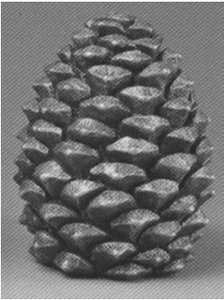
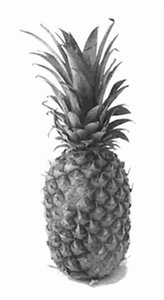
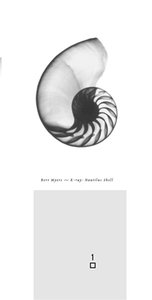
Golden spirals, which are based on the golden ratio, appear in many natural forms, such as shells, sunflower seed arrangements, pinecones, and pineapples. These patterns allow optimal packing and uniform distribution.
Mathematical Patterns in Geometry and Art
Pentagram and Phi Ratios
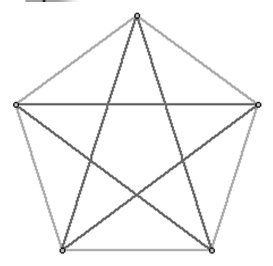
The pentagram contains numerous golden ratio relationships. The ratio of the longer side to the shorter side in a pentagram is phi.
Fibonacci Spiral Construction
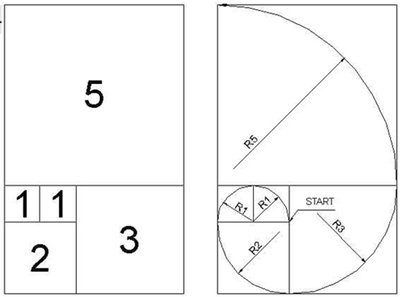
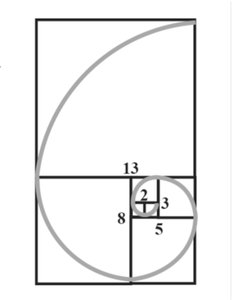
The Fibonacci spiral is constructed by drawing quarter circles in squares whose side lengths are Fibonacci numbers. This spiral closely approximates the golden spiral.
Phi in Art, Architecture, and Human Proportions
Historical and Artistic Applications
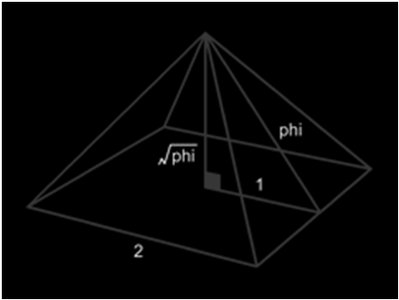
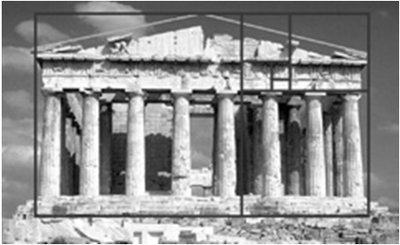
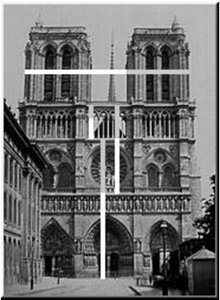
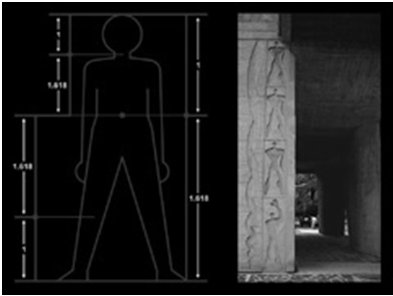
The golden ratio has been used in art and architecture for centuries, contributing to aesthetic appeal and structural harmony. Examples include the pyramids, the Parthenon, and the Cathedral of Notre Dame.
Human Proportions
Human body proportions often approximate the golden ratio, as seen in classical art and architectural design.
Golden Ratio in Astronomy and Physics
Spiral Patterns in the Universe
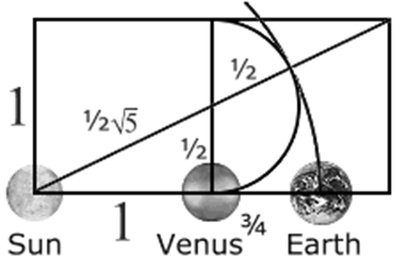
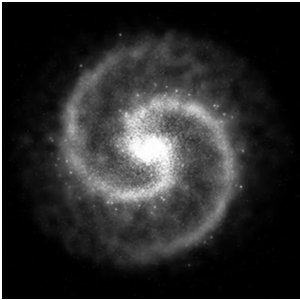
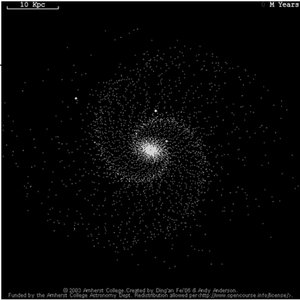
Spiral galaxies, hurricanes, and other cosmic structures often exhibit patterns related to the golden ratio and Fibonacci spirals, reflecting underlying physical laws of symmetry and optimal distribution.


Oscillatory Motion and Simple Harmonic Motion (SHM)
Introduction to Oscillatory Motion
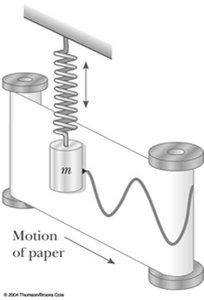
Oscillatory motion is a fundamental concept in physics, describing systems that move back and forth in a regular pattern. The simplest form is Simple Harmonic Motion (SHM), where the restoring force is proportional to displacement.
SHM Equation:
Period (T): The time for one complete cycle.
Amplitude (A): Maximum displacement from equilibrium.
Molecular Model of SHM
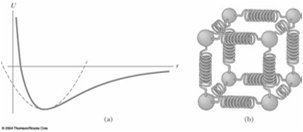
Atoms in molecules can be modeled as masses connected by springs, exhibiting SHM. The potential energy curve resembles that of a spring oscillator.
Damped Oscillations
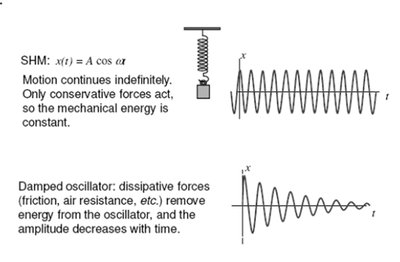
Damped oscillations occur when dissipative forces (such as friction or air resistance) reduce the amplitude over time, but the frequency remains constant. This principle is important in musical instrument design and engineering.
Cosmic Microwave Background (CMB) and Structure of the Universe
Uniformity and Fluctuations in CMB
The cosmic microwave background is the afterglow radiation from the Big Bang, with extremely uniform temperature across the sky. Tiny fluctuations provide insight into the origin, evolution, and structure of the universe.
Discovery and Measurement
Instruments such as COBE, WMAP, and PLANCK have measured these fluctuations, confirming predictions of cosmological models.
Musical Analogies in Physics and Astronomy
Kepler and the Music of the Spheres
Johannes Kepler and other early astronomers used musical analogies to describe planetary motion, seeking harmony and rational order in the cosmos. Modern physics continues to find analogies between wave phenomena, quantum mechanics, and musical harmonics.
Summary Table: Golden Ratio and Fibonacci Applications
Domain | Golden Ratio/Fibonacci Application |
|---|---|
Mathematics | Proportion, geometry, recursive sequences |
Nature | Plant growth, animal shells, seed patterns |
Art & Architecture | Design, human proportions, structural harmony |
Physics | Oscillatory motion, wave phenomena, cosmic structures |
Music | Frequency ratios, harmonics, intervals |
Additional info: The notes expand on the mathematical and physical context of the golden ratio, Fibonacci sequence, and oscillatory motion, providing examples and applications relevant to college-level physics.
