 Back
BackThe Discovery of Electromagnetism: Ørsted’s Experiment and Its Impact
Study Guide - Smart Notes
 Tailored notes based on your materials, expanded with key definitions, examples, and context.
Electromagnetism: Historical Foundations and Ørsted’s Discovery
Ørsted’s Historic Experiment (1820)
Electromagnetism, the unification of electricity and magnetism, was first experimentally demonstrated by Hans Christian Ørsted in 1820. During a lecture, Ørsted observed that a compass needle was deflected by a nearby current-carrying wire, revealing a direct connection between electric currents and magnetic fields. This discovery initiated a scientific revolution, leading to the development of electromagnetic theory and technologies that shape modern life.
Key Point 1: Ørsted’s experiment showed that electric currents produce magnetic fields, fundamentally linking electricity and magnetism.
Key Point 2: The effect was initially weak, but Ørsted’s systematic follow-up experiments confirmed its significance.
Example: A wire carrying current placed near a compass causes the needle to move, demonstrating the magnetic field generated by the current.
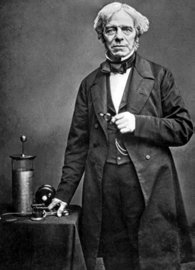
Additional info: Ørsted’s experiment paved the way for Faraday’s discovery of electromagnetic induction and Maxwell’s formulation of electromagnetic theory.
Philosophical and Scientific Context
Kantian Influence and the Search for Unity in Natural Forces
Ørsted’s scientific philosophy was deeply influenced by Immanuel Kant, who argued that true science must be based on necessary facts and mathematical reasoning. Kant’s ideas led Ørsted to seek fundamental connections between natural forces, believing that all physical phenomena could be unified under common principles of attraction and repulsion.
Key Point 1: Kant’s philosophy emphasized mathematical treatment and unity in natural science, inspiring Ørsted’s search for links between electricity, magnetism, heat, and light.
Key Point 2: Ørsted believed that observable forces were mixtures of fundamental attractive and repulsive forces.
Example: Ørsted’s dissertation and later works attempted to extend Kant’s ideas to chemistry and physics, motivating his experiments.
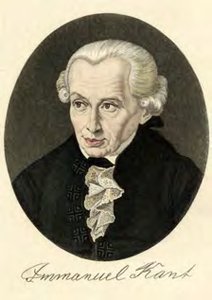
Additional info: Kant’s rejection of atomism in favor of dynamism influenced Ørsted’s views, though later developments in physics and chemistry confirmed the existence of atoms.
Development of Electrical Science
From Static Electricity to Electric Currents: Volta’s Battery
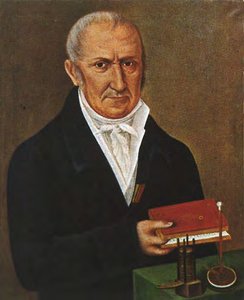
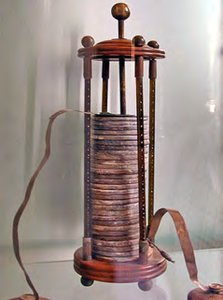
Before 1800, electricity was understood as a static phenomenon. Alessandro Volta’s invention of the voltaic pile (battery) provided a continuous source of electric current, revolutionizing physics and chemistry by enabling new experiments and discoveries.
Key Point 1: The voltaic pile allowed scientists to study electric currents and their effects, including decomposition of compounds and the nature of elements.
Key Point 2: Ørsted’s access to a voltaic cell was crucial for his electromagnetism experiments.
Example: Passing current through a wire above a compass needle demonstrated the magnetic effect of electric currents.
Ørsted’s Scientific Journey and Influences
Collaboration and Kantian Naturphilosophie
Ørsted’s travels and collaborations, especially with Johann Wilhelm Ritter, reinforced his commitment to Kantian Naturphilosophie. He sought unity among natural forces and was influenced by contemporary chemists and physicists who explored the boundaries of electricity, magnetism, and chemical reactions.
Key Point 1: Ørsted’s exposure to German and French scientific culture shaped his approach to experimentation and theory.
Key Point 2: His advocacy for unity among natural forces led to experiments in acoustics, compressibility, and electromagnetism.
Example: Ørsted’s belief in interconnected forces motivated his search for electrical effects in acoustic figures and compressibility studies.
Acoustic Figures and Compressibility
Acoustic Figures: Early Experiments in Physics
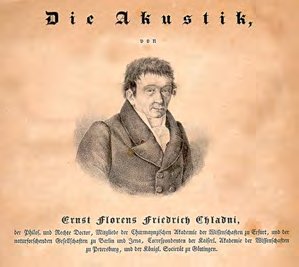
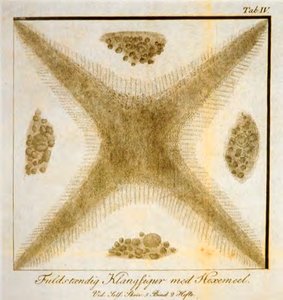
Ørsted investigated acoustic figures, patterns formed by vibrations on plates, as part of his quest to unify natural forces. He hypothesized that mechanical oscillations could produce electrical effects, and his experiments contributed to the understanding of wave phenomena.
Key Point 1: Acoustic figures are visual patterns created by vibrating plates, revealing nodal lines and resonant modes.
Key Point 2: Ørsted’s experiments anticipated modern applications in chaos theory and quantum mechanics.
Example: Using dust or sand on plates, Ørsted visualized acoustic figures and attempted to detect electrical effects.
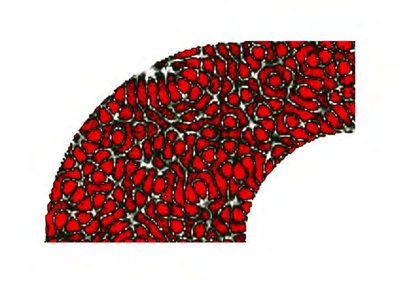
Additional info: Acoustic figures are still used in physics to study wave phenomena and chaos in quantum systems.
Compressibility of Gases and Liquids
Ørsted’s research on compressibility aimed to test the universality of Boyle’s Law (pressure-volume relationship) for gases and liquids. He believed that universal validity would disprove the existence of atoms, though later evidence supported atomic theory.
Key Point 1: Boyle’s Law states that for a fixed amount of gas at constant temperature, pressure and volume are inversely proportional:
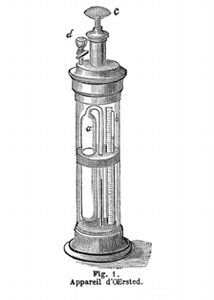
Key Point 2: Ørsted developed improved piezometers to measure compressibility accurately.
Example: Experiments with gases near phase transitions revealed deviations from Boyle’s Law, supporting the existence of atoms.
Ørsted’s Discovery and Its Immediate Impact
Experimental Documentation and Scientific Communication
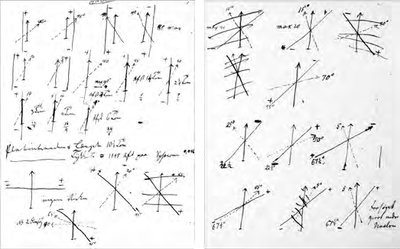
Ørsted meticulously documented his experiments, noting the effects of current-carrying wires on compass needles. He published his findings in Latin and sent them to scientific societies across Europe, ensuring rapid dissemination and recognition.
Key Point 1: Ørsted’s notes and diagrams provided clear evidence of the magnetic effect of electric currents.
Key Point 2: His communication strategy ensured priority and widespread acceptance of his discovery.
Example: Detailed sketches showed the orientation and deflection of compass needles relative to wires.
Portraits and Scientific Instruments
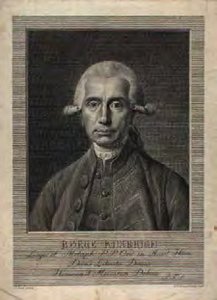
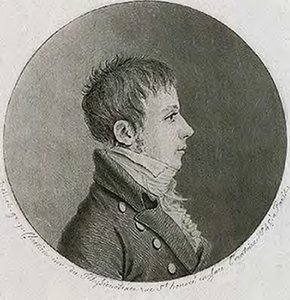
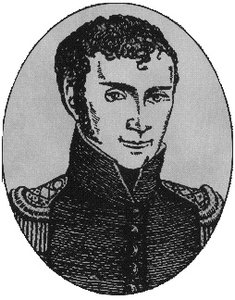
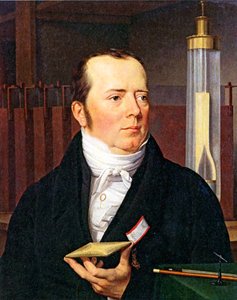
Contemporary portraits of Ørsted and his laboratory instruments, such as the galvanic apparatus and piezometer, highlight the tools and context of his discovery. These visual representations reinforce the importance of experimental physics in the development of electromagnetism.
Key Point 1: Ørsted’s laboratory included powerful galvanic cells and precision instruments for measuring physical effects.
Key Point 2: Portraits often depicted the key apparatus used in his experiments.
Example: The galvanic apparatus was described as consisting of multiple copper troughs and plates, capable of heating wires red hot.
Confirmation and Expansion of Electromagnetic Theory
Rapid Verification and French Contributions
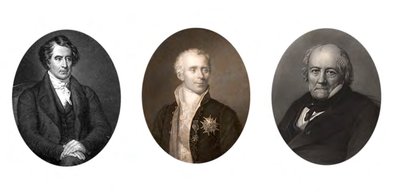
Ørsted’s discovery was quickly verified by leading scientists such as Humphry Davy and Michael Faraday in England, and by Arago, Ampère, Biot, and Laplace in France. French physicists expanded the theory, demonstrating interactions between current-carrying wires and formulating the Biot-Savart Law.
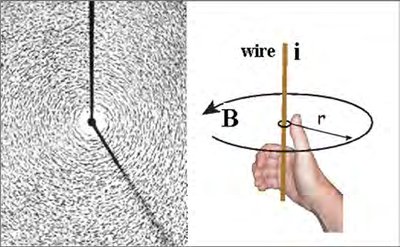
Key Point 1: The Biot-Savart Law describes the magnetic field produced by a current-carrying wire:
Key Point 2: Ampère’s circuital law relates the integrated magnetic field around a loop to the current passing through it.
Example: Iron filings reveal the circular magnetic field around a wire, and the right-hand rule determines its direction.
Additional info: These foundational laws are central to the study of magnetic fields and are covered in college physics courses.
Timeline of Electromagnetic Discoveries
Major Milestones in Electromagnetism
The first century of electromagnetism saw rapid progress, from Volta’s battery to Maxwell’s equations and Einstein’s theory of relativity. Key inventions and discoveries transformed both fundamental science and technology.
Year | Event |
|---|---|
1800 | Volta invents the electric battery |
1820 | Ørsted discovers electromagnetism |
1831 | Faraday discovers electromagnetic induction |
1865 | Maxwell formulates electromagnetic theory |
1887 | Michelson and Morley disprove the existence of aether |
1905 | Einstein discovers special relativity |
Electromagnetic Theory: Maxwell and Beyond
Maxwell’s Equations and Electromagnetic Waves
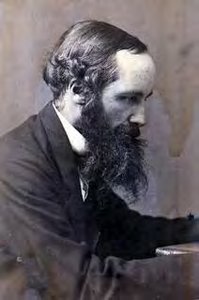
James Clerk Maxwell unified electricity and magnetism into a single theory, predicting electromagnetic waves that propagate at the speed of light. Oliver Heaviside later simplified Maxwell’s equations using vector notation, making them more accessible and practical.
Key Point 1: Maxwell’s equations describe the behavior of electric and magnetic fields and their interactions.
Key Point 2: Electromagnetic waves travel at speed , independent of the motion of the source or observer.
Example: The prediction and discovery of radio waves enabled wireless communication.
Additional info: Maxwell’s equations are fundamental to college physics, covering topics such as electromagnetic waves, optics, and relativity.
Conclusion: The Legacy of Ørsted’s Discovery
Ørsted’s discovery of electromagnetism catalyzed a century of scientific and technological progress. The unity of natural forces, as envisioned by Kant and Ørsted, became a reality through experimental physics and mathematical theory. Electromagnetism remains a cornerstone of modern physics, with applications ranging from electric motors to wireless communication and relativity.
