 Back
BackThe Wave Nature of Light: Interference, Diffraction, and Applications
Study Guide - Smart Notes
 Tailored notes based on your materials, expanded with key definitions, examples, and context.
The Wave Nature of Light
Competing Theories of Light
The nature of light has been debated for centuries, with early scientists proposing both particle and wave models. Isaac Newton advocated for the particle theory, while Robert Hooke and later James Clerk Maxwell supported the wave theory. Maxwell's discovery that light is an electromagnetic wave provided strong evidence for the wave model. Geometric optics can be explained by both models, but wave-specific phenomena require the wave theory for a complete understanding.
Consistency with Laws of Reflection and Refraction
The wave nature of light is consistent with the laws of reflection and refraction. As a wave enters a new medium, its speed and wavelength change, but its frequency remains constant. Snell's Law describes how the angle of refraction depends on the indices of refraction of the two media:
Interference: Young’s Double-Slit Experiment
Experimental Setup and Results
Thomas Young's double-slit experiment (1801) provided direct evidence for the wave nature of light. When monochromatic light passes through two closely spaced slits, it produces an interference pattern of alternating bright and dark fringes on a screen. If light were purely a particle, only two bright spots would appear, corresponding to the slits.



Wave Interference and Path Difference
The observed pattern is due to constructive and destructive interference. Constructive interference (bright fringes) occurs when the path difference between the two waves is an integer multiple of the wavelength:
Destructive interference (dark fringes) occurs when the path difference is a half-integer multiple of the wavelength:

Intensity Distribution
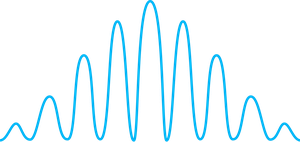
The intensity of the interference pattern varies with position. Maxima correspond to constructive interference, while minima correspond to destructive interference.
Diffraction Gratings
Principle and Applications
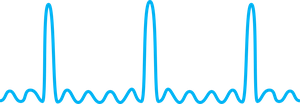
A diffraction grating consists of many equally spaced slits. It produces sharper and more intense maxima compared to a double slit, allowing for precise measurements of wavelength. The condition for maxima is similar to the double-slit case:
Spectroscopy
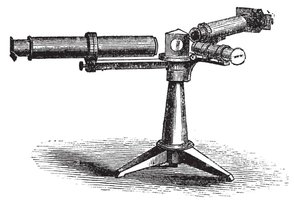
Diffraction gratings are used in spectrometers to separate light into its component wavelengths, enabling the identification of elements by their unique spectral lines.
Huygens’ Principle and Diffraction
Huygens’ Principle
Christian Huygens proposed that every point on a wavefront acts as a source of secondary wavelets. The new wavefront is the envelope of these wavelets. This principle explains reflection, refraction, and diffraction phenomena.

Single-Slit Diffraction
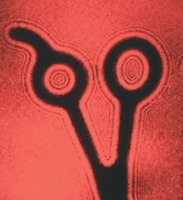
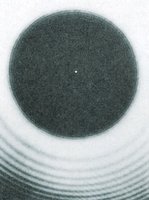
When light passes through a single narrow slit, it produces a central bright maximum and several dimmer maxima and minima due to interference among wavelets from different parts of the slit. The condition for minima is:
(for )
Dispersion
Prism and Color Separation
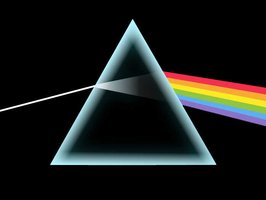
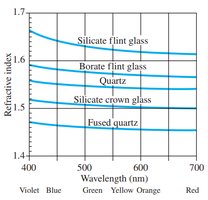
Dispersion occurs when different wavelengths of light are refracted by different amounts in a medium, such as a prism. Shorter wavelengths (blue/violet) are bent more than longer wavelengths (red), spreading white light into a spectrum.
Thin-Film Interference
Principle and Examples
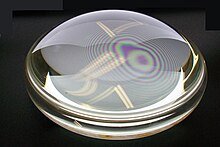
Thin-film interference occurs when light reflects off the upper and lower boundaries of a thin film (such as soap bubbles or oil slicks). The path difference between the two reflected rays leads to constructive or destructive interference, depending on the film's thickness and the wavelength of light.

Michelson Interferometer and Gravitational Waves
Michelson Interferometer
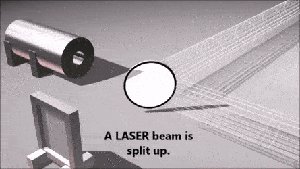
The Michelson interferometer splits a beam of light into two paths, reflects them back, and recombines them to produce interference. It is highly sensitive to changes in path length and is used for precise measurements, including the detection of gravitational waves.
LIGO and Gravitational Waves
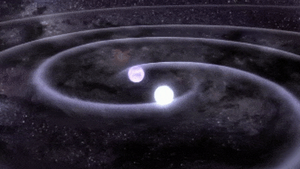
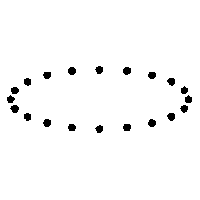
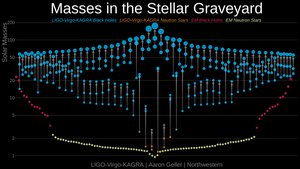
LIGO (Laser Interferometer Gravitational-Wave Observatory) uses large-scale Michelson interferometers to detect gravitational waves—ripples in spacetime caused by massive accelerating objects like merging black holes or neutron stars. The passage of a gravitational wave changes the relative lengths of the interferometer arms, producing a measurable shift in the interference pattern.


Additional info: The equations and principles above are foundational for understanding modern optics, spectroscopy, and the experimental verification of gravitational waves. Mastery of these topics is essential for advanced studies in physics and engineering.
