 Back
Uniform Circular Motion: Physics with Calculus Study Guide
Study Guide - Smart Notes
 Tailored notes based on your materials, expanded with key definitions, examples, and context.
Uniform Circular Motion (UCM)
Definition and Description
Uniform Circular Motion (UCM) refers to the motion of an object traveling in a circle with a constant radius and constant speed. Although the speed remains unchanged, the direction of the velocity continuously changes, resulting in acceleration.
Constant Radius (R): The distance from the center of the circle to the moving object remains fixed.
Constant Speed (v): The magnitude of the velocity is constant, but its direction changes.
Position: Can be described using Cartesian coordinates (x, y) or polar coordinates (R, θ).
Coordinate Systems for UCM
UCM can be described in both Cartesian and polar coordinates, but polar coordinates are particularly natural for circular motion.
Cartesian Coordinates: Position (x, y), velocity (vx, vy).
Polar Coordinates: Position (R, θ), velocity (vR, ω).
In UCM, R is constant and ω (angular velocity) is constant.
Arc Length and Angular Displacement
The arc length s is the distance traveled along the circumference and is related to the angular displacement θ:
Arc Length:
Units of θ: Radians
One complete revolution: radians
Position Equations in UCM
Position in UCM can be expressed as:
For constant angular velocity:
Thus, and
Velocity and Angular Velocity
Velocity in UCM is tangential to the circle, and angular velocity describes the rate of change of the angle:
Linear Velocity:
Angular Velocity: (units: radians/second)
For constant angular velocity:
Period and Frequency
The period and frequency are fundamental properties of circular motion:
Frequency (f): Number of revolutions per second
Period (T): Time for one revolution
Relationship:
Polar Unit Vectors
Polar unit vectors are used to describe directions in circular motion:
Radial Unit Vector (\hat{r}): Points outward from the center
Tangential Unit Vector (\hat{\theta}): Points perpendicular to \hat{r}, along the direction of motion
Centripetal Acceleration
Concept and Calculation
Even though the speed is constant in UCM, the velocity changes direction, resulting in acceleration toward the center of the circle, known as centripetal acceleration.
Average Acceleration:
As ,
Direction: Always points toward the center (radially inward)
Magnitude of Centripetal Acceleration
The magnitude of centripetal acceleration is given by:
Using ,
Applications and Examples
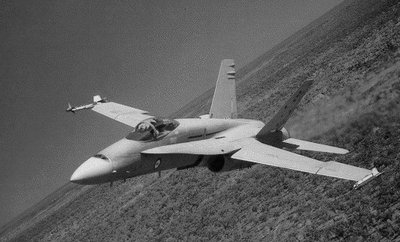
Example: Fighter Pilot in Circular Turn
A fighter pilot can withstand centripetal acceleration up to about 9 times the acceleration due to gravity (9g). If the pilot's speed is 300 m/s, the tightest turn diameter can be calculated:
Given: , m/s
, so
Diameter
Calculation: m, m
Example: Propeller Tip Acceleration
The tip of a propeller blade experiences high centripetal acceleration due to rapid rotation:
Frequency: rpm
Blade length: m
Angular velocity: (convert rpm to rad/s)
Acceleration:
Result: m/s2 ()
Example: Moon's Acceleration Around Earth
The Moon's centripetal acceleration due to its orbit around Earth can be calculated:
Period: s
Radius: m
Angular velocity:
Acceleration:
Result: m/s2 ()
Newton observed that , inspiring the inverse-square law for gravity.
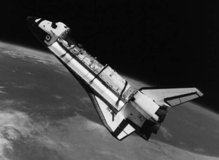
Example: Space Shuttle in Low Earth Orbit
The Space Shuttle in Low Earth Orbit (LEO) experiences centripetal acceleration due to its orbital motion:
Altitude: 300 km above Earth's surface
Radius: km m
Period: min s
Angular velocity:
Acceleration:
Result: m/s2
Recap and Connections
Summary of Key Concepts
UCM involves constant speed, changing direction, and centripetal acceleration.
Polar coordinates and unit vectors are natural for describing circular motion.
Period, frequency, and angular velocity are interconnected.
Centripetal acceleration is always directed toward the center and can be calculated using or .
Applications include planetary motion, orbital mechanics, and engineering scenarios.
Additional info:
Connections to Newton's Laws and gravitation will be explored in later chapters.
Projectile motion and 2-D kinematics are foundational for understanding UCM.
