 Back
BackUnit 2 Study Guide: Gravitation, Work & Energy, Conservation of Energy, and Linear Momentum
Study Guide - Smart Notes
 Tailored notes based on your materials, expanded with key definitions, examples, and context.
Gravitation and Newton’s Synthesis
Newton’s Law of Universal Gravitation
Newton’s law of universal gravitation describes the attractive force between two masses. This force is fundamental to understanding planetary motion, satellite orbits, and gravitational interactions on Earth.
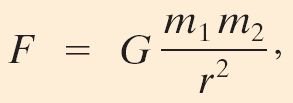
Law Statement: The force between two masses is proportional to the product of their masses and inversely proportional to the square of the distance between them.
Equation:
Vector Form: The force is directed along the line joining the masses.
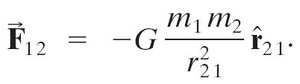
Superposition Principle: For multiple masses, the total force is the vector sum of individual forces.

Gravity Near the Earth’s Surface; Geophysical Applications
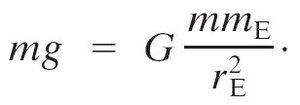
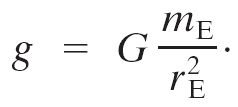
The gravitational force near Earth’s surface can be related to the local acceleration due to gravity, g. This allows calculation of Earth's mass and understanding variations in gravity due to altitude and location.
Relation to g:
Solving for g:
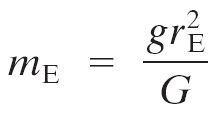
Solving for Earth's mass:
Example: Gravity on Mt. Everest is slightly less than at sea level due to increased altitude.

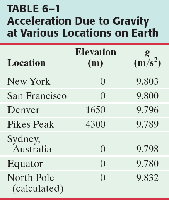
Variation of g: Gravity varies with location due to altitude, geology, and Earth's shape.
Satellites and "Weightlessness"
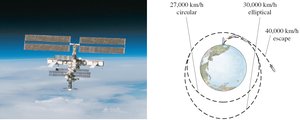
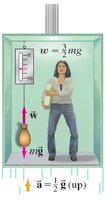
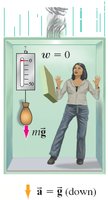
Satellites orbit Earth due to their tangential speed, experiencing apparent weightlessness because they are in continuous free fall.
Orbital Motion: Satellites require sufficient tangential speed to remain in orbit.
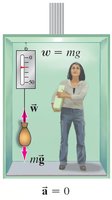
Apparent Weightlessness: In orbit, objects experience no normal force, leading to the sensation of weightlessness.
Kepler’s Laws and Newton's Synthesis
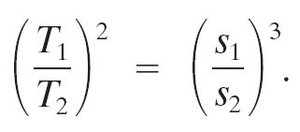
Kepler’s laws describe planetary motion and can be derived from Newton’s laws. The third law relates orbital period and mean distance.
Kepler’s Third Law:
Principle of Equivalence; Curvature of Space; Black Holes
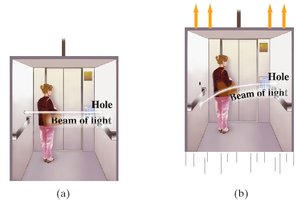
The principle of equivalence states that inertial and gravitational mass are identical. Massive objects can bend light, and extremely strong gravitational fields can create black holes.
Light Deflection: Light is bent by gravity, as visualized in experiments.
Work and Energy
Work Done by a Constant Force
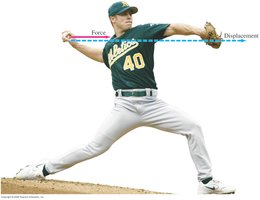
Work is defined as the product of force and displacement in the direction of the force. The SI unit is the joule (J).
Example: Work done on a baseball by a pitcher.
Work Done by a Varying Force
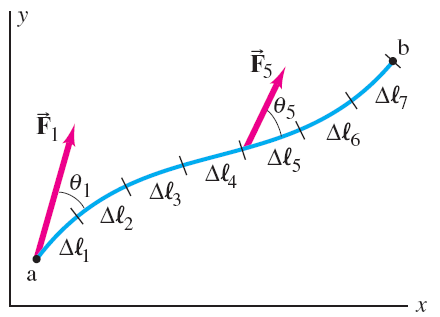
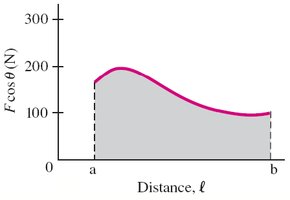
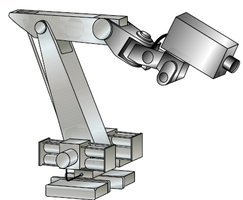
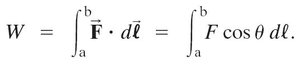
When force varies with position, work is calculated by integrating the force over the path.
Path and Force Diagram:
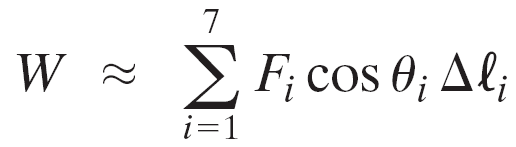
Work Approximation:
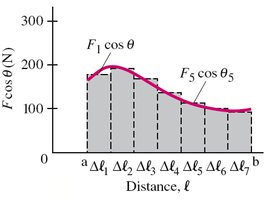
Area Under Curve:
Integral Form:

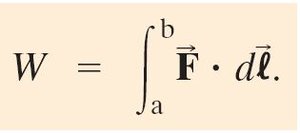
Vector Integral:
Work Done by a Spring Force
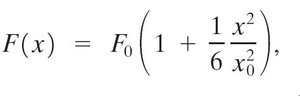
The force exerted by a spring is proportional to its displacement, and the work done is the area under the force-displacement curve.
Spring Force Equation:
Kinetic Energy and the Work-Energy Principle
Kinetic energy is the energy of motion. The work-energy principle states that the net work done on an object equals its change in kinetic energy.
Example: Net work required to accelerate a car.
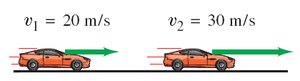
Kinetic Energy Formula:
Conservation of Energy
Conservative and Nonconservative Forces
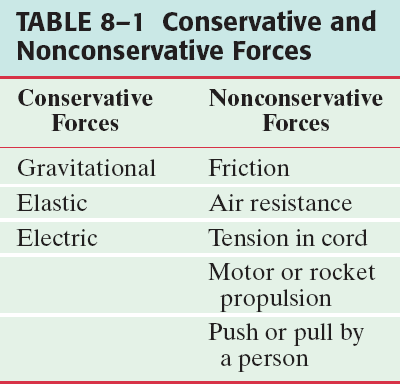
Conservative forces allow potential energy to be defined and conserve mechanical energy. Nonconservative forces (like friction) dissipate energy.
Conservative Forces | Nonconservative Forces |
|---|---|
Gravitational | Friction |
Elastic | Air resistance |
Electric | Tension in cord |
Motor or rocket propulsion | |
Push or pull by a person |
Potential Energy
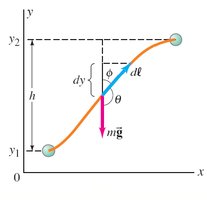
Potential energy is stored energy due to position or configuration. Gravitational and elastic potential energies are common examples.
Gravitational Potential Energy:
Elastic Potential Energy:
Energy Conservation with Dissipative Forces
When nonconservative forces act, mechanical energy is not conserved, but total energy (including thermal, chemical, etc.) is always conserved.
Example: Friction with a spring.
Linear Momentum
Momentum and Its Relation to Force
Momentum is a vector quantity defined as the product of mass and velocity. The rate of change of momentum equals the net force.
Equation:
Newton’s Second Law (momentum form):
Example: Tennis serve.
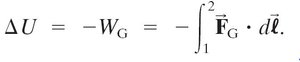
Conservation of Momentum
Momentum is conserved in isolated systems, especially during collisions.
Rifle Recoil Example: Conservation of momentum in rifle and bullet.

Collisions and Impulse
Impulse is the change in momentum resulting from a force applied over a time interval. It is equal to the area under the force-time curve.
Impulse Equation:

Summary Table: Acceleration Due to Gravity at Various Locations
Location | Elevation (m) | g (m/s2) |
|---|---|---|
New York | 0 | 9.805 |
San Francisco | 0 | 9.800 |
Denver | 1650 | 9.796 |
Pikes Peak | 4300 | 9.789 |
Sydney, Australia | 0 | 9.798 |
Equator | 0 | 9.780 |
North Pole (calculated) | 0 | 9.832 |
