 Back
Vibrations and Waves: Physics with Calculus Study Guide
Study Guide - Smart Notes
 Tailored notes based on your materials, expanded with key definitions, examples, and context.
Vibrations and Waves
Introduction to Vibrations and Waves
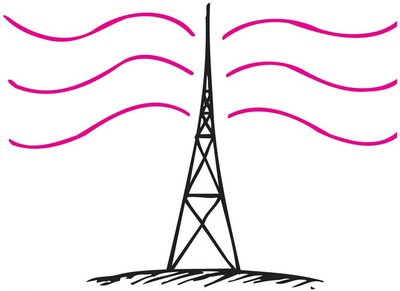
Vibrations and waves are fundamental concepts in physics, describing periodic motions and the propagation of energy through space and time. Vibrations refer to oscillations in time, while waves are oscillations that extend through both space and time, transporting energy without transporting matter.
Vibration: A periodic wiggle in time.
Wave: A periodic wiggle in both space and time, extending from one place to another.
Examples:
Light: Electromagnetic wave, does not require a medium.
Sound: Mechanical wave, requires a medium.
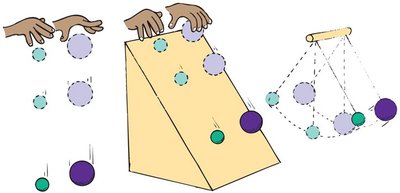
Vibrations of a Pendulum
A simple pendulum consists of a mass (bob) suspended from a string. Its motion is a classic example of periodic vibration, and its period depends only on the length of the pendulum, not the mass.
Period (T): Time for one complete to-and-fro swing.
Dependence:
Period increases with length.
Period is independent of mass.
Formula:
Example: Changing the mass of the bob does not affect the period; increasing the length increases the period.
Wave Description
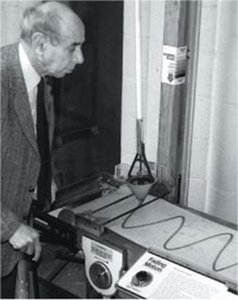
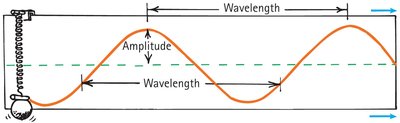
Waves are often represented by sine curves, which can be visualized by tracing the motion of a vibrating pendulum over time. Key characteristics of waves include crests, troughs, amplitude, and wavelength.
Crest: High point of the wave.
Trough: Low point of the wave.
Amplitude: Distance from midpoint to crest or trough.
Wavelength (λ): Distance between successive identical parts of the wave.
Frequency and Period
Frequency and period are fundamental properties of waves and vibrations. Frequency is the number of cycles per second, measured in Hertz (Hz), while period is the time for one cycle.
Frequency (f): Number of vibrations per second.
Period (T): Time for one vibration.
Examples:
Sound waves: hundreds to thousands of Hz.
Radio waves: millions of Hz (MHz).
Cell phones: billions of Hz (GHz).
Wave Motion and Wave Speed
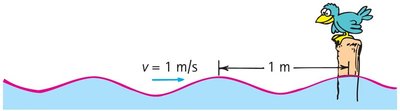
Wave motion transports energy, not matter. The speed of a wave depends on its frequency and wavelength.
Wave Speed (v):
Example: A wave with wavelength 1 m and frequency 1 Hz has speed 1 m/s.
Energy Transport: Waves carry energy across a medium without moving the medium itself.

Transverse and Longitudinal Waves
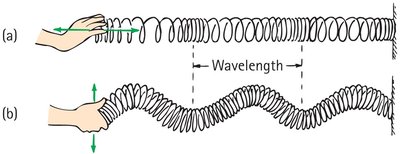
Waves are classified based on the direction of vibration relative to the direction of energy transfer.
Transverse Waves: Medium vibrates perpendicular to direction of energy transfer.
Examples: Vibrations in strings, radio waves, light waves, S-waves in geology.
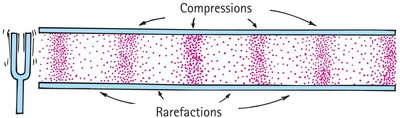
Longitudinal Waves: Medium vibrates parallel to direction of energy transfer.
Examples: Sound waves in solids, liquids, gases; P-waves in geology.
Features: Compressions (high density) and rarefactions (low density).
Wave Interference
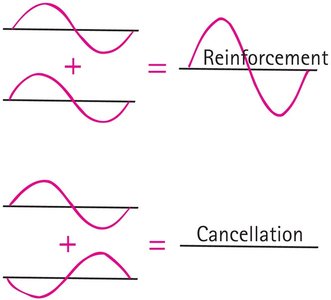
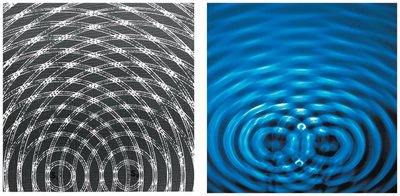
When two or more waves overlap, their effects combine according to the superposition principle. This can result in constructive or destructive interference.
Constructive Interference: Crests overlap, increasing amplitude.
Destructive Interference: Crest overlaps trough, reducing or canceling amplitude.
Superposition Principle: The total displacement is the sum of individual displacements.
Standing Waves
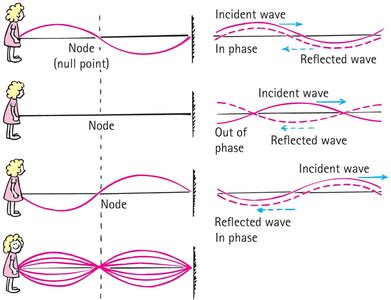
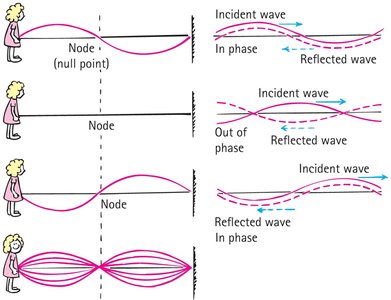
Standing waves are formed when incident and reflected waves interfere in such a way that certain points (nodes) remain stationary, while others (antinodes) oscillate with maximum amplitude.
Node: Point of zero displacement.
Antinode: Point of maximum displacement.
Formation: Occurs when a wave reflects and interferes with itself.
Examples: Guitar strings, sound waves in trumpets.

Doppler Effect
The Doppler Effect describes the change in frequency of a wave as perceived by an observer moving relative to the source. It applies to both sound and light.
Approaching: Frequency increases (blue shift for light).
Receding: Frequency decreases (red shift for light).
Applications: Measuring star spin rates, radar, medical imaging.
Bow Waves
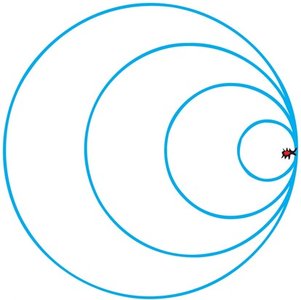
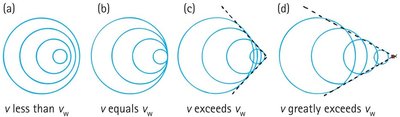
Bow waves occur when an object moves through a medium at a speed greater than the wave speed, creating a V-shaped pattern of overlapping waves.
Wave Barrier: Waves superimpose to form a wall.
Bow Wave: V-shape forms when object travels faster than wave speed.
Example: Bug swimming as fast as the waves it creates.
Shock Waves and Sonic Boom
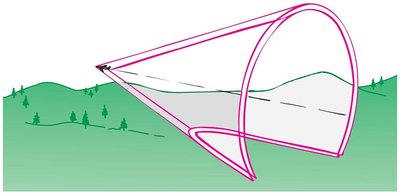
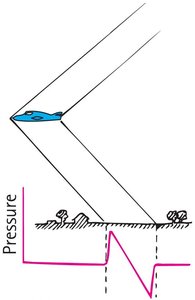
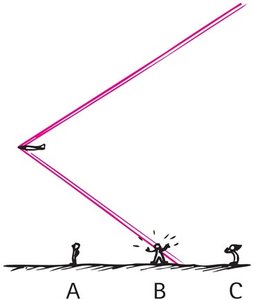
Shock waves are produced by objects moving faster than the speed of sound, forming a cone-shaped pattern. The sonic boom is the sharp sound associated with the passage of a shock wave.
Shock Wave: Overlapping spheres form a cone from supersonic objects.
Sonic Boom: Sharp sound due to overpressure and underpressure between cones.
Examples: Supersonic aircraft, bullets, whip cracks.
Summary Table: Wave Properties
Property | Definition | Formula |
|---|---|---|
Period (T) | Time for one cycle | |
Frequency (f) | Cycles per second | |
Wavelength (λ) | Distance between identical points | — |
Wave Speed (v) | Speed of wave propagation |
