Back
BackWave-Particle Duality, Probability, and the Heisenberg Uncertainty Principle
Study Guide - Smart Notes
 Tailored notes based on your materials, expanded with key definitions, examples, and context.
Light: Wave-Particle Duality, Probability, and Uncertainty
Diffraction and Interference
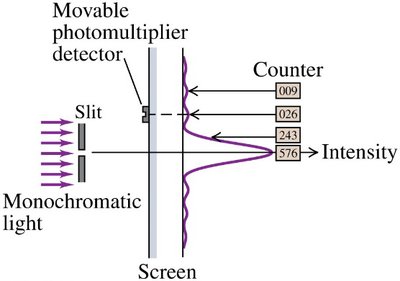
The nature of light is revealed through experiments that demonstrate both its wave-like and particle-like properties. The double-slit experiment is a classic demonstration of this duality, showing that light can produce interference patterns characteristic of waves, while individual photons are detected as discrete particles.
Wave Description: Explains the formation of interference and diffraction patterns when light passes through slits.
Particle Description: Accounts for the detection of individual photons at specific locations on a screen.
Statistical Nature: The probability distribution of photon impacts forms the observed pattern, but the exact location of any single photon cannot be predicted.
Conundrum: The path of an individual photon is indeterminate; the wave description determines the probability pattern, while the particle description explains detection events.
Example: In the double-slit experiment, even when photons are sent one at a time, an interference pattern emerges over time, indicating wave-like behavior.
Probability and Uncertainty in Photon Experiments
Single-Slit Diffraction and Momentum Components
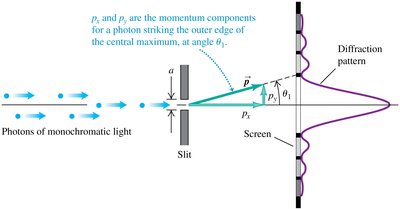
When monochromatic light passes through a single slit, the resulting diffraction pattern can be analyzed to understand the uncertainty in a photon's position and momentum. The position of dark fringes is given by the condition:
Variables: a is the slit width, \theta_m is the angle of the m-th minimum, \lambda is the wavelength, and m is an integer (±1, ±2, ...).
Approximation: For small angles, (in radians), so for the first minimum.
Momentum Components: A photon striking the screen at angle \theta_1 has momentum components (original direction) and (perpendicular due to diffraction).
Relation: , so .
Uncertainty in Momentum and Position
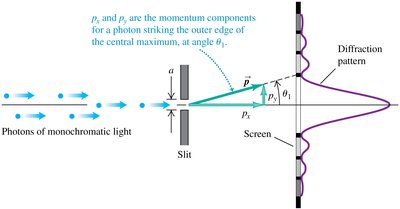
The single-slit experiment illustrates the uncertainty in the transverse momentum () of photons. The narrower the slit, the greater the spread in the diffraction pattern, and thus the greater the uncertainty in .
Uncertainty Relation:
Position Uncertainty: The slit width defines the uncertainty in the photon's position ().
Momentum Uncertainty: The spread in the diffraction pattern corresponds to uncertainty in .
Photon Momentum:
Heisenberg Relation (for this setup):
The Heisenberg Uncertainty Principle
Mathematical Statement and Physical Meaning
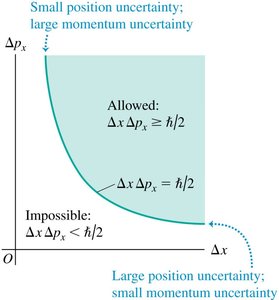
The Heisenberg uncertainty principle sets a fundamental limit on the precision with which certain pairs of physical properties, such as position and momentum, can be simultaneously known. For position and momentum :
Standard Deviation: Uncertainties are typically described using the standard deviation of the measured values.
Physical Interpretation: The more precisely the position is known, the less precisely the momentum can be known, and vice versa.
Generalization: The principle applies to all conjugate pairs, including and , and .
Example: In the single-slit experiment, narrowing the slit (reducing ) increases the spread of the diffraction pattern (increasing ).
Waves, Superposition, and Uncertainty
Wave Properties and Localization
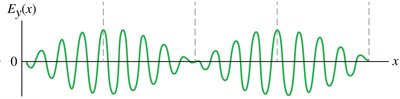
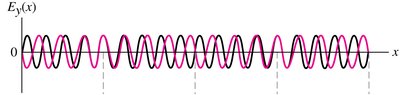
The uncertainty principle can also be understood in terms of wave properties. A pure sine wave has a well-defined wavelength (and thus momentum), but is completely delocalized in space. To localize a particle, a superposition of waves (wave packet) is required, which introduces uncertainty in momentum.
Wave Number:
Angular Frequency:
Photon Energy:
Photon Momentum:
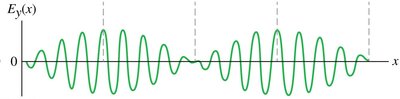
Superposition: Combining waves of different wavelengths creates a localized wave packet, but with increased momentum uncertainty.
Example: Superimposing two sine waves of slightly different wavelengths produces a beat pattern, localizing the photon in space but introducing two possible momenta.
Uncertainty in Energy and Time
Heisenberg Uncertainty Principle for Energy and Time
There is also an uncertainty relation between energy and time, analogous to the position-momentum uncertainty. This can be illustrated by considering the superposition of waves with slightly different frequencies (energies), resulting in a beat pattern that is localized in time.
Physical Meaning: The more precisely the energy of a system is known, the less precisely the time interval during which it has that energy can be known, and vice versa.
Example: Measuring the energy of a photon in a short time interval introduces uncertainty in the energy measurement.
Beats: The superposition of two waves with slightly different frequencies produces a modulation (beats), localizing the photon in time but introducing two possible energies.