 Back
Waves, Sound, and the Decibel Scale: Physics with Calculus Study Notes
Study Guide - Smart Notes
 Tailored notes based on your materials, expanded with key definitions, examples, and context.
Waves and Sound
Introduction to Waves
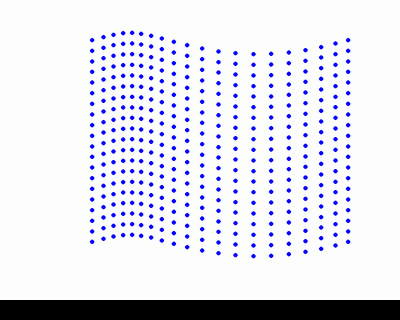
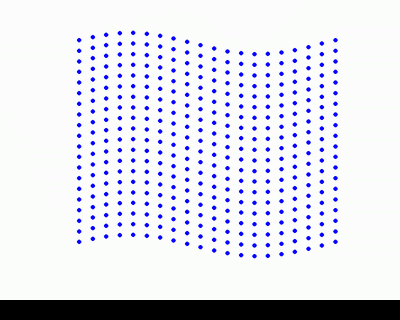
Waves are disturbances that transfer energy from one place to another without transferring matter. In physics, waves are classified based on the direction of particle motion relative to the direction of wave propagation.
Transverse Waves: Particles move perpendicular to the direction of wave propagation (e.g., waves on a string).
Longitudinal Waves: Particles move parallel to the direction of wave propagation (e.g., sound waves in air).
Both Types: Some systems can support both transverse and longitudinal waves.


Damping in Oscillatory Systems
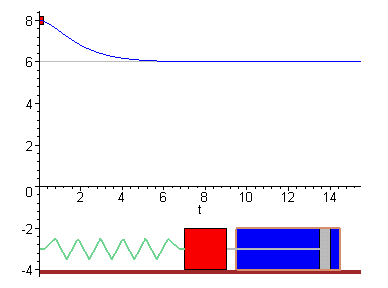
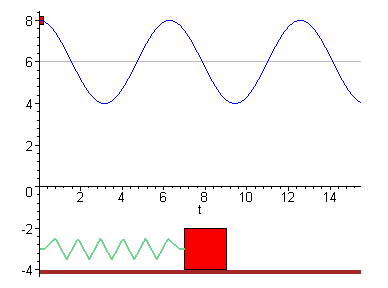
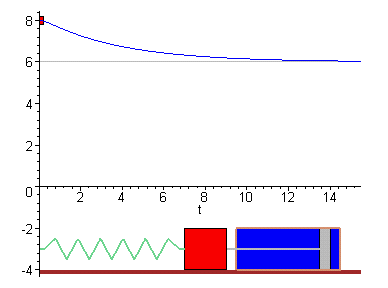
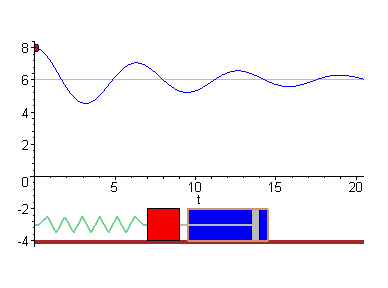
Damping refers to the effect of energy loss in oscillatory systems, such as a mass-spring system or a vibrating tuning fork. The degree of damping determines the system's response:
Undamped: No energy loss; oscillations continue indefinitely.
Underdamped: Oscillations gradually decrease in amplitude over time.
Overdamped: System returns to equilibrium without oscillating.
Critically Damped: System returns to equilibrium as quickly as possible without oscillating.
Resonance and Resonant Frequency
Resonant Frequency (fr)
Resonance occurs when a system is driven at its natural frequency, resulting in maximum amplitude oscillations. The resonant frequency depends on the physical properties of the system (e.g., mass, stiffness, length).
Definition: The frequency at which a system naturally oscillates with the greatest amplitude.
Examples: Vibrating strings, air columns in tubes, and the basilar membrane in the ear.
Equation: The resonant frequency for a simple mass-spring system is given by: where k is the spring constant and m is the mass.
Frequency and Period: Frequency (f) and period (T) are inversely related:

Sound Pressure, Energy, Power, and Intensity
Instantaneous Pressure
Sound waves cause variations in air pressure. The instantaneous pressure at time t for a vibrating object is given by:
Pressure (p): Measured in Pascals (Pa), where
Relationship: , ,
Energy, Power, and Work
Sound involves the transfer of energy through a medium. Key definitions:
Energy (E): The ability to do work, measured in Joules (J).
Power (P): The rate of energy transfer, measured in Watts (W), where .
Work (W): The transfer of energy when a force moves an object:
Relationships:

Sound Intensity
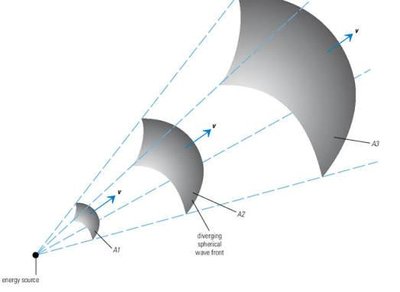
Sound intensity is the amount of energy transmitted per second through a unit area, measured in . It is a vector quantity, indicating both magnitude and direction.
Definition: , where P is power and A is area.
Relationship to Pressure: , where is the root mean square pressure, is the density of the medium, and is the speed of sound.
Characteristic Impedance (Zc):
Impedance
Impedance (Z) is the opposition to motion in a system. In acoustics:
Acoustic Impedance: Opposition presented by an acoustic system to air particle motion.
Characteristic Impedance: Intrinsic property of the medium, dependent on density and speed of sound.
Effect: When a sound wave encounters a change in characteristic impedance (e.g., air to water), part of the wave is reflected and part is transmitted.
Absolute vs. Relative Acoustic Measures
Absolute Measures
Absolute measures include power (W), intensity (W/m2), and pressure (Pa). These are direct, physical quantities.
Relative Measures and Levels
Relative measures compare a quantity to a reference value, often using a logarithmic scale. This is useful for expressing large ranges of values in manageable numbers.
Level: The ratio of a measured quantity to a reference, usually expressed in bels or decibels (dB).
Reference Values: Must always be specified for meaningful comparison.
The Bel and Decibel (dB) Scale
The Bel (bel)
The bel is a dimensionless unit that expresses the logarithm (base 10) of the ratio of two powers, energies, or intensities:
Reference values for energy, power, and intensity are typically J, $10^{-12}$ W, and $10^{-12}$ W/m2, respectively.
The bel is rarely used directly due to its large scale; instead, the decibel (dB) is used.
The Decibel (dB)
The decibel (dB) is one-tenth of a bel and is the standard unit for expressing relative sound levels:
For intensity, power, or energy:
For pressure: (since )
Always specify the reference value and measurement distance.
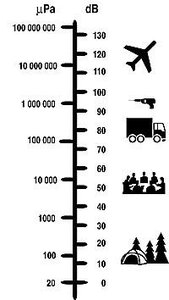
Standard Decibel References
dB SPL: Sound Pressure Level, reference = 20 μPa
dB IL: Intensity Level, reference = W/m2
dB SL: Sensation Level, above threshold for a condition
dB HL: Hearing Level, above threshold for a given frequency
Sample Decibel Calculations
Intensity Level:
Pressure Level:
Examples:
An increase in sound power by a factor of 2:
Intensity level for , :
Intensity level for , :
20 dB corresponds to an intensity ratio of 100:1
An increase in sound pressure by a factor of 2:
An increase in sound pressure by a factor of 10:
26 dB corresponds to a pressure ratio of 20:1







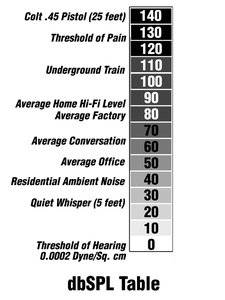
Summary Table: dB SPL Reference Values
Sound Source | dB SPL |
|---|---|
Colt .45 Pistol (25 feet) | 140 |
Threshold of Pain | 130 |
Underground Train | 100 |
Average Home Hi-Fi Level / Factory | 80 |
Average Conversation | 60 |
Average Office | 50 |
Residential Ambient Noise | 40 |
Quiet Whisper (5 feet) | 20 |
Threshold of Hearing | 0 |
Key Equations
Resonant Frequency (mass-spring):
Sound Intensity:
Decibel (Intensity):
Decibel (Pressure):
Additional info: These notes cover the core concepts of waves, sound, resonance, intensity, and the decibel scale, which are essential for understanding periodic motion and waves in a calculus-based physics course.
