 Back
BackWork, Energy, and Momentum: Study Notes for College Physics
Study Guide - Smart Notes
 Tailored notes based on your materials, expanded with key definitions, examples, and context.
Work and Energy
Definition of Work
Work is a measure of energy transfer when a force acts upon an object to move it. The work done by a force depends on both the magnitude of the force and the displacement of the object in the direction of the force.
Work can be positive, negative, or zero depending on the direction of force relative to displacement.
Formula:
Dot Product: The dot product of force and displacement yields a scalar value for work.
Example: If a box is pulled up an incline, multiple forces (gravity, tension, friction, normal force) may do work, but only those with a component along the displacement contribute non-zero work.
Path Independence and Conservative Forces
For certain forces, the work done is independent of the path taken. These are called conservative forces.
Examples: Gravity, spring force, electric force.
Non-conservative force: Kinetic friction (work depends on path).
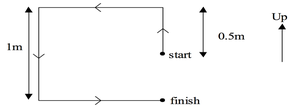
Work by gravity: The total work done by gravity depends only on the initial and final positions, not the path taken.
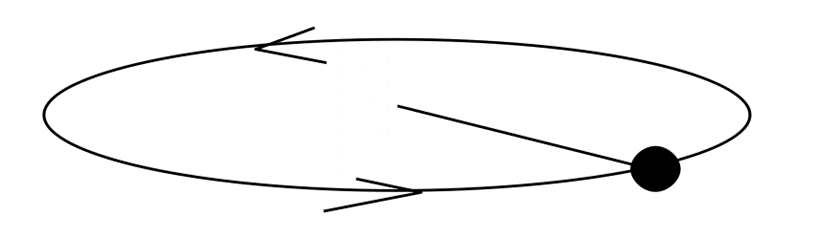
Example: Moving a mass around a loop and returning to the same point results in zero net work by gravity.
Work Done by Springs
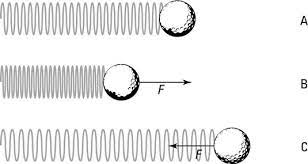
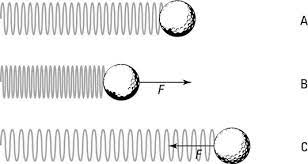
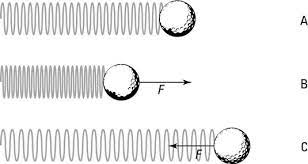
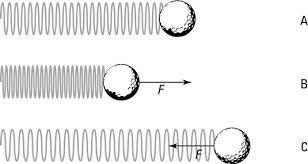
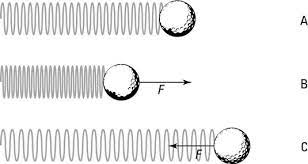
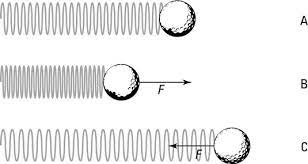
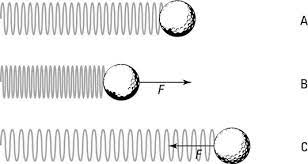
Spring forces are conservative. The force exerted by an ideal spring is proportional to its displacement from equilibrium.
Hooke's Law:
Spring constant (k): Measures stiffness; units are N/m.
Work required to stretch a spring:
Example: Compressing or stretching a spring stores potential energy.
Kinetic Energy and the Work-Energy Theorem
Kinetic Energy
Kinetic energy is the energy of motion. It is always positive or zero and is a scalar quantity.
Formula:
Example: If two cars have the same mass but different speeds, the faster car has much more kinetic energy (proportional to the square of speed).
Work-Energy Theorem
The work done by the net force on an object equals the change in its kinetic energy.
Formula:
Example: A catcher stopping a baseball does negative work, reducing the ball's kinetic energy.
Potential Energy and Conservation of Energy
Potential Energy
Potential energy is stored energy due to position or configuration. Common forms include gravitational and elastic (spring) potential energy.
Gravitational Potential Energy:
Elastic Potential Energy:
Potential energy can be negative depending on the choice of reference point.
Conservation of Energy
If only conservative forces act, the total mechanical energy (kinetic + potential) of a system remains constant.
Formula:
Example: A block sliding down a frictionless ramp converts potential energy to kinetic energy.
With friction: Some mechanical energy is converted to heat, so decreases.
Energy Graphs
Graphs of potential energy versus position help visualize energy changes in systems like roller coasters.
At turning points: Kinetic energy is zero, and all energy is potential.
At other points:
Power
Definition of Power
Power is the rate at which work is done or energy is transferred.
Formula:
Units: Watt (W), where
Example: Climbing stairs quickly requires more power than climbing slowly.
Momentum and Impulse
Definition of Momentum
Momentum is the product of mass and velocity and is a vector quantity.
Formula:
Units: kg·m/s
For a system: Total momentum is the sum of individual momenta.
Impulse
Impulse is the change in momentum resulting from a force applied over a time interval.
Formula:
Impulse is the area under the force vs. time curve.
Conservation of Momentum
Principle of Conservation
In an isolated system, the total momentum remains constant if no external forces act.
Internal forces cancel out due to Newton's Third Law.
Collisions: Momentum is conserved in all collisions, but kinetic energy is only conserved in elastic collisions.
Types of collisions:
Elastic: Both momentum and kinetic energy are conserved.
Inelastic: Momentum is conserved, but kinetic energy is not.
Perfectly inelastic: Objects stick together after collision.
Momentum in Two Dimensions
Momentum conservation applies in each direction independently. In 2D collisions, vector addition is used to analyze momentum before and after interaction.
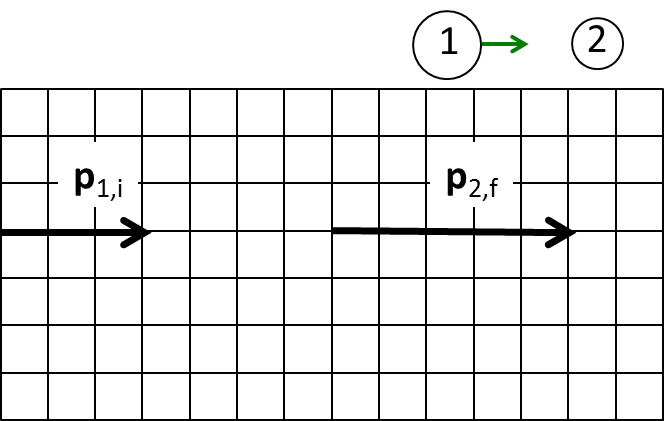
Example: Ball 1 strikes Ball 2; the final momentum components must satisfy conservation laws.
Summary Table: Types of Collisions
Type | Momentum Conserved? | Kinetic Energy Conserved? | Result |
|---|---|---|---|
Elastic | Yes | Yes | Objects bounce, no energy loss |
Inelastic | Yes | No | Objects may deform, some energy lost |
Perfectly Inelastic | Yes | No | Objects stick together, maximum energy loss |
Additional info: These notes expand on brief points from the original materials, providing full academic context, definitions, and examples for clarity and completeness.
