 Back
Work, Kinetic Energy, and Power: Physics with Calculus Study Notes
Study Guide - Smart Notes
 Tailored notes based on your materials, expanded with key definitions, examples, and context.
Work and Kinetic Energy
Energy and Its Conservation
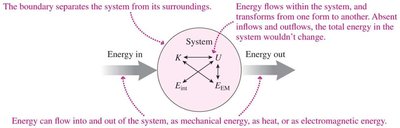
Energy is a fundamental concept in physics, representing the ability of a system to do work. Energy can be transferred or transformed between different forms, but it is always conserved in isolated systems. The main types of energy include kinetic energy, potential energy, internal energy, and electromagnetic energy.
Kinetic Energy: Energy of motion.
Potential Energy: Energy due to position or configuration.
Internal Energy: Energy from random molecular motion or configuration.
Electromagnetic Energy: Energy carried by electromagnetic waves.
System: A defined portion of the universe whose energy is being studied. The system boundary separates the system from its surroundings, allowing energy to flow in or out as mechanical, heat, or electromagnetic energy.
Work Done by a Constant Force
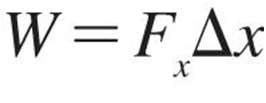
Work is a measure of energy transfer when a force acts upon an object causing displacement. For a constant force in one dimension, work is calculated as:
Formula:
SI Unit: Joule (J), where
Work: Positive, Negative, or Zero
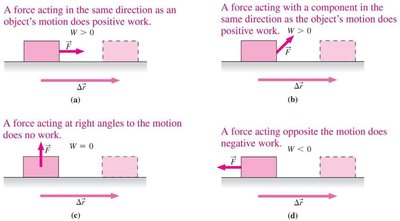
The sign of work depends on the direction of the force relative to the displacement:
Positive Work: Force in the same direction as motion ()
Negative Work: Force opposite to motion ()
Zero Work: Force perpendicular to motion ()
Example: Work Calculation
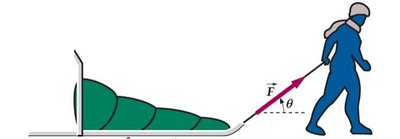
When pulling a sled with a force at an angle, only the component of force in the direction of motion contributes to work:
Example: Pulling a sled (80 kg) with a force of 180 N at 40° above the horizontal for 5.0 m.
Calculation:
Scalar Product (Dot Product) and Work
The scalar product (dot product) is used to calculate work when force and displacement are vectors:
Definition:
Component Form:
Work as Dot Product:

Net Work
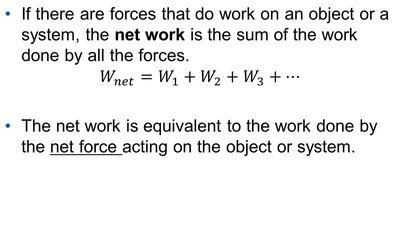
Net work is the sum of work done by all forces acting on an object or system:
Formula:
The net work is equivalent to the work done by the net force.
Work Done by Gravity and Kinetic Friction
Gravity and friction are common forces that do work on objects:
Work by Gravity: (positive if moving downward, negative if upward)
Work by Kinetic Friction: Always negative, as friction opposes motion.
Kinetic Energy and the Work-Energy Theorem
Kinetic energy is the energy of motion, given by:
Formula:
Kinetic energy is always positive.
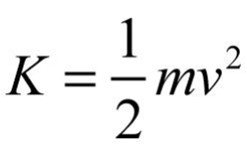
The work-energy theorem states that the net work done on an object equals the change in its kinetic energy:
Formula:
Work Done by a Variable Force
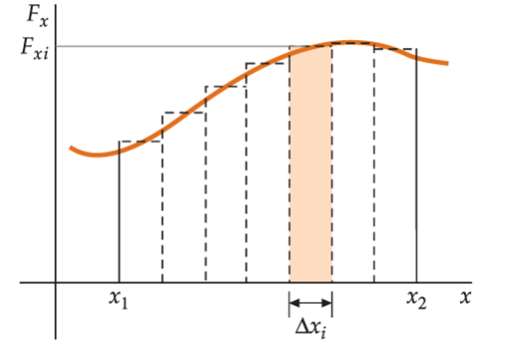
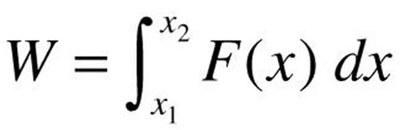
When force varies with position, work is calculated using integration. The area under the force-versus-position curve represents the work done:
Approximation:
Exact Calculation:
Work Done by a Spring
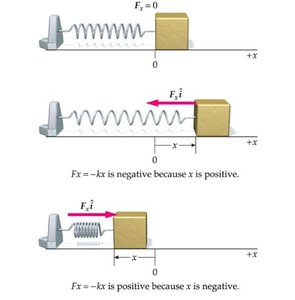
A spring exerts a force proportional to its displacement from equilibrium, described by Hooke's Law:
Spring Force:
Work Done by Spring:

Power
Power is the rate at which work is done or energy is transferred:
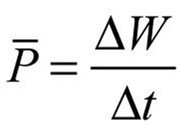
Average Power:
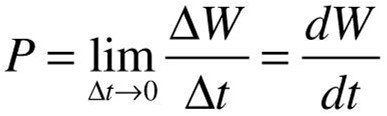
Instantaneous Power:
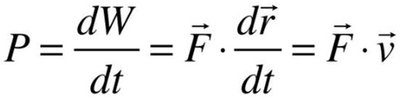
Power by Force:
Unit: Watt (W), where
Summary Table: Work and Energy Concepts
Concept | Formula | Key Points |
|---|---|---|
Work (constant force) | Energy transfer by force in direction of displacement | |
Work (variable force) | Area under force-position curve | |
Kinetic Energy | Energy of motion, always positive | |
Work-Energy Theorem | Net work equals change in kinetic energy | |
Power | Rate of doing work, measured in watts |
Example Applications: Calculating work done by forces in various scenarios, determining kinetic energy changes, and evaluating power requirements in mechanical systems.
Additional info: Integration and calculus are essential for analyzing work done by variable forces, and understanding energy conservation is foundational for all physics topics.
