 Back
Merchandising Operations: Principles of Accounting Study Guide
Study Guide - Smart Notes
 Tailored notes based on your materials, expanded with key definitions, examples, and context.
Merchandising Operations
Introduction to Merchandising Operations
Merchandising operations are a fundamental aspect of accounting, focusing on businesses that buy and sell goods rather than providing services. Merchandisers include both wholesalers and retailers, and their activities revolve around purchasing inventory, selling it to customers, and collecting cash.
Merchandiser: A business that sells merchandise (goods) to customers.
Merchandise Inventory: Goods purchased for resale to customers.
Wholesaler: Buys goods from manufacturers and sells them to retailers.
Retailer: Buys merchandise from manufacturers or wholesalers and sells to consumers.
Operating Cycle of a Merchandising Business
The operating cycle begins with the purchase of inventory, followed by selling the inventory to customers, and finally collecting cash from those customers.
Step 1: Purchase inventory from a supplier.
Step 2: Sell inventory to customers.
Step 3: Collect cash from customers.
Financial Statements Comparison
Merchandising companies report Sales Revenue and Cost of Goods Sold (COGS) on their income statements, unlike service companies that report only Service Revenue. Gross profit is calculated as Net Sales Revenue minus COGS, and operating expenses are reported separately. 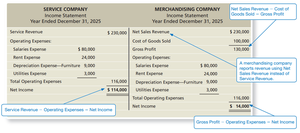
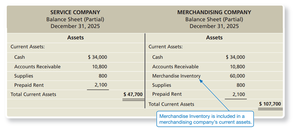
Merchandise Inventory Systems
Businesses must track the value of inventory on hand and sold. There are two main inventory accounting systems:
Periodic Inventory System: Requires a physical count of inventory to determine inventory on hand.
Perpetual Inventory System: Maintains a running computerized record of inventory.
Purchasing Merchandise Inventory (Perpetual System)
Recording Purchases
The purchase of merchandise inventory is recorded in the Merchandise Inventory account. Purchases may be made for cash or on account, and invoices are used to request payment. 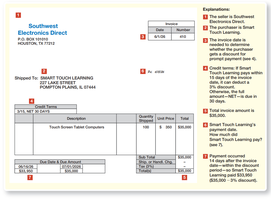
Purchase Returns and Allowances
Purchase Returns: Occur when purchasers return defective or unsuitable merchandise.
Purchase Allowances: Amounts granted to purchasers as incentives to keep goods that are not as ordered.

Purchase Discounts
Businesses offer discounts for early payment. Credit terms specify the discount, time period, and due date. For example, "3/15, Net 30 Days" means a 3% discount if paid within 15 days; otherwise, full payment is due in 30 days. 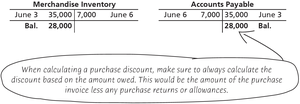


Transportation Costs
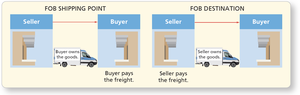
Shipping terms determine when ownership transfers and who pays freight.
FOB Shipping Point: Buyer owns goods after they leave seller's location; buyer pays freight.
FOB Destination: Buyer owns goods at delivery; seller pays freight.
Net Cost of Inventory Purchased
The net cost of inventory is calculated as:
Sales of Merchandise Inventory (Perpetual System)
Recording Sales
Sales transactions require two entries: one for sales revenue and cash received, and another for cost of goods sold and reduction of inventory. 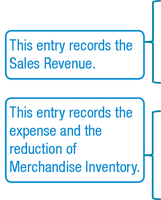

Sales on Account
Sales may be made on account, with or without discounts for early payment. 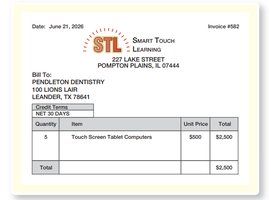
Sales Returns and Allowances
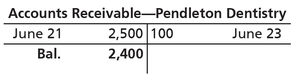
Sales Return: Customer returns goods, reducing future cash collected or requiring a refund.
Sales Allowance: Seller reduces amount owed without return of goods; a credit memo is issued.
Adjusting and Closing Accounts
Inventory Shrinkage
Inventory shrinkage is loss from theft, damage, or errors. Physical counts are used to adjust inventory balances. 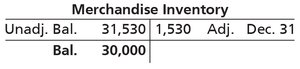
Financial Statements for Merchandisers
Income Statement Formats
Single-Step Income Statement: Groups all revenues and expenses together.
Multi-Step Income Statement: Contains subtotals for gross profit, operating income, and other income/expenses.
Gross Profit Percentage
Evaluating Business Performance
The gross profit percentage measures profitability above the cost of goods sold.
Formula:
Periodic Inventory System
Recording Purchases and Sales
Purchases are recorded in a Purchases account.
Freight In is recorded separately.
Inventory is updated at period end.
Net Cost of Inventory (Periodic System)
Calculated as Purchases minus returns, allowances, and discounts, plus Freight In.
Closing Entries (Periodic System)
Sales Revenue and other temporary accounts are closed via the Income Summary account.
Ending inventory is determined by physical count.
Net Method for Sales Discounts
Recording Sales at Net Amount
Sales are recorded at the net amount, less any sales discounts, in accordance with revenue recognition standards.
If payment is made within the discount period, the net amount is received.
If payment is made after the discount period, the discount lost is recorded.
Summary
Merchandising operations involve unique accounting procedures for inventory, sales, and financial statements. Understanding both perpetual and periodic inventory systems, as well as the impact of discounts, returns, and allowances, is essential for accurate financial reporting and performance evaluation in merchandising businesses.
