Back

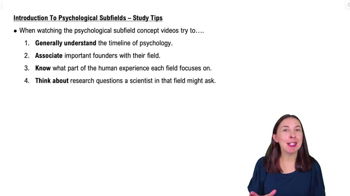
Introduction to Subfields definitions

Control buttons has been changed to "navigation" mode.
1/14
  • Developmental Psychology

    Focuses on changes across the lifespan, examining how people grow, learn, and adapt from infancy through old age.
  • Social Psychology

    Explores how individuals' thoughts, feelings, and behaviors are influenced by the presence and actions of others.
  • Cognitive Psychology

    Investigates mental processes such as perception, memory, reasoning, and problem-solving.
  • Behaviorism

    Emphasizes observable actions and the role of environmental factors in shaping behavior.
  • Cognitive Therapy

    Aims to address dysfunctional thinking patterns to improve emotional well-being and behavior.
  • Attachment

    Describes the emotional bond formed between individuals, often studied in the context of child-caregiver relationships.
  • Cognitive Dissonance

    Refers to the psychological discomfort experienced when holding conflicting beliefs or attitudes.
  • Founders

    Pioneers who established major psychological fields and shaped the discipline's direction.
  • Subfield

    A specialized area within psychology focusing on a distinct aspect of human experience or behavior.
  • Historical Context

    The background and circumstances that influenced the emergence and evolution of psychological fields.
  • Research Questions

    Central inquiries that guide scientific investigation within a particular psychological field.
  • Timeline

    A chronological overview highlighting major trends and developments in psychology's history.
  • Trends

    Patterns or shifts in focus that have occurred throughout the evolution of psychological science.
  • Human Experience

    The range of thoughts, emotions, and behaviors studied across various psychological subfields.