 Back
BackAttitudes, Cognitive Dissonance, and Persuasion Techniques in Social Psychology
Study Guide - Smart Notes
 Tailored notes based on your materials, expanded with key definitions, examples, and context.
Introduction to Social Psychology
What Motivates Our Social Behavior?
Social psychology is the scientific study of how other people influence our behavior, beliefs, emotions, and attitudes. Human beings are inherently social, and our need for belonging is a universal, biologically rooted drive to form social networks and connect with others. Social situations and the presence of others are powerful motivators for our actions.
Need for Belonging: Humans are attuned to signs of rejection and seek acceptance in groups.
Social Referencing: We look to others to determine appropriate behavior in ambiguous situations.
Self-Esteem: We want to feel good about ourselves in relation to others.
Evolutionary Basis: Being accepted and connected promoted survival and reproduction in ancestral environments.
Personality: Individual differences also shape our responses to social situations.

Types of Social Influence
Social influence varies in strength, from subtle to overt forms. The three primary types are:
Conformity: Adjusting behavior or thinking to align with group norms.
Compliance: Changing behavior in response to a direct request.
Obedience: Following orders from an authority figure.

Cognitive Dissonance and Attitude Change
Attitudes and Their Relationship to Behavior
An attitude is a belief reflecting how we evaluate an issue or person. The correlation between attitudes and behavior is moderate (typically around r = 0.3), meaning attitudes do not always predict behavior perfectly. When our attitudes do not match our behavior, or when our attitudes conflict with each other, psychological discomfort arises.
What is Cognitive Dissonance?
Cognitive dissonance is the psychological discomfort experienced when holding two or more inconsistent cognitions (thoughts, beliefs, or attitudes), or when behavior conflicts with attitudes. This discomfort motivates individuals to resolve the inconsistency.
Sources of Dissonance: Inconsistency between attitudes, or between attitudes and behavior.
Magnitude of Dissonance: Proportional to the importance and number of conflicting cognitions.
Resolution: People are motivated to reduce dissonance by changing attitudes, changing behavior, or rationalizing the inconsistency.
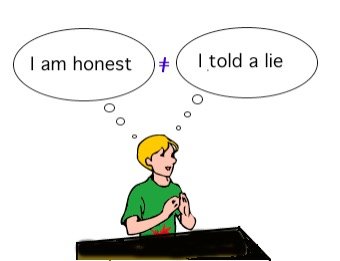
Festinger & Carlsmith (1959) Study
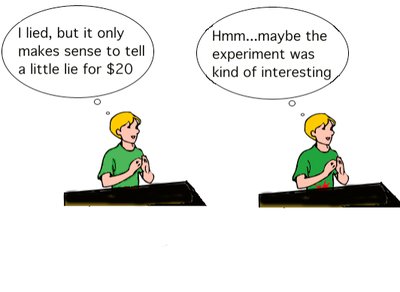
This classic experiment demonstrated cognitive dissonance in action. Participants performed boring tasks and were then asked to lie to another participant, saying the tasks were enjoyable. Some were paid $1 to lie, others $20, and a control group was not asked to lie. Later, participants rated how much they actually liked the tasks.
Results: Those paid $1 rated the tasks as more enjoyable than those paid $20 or the control group.
Interpretation: $1 was insufficient justification for lying, so participants changed their attitudes to reduce dissonance. $20 provided enough external justification, so attitudes did not change.
Resolving Cognitive Dissonance
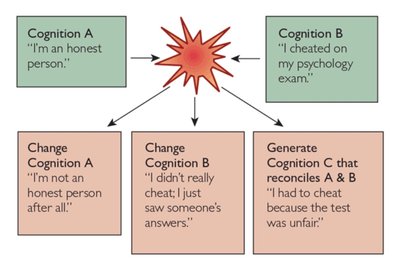
There are several strategies for reducing cognitive dissonance:
Change Cognition A: Alter one of the conflicting beliefs.
Change Cognition B: Alter the other conflicting belief.
Add Cognition C: Introduce a new cognition that reconciles the conflict.
Effort Justification and Other Examples
Effort justification is a form of cognitive dissonance where individuals come to value outcomes more highly if they have put significant effort into achieving them, especially if the experience was unpleasant.
Examples: Voters rationalizing their choices, students justifying their college selection, and individuals valuing group membership after difficult initiations (e.g., boot camp, fraternity/sorority initiations).
Key Principle: "We come to love the things we suffer for."



Compliance Techniques
What is Compliance?
Compliance refers to a change in behavior or attitude as a result of a request from another person. Several techniques are used to increase compliance, often by leveraging social norms or psychological mechanisms.
Foot-in-the-Door Technique
This technique involves making a small request that is likely to be accepted, followed by a larger request. Compliance with the small request increases the likelihood of compliance with the larger one.
Example: First asking someone to put a small sign in their window, then later asking them to display a large, ugly sign on their lawn.
Why it Works: People want to appear consistent with their previous behavior.
Low-Balling Technique
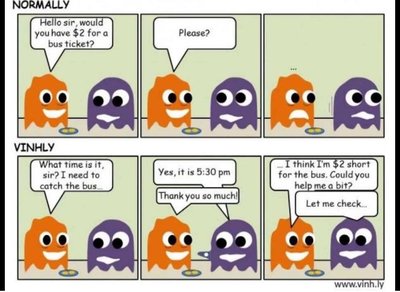
Low-balling involves getting a person to commit to a deal and then increasing the cost or changing the terms. People often still comply due to their initial commitment and the desire to avoid cognitive dissonance.
Example: Agreeing to buy a car at a certain price, then being told additional costs have been added.
Why it Works: Commitment creates psychological pressure to follow through, even when the deal changes.

Pregiving Technique
Pregiving involves giving someone a small gift or favor before making a request. The recipient feels obligated to reciprocate due to the norm of reciprocity.
Example: Giving a participant a soda before asking them to buy a raffle ticket.
Why it Works: Social norms dictate that favors should be returned.

Door-in-the-Face Technique
This technique involves making a large request that is likely to be refused, followed by a smaller, more reasonable request. The contrast makes the second request seem more acceptable, increasing compliance.
Example: First asking someone to volunteer two hours a week for two years, then asking them to take troubled teens to the zoo for one day.
Why it Works: The person feels a sense of concession and is more likely to agree to the smaller request.
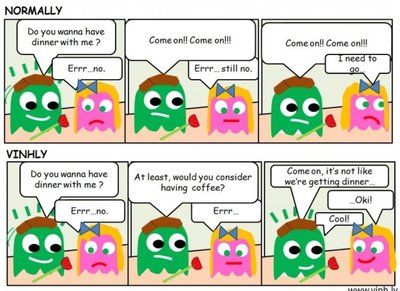
Summary Table: Compliance Techniques
Technique | How It Works | Example |
|---|---|---|
Foot-in-the-Door | Start with a small request, then follow with a larger one | Small sign, then large sign request |
Low-Balling | Get commitment, then increase the cost | Car sales with added fees |
Pregiving | Give a small gift before making a request | Give a soda, then ask to buy a ticket |
Door-in-the-Face | Make a large request, then a smaller one | Ask for major commitment, then a minor one |
Additional info: These compliance techniques are widely used in everyday life, marketing, and negotiations. Understanding them can help individuals recognize when they are being influenced and make more informed decisions.
