 Back
Autism Spectrum Disorder and Childhood-Onset Schizophrenia: Key Concepts and Clinical Features
Study Guide - Smart Notes
 Tailored notes based on your materials, expanded with key definitions, examples, and context.
Autism Spectrum Disorder (ASD)
Definition and Core Features
Autism Spectrum Disorder (ASD) is a biologically-based, lifelong neurodevelopmental disorder that typically emerges in the first few years of life. It is characterized by persistent deficits in social communication and interaction, as well as restricted, repetitive patterns of behavior, interests, or activities.
Impairments in social interaction: Difficulties in social-emotional reciprocity, nonverbal communicative behaviors, and developing, maintaining, and understanding relationships.
Impairments in communication: Delays or deficits in verbal and nonverbal communication, including limited use of gestures and language.
Restricted, repetitive behaviors: Stereotyped movements, insistence on sameness, and highly restricted interests.
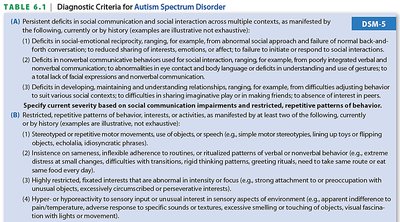
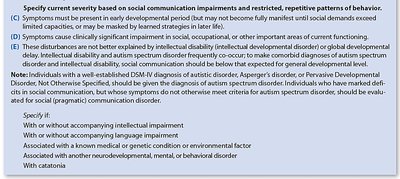
DSM-5 Diagnostic Criteria for ASD
The DSM-5 outlines specific criteria for diagnosing ASD, emphasizing persistent deficits in social communication and interaction, and restricted, repetitive patterns of behavior. Severity is specified based on the level of support required.
Criterion A: Persistent deficits in social communication and social interaction across multiple contexts.
Criterion B: Restricted, repetitive patterns of behavior, interests, or activities.
Criterion C: Symptoms must be present in the early developmental period.
Criterion D: Symptoms cause clinically significant impairment in social, occupational, or other important areas of functioning.
Criterion E: Disturbances are not better explained by intellectual disability or global developmental delay.
Autism Across the Spectrum
ASD is a spectrum disorder, meaning that individuals can vary widely in their abilities and challenges. Three main factors contribute to this variability:
Level of intellectual ability (from profound disability to above-average intelligence)
Severity of language problems
Changes in behavior with age
Social Interaction Impairments
Children with ASD often show deficits in social and emotional reciprocity, unusual nonverbal behaviors, limited social expressiveness, and difficulties with joint attention and imitation.
Difficulty sharing focus of attention or engaging in make-believe play
Atypical processing of faces and facial expressions
Communication Impairments
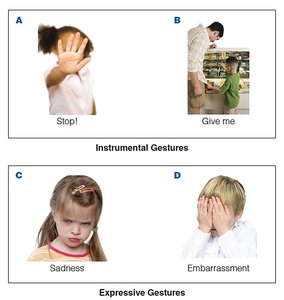
Communication difficulties are a hallmark of ASD. Early signs include inconsistent use of preverbal communication and a preference for instrumental (protoimperative) gestures over expressive (protodeclarative) gestures.
About 50% of children with ASD do not develop useful language
Qualitative language impairments: pronoun reversals, echolalia, perseverative speech, and pragmatic deficits
Restricted and Repetitive Behaviors and Interests
ASD is associated with stereotyped body movements, insistence on sameness, and self-stimulatory behaviors. These may serve as a way to regulate sensory input or emotions.
Examples: hand-flapping, lining up toys, repetitive speech
Theories suggest these behaviors may provide sensory reinforcement or help block out overwhelming stimuli
Associated Features
Intellectual Deficits/Strengths: About 70% have co-occurring intellectual impairment; 5% are savants with remarkable talents.
Sensory and Perceptual Impairments: Oversensitivity or undersensitivity to sensory stimuli is common.
Cognitive and Motivational Deficits
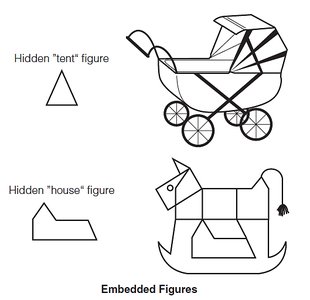
Children with ASD often have deficits in processing social-emotional information, including difficulties with theory of mind (ToM), which is the ability to understand others' mental states. Executive functioning and central coherence (the ability to see the big picture) are also often impaired.
May excel at tasks requiring focus on details but struggle with broader context
Medical Conditions and Physical Characteristics
About 10% have coexisting medical conditions (e.g., seizures, motor/sensory impairments)
Sleep disturbances (65%) and gastrointestinal symptoms (50%) are common
Some have abnormal head growth patterns
Accompanying Disorders and Symptoms
Common comorbidities: intellectual disability, epilepsy, ADHD, conduct problems, anxiety, mood disorders
Some may engage in self-injurious behaviors (SIB)
Prevalence and Course
Worldwide prevalence: ~1% (100 per 10,000 children)
Occurs across all social classes and cultures
Diagnosis typically made between ages 2-3; symptoms are generally stable over time
Course and Outcome
Children with ASD may show gradual improvements with age, but many continue to experience significant challenges. Symptoms may worsen during adolescence, with the development of complex rituals.
Causes of ASD
Problems in Early Development
Increased health problems during pregnancy, birth, or shortly after
Risk factors: parental age, in vitro fertilization, maternal drug use
Genetic Influences
Chromosomal and gene disorders (e.g., Fragile-X, tuberous sclerosis)
High heritability: 70-90% concordance in identical twins
Brain Abnormalities
Abnormal connectivity and communication across brain networks
Multiple brain regions involved
Treatment of ASD
There is no known cure for ASD, but early and intensive intervention can improve outcomes. Treatment focuses on minimizing core symptoms, maximizing independence, and supporting families.
Behavioral interventions: discrete trial training, incidental teaching
Early intervention: intensive, structured programs with family involvement
Medications: may be used to manage specific symptoms (e.g., antidepressants, antipsychotics)
Childhood-Onset Schizophrenia (COS)
Definition and Core Features
Childhood-Onset Schizophrenia (COS) is a rare and severe neurodevelopmental disorder characterized by abnormal mental functions and disturbed behavior, including psychotic symptoms such as delusions and hallucinations.
Gradual onset, typically after age 7
Profound impact on social and academic functioning
DSM-5 Symptoms
Positive symptoms: Delusions, hallucinations (auditory most common), thought disorder
Negative symptoms: Slowed thinking, speech, movement, emotional apathy, lack of motivation
Precursors and Comorbidities
History of behavioral, social, and psychiatric disturbances before psychosis
Common comorbidities: mood disorders, oppositional defiant disorder (ODD), conduct disorder (CD)
Prevalence and Course
Extremely rare in children under 12 (less than 1 per 10,000)
More common in boys before adolescence; gender differences disappear later
Causes of COS
Neurodevelopmental model: Defective neural circuitry increases vulnerability to stress
Biological factors: Strong genetic contribution, CNS dysfunction, enlarged ventricles, gray matter loss
Environmental factors: Family stress and nongenetic influences interact with genetic susceptibility
Treatment of COS
COS is a chronic disorder with a poor long-term prognosis. Treatment typically involves antipsychotic medications, psychotherapy, and social/educational support. Medications help control psychotic symptoms but may have serious side effects.
