 Back
BackClassical Conditioning: Principles and Applications (Ch. 6 Learning)
Study Guide - Smart Notes
 Tailored notes based on your materials, expanded with key definitions, examples, and context.
Learning and Conditioning
Definitions and Overview
Learning is a relatively enduring change in behavior, thought, or knowledge as a result of past experience. Conditioning is a form of learning that involves making associations between environmental stimuli and an organism’s responses. Classical conditioning is the process of pairing a neutral stimulus with a bodily response until the neutral stimulus is able to elicit the bodily response independently.
Learning: A process resulting in a relatively permanent change in behavior or knowledge due to experience.
Conditioning: Learning associations between environmental events and behavioral responses.
Classical Conditioning: A type of associative learning where a neutral stimulus becomes capable of eliciting a response after being paired with a stimulus that naturally brings about that response.
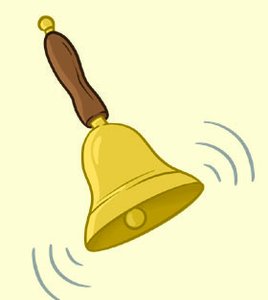
Example: Pavlov’s dogs learned to salivate at the sound of a bell after it was repeatedly paired with food.

Classical Conditioning: Pavlov’s Discovery
Historical Context and Key Observations
Ivan Pavlov, a Russian physiologist, discovered classical conditioning in the 1890s while studying digestion in dogs. He noticed that dogs would salivate in anticipation of food when exposed to certain environmental cues, such as the sight of the lab assistant, even before the food was presented. This observation led to the realization that dogs were associating environmental signals with food, causing a learned response.
Key Point: Pavlov’s research shifted focus from digestion to the study of learned associations.
Example: Dogs salivating at the sight of the lab assistant (a cue associated with food).
Core Concepts in Classical Conditioning
Key Terms and Their Roles
Classical conditioning involves several key components:
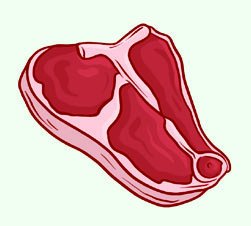
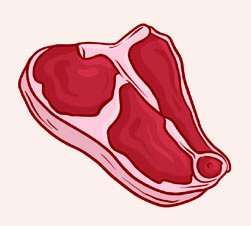
Unconditioned Stimulus (US): A stimulus that naturally and automatically triggers a reflexive response (e.g., food).
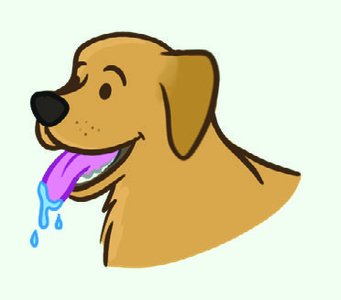
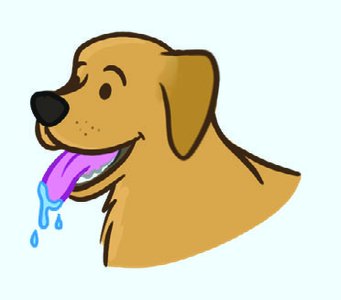
Unconditioned Response (UR): The unlearned, naturally occurring response to the US (e.g., salivation to food).
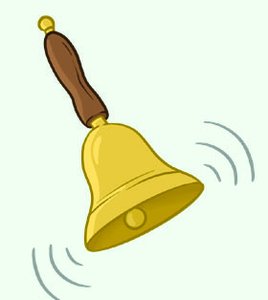
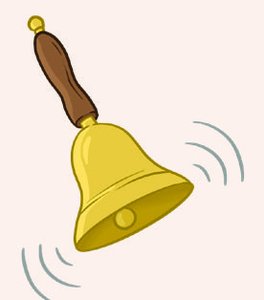
Neutral Stimulus (NS): A stimulus that does not naturally elicit the response of interest (e.g., a bell before conditioning).
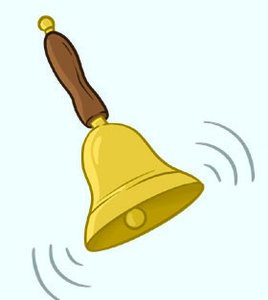
Conditioned Stimulus (CS): A previously neutral stimulus that, after association with the US, triggers a conditioned response (e.g., bell after conditioning).
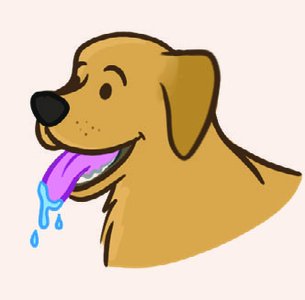
Conditioned Response (CR): The learned response to the previously neutral stimulus (e.g., salivation to the bell).

Phases of Classical Conditioning
Before Conditioning: US elicits UR; NS elicits no response.
During Conditioning (Acquisition): NS is paired with US repeatedly; learning occurs.
After Conditioning: NS becomes CS and elicits CR, which is similar or identical to UR.
Principles and Extensions of Classical Conditioning
Acquisition, Extinction, and Spontaneous Recovery
Acquisition is the initial stage of learning when a response is first established. Extinction occurs when the CS is repeatedly presented without the US, leading to a decrease in the CR. Spontaneous recovery is the reappearance of a weakened CR after a pause following extinction.
Acquisition: The phase where the NS and US are paired, and the NS becomes a CS.
Extinction: The diminishing of a CR when the CS is presented without the US.
Spontaneous Recovery: The sudden reappearance of a CR after a rest period post-extinction.
Stimulus Generalization and Discrimination
Stimulus generalization is the tendency for stimuli similar to the CS to elicit the CR. Stimulus discrimination is the learned ability to distinguish between a CS and other similar stimuli that do not signal a US.
Stimulus Generalization: Responding to stimuli that are similar to the CS.
Stimulus Discrimination: Learning to respond only to the specific CS and not to similar stimuli.
Relationship: As discrimination increases, generalization decreases, and vice versa.
Second-Order (Higher-Order) Conditioning
Second-order conditioning occurs when a new neutral stimulus is paired with an existing CS, eventually eliciting the CR without the original US. This demonstrates that conditioned responses can be extended to new stimuli.
Procedure: Pair a new NS with an established CS until the new NS elicits the CR.
Example: A dog learns to salivate to a light after the light is paired with a bell (CS) that was previously paired with food (US).



Common Misconceptions in Classical Conditioning
Clarifications
Misconception 1: Classical conditioning is a simple association. Correction: The CS is learned as a signal that predicts the US.
Misconception 2: During acquisition, the NS and US are presented simultaneously. Correction: For stronger conditioning, the NS should precede the US.
Summary Table: Key Terms in Classical Conditioning
Term | Definition | Example (Pavlov’s Experiment) |
|---|---|---|
Unconditioned Stimulus (US) | Stimulus that naturally elicits a response | Food |
Unconditioned Response (UR) | Natural, reflexive response to the US | Salivation to food |
Neutral Stimulus (NS) | Stimulus that does not elicit the response before conditioning | Bell (before pairing) |
Conditioned Stimulus (CS) | Previously neutral stimulus that elicits the response after conditioning | Bell (after pairing) |
Conditioned Response (CR) | Learned response to the CS | Salivation to bell |
Key Equations and Relationships
Acquisition: (Repeated pairings)
After Conditioning:
Extinction: (after repeated CS alone)
Applications and Examples
Example 1: A dog salivates when it hears a bell because the bell has been paired with food.
Example 2: A cat meows when it hears a can opener, associating the sound with being fed.
Example 3: A person feels anxious when entering a dentist’s office after previous painful experiences (classical conditioning of fear).
