Back
Motivation and Emotion: Study Notes for Introduction to Psychology
Study Guide - Smart Notes
 Tailored notes based on your materials, expanded with key definitions, examples, and context.
Motivation and Emotion
Overview
This chapter explores the psychological and biological foundations of motivation and emotion, focusing on hunger, eating, sex, social and achievement motivation, and emotional processes. Understanding these concepts is essential for analyzing human behavior and mental processes.
Motivation
Homeostasis and Drives
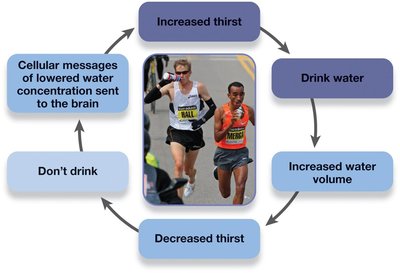
Homeostasis refers to the body's process of maintaining stable internal states, such as thirst and hunger. When internal balance is disrupted, the body generates drives that motivate behavior to restore equilibrium.
Homeostasis: The regulation of internal conditions (e.g., fluid levels, temperature).
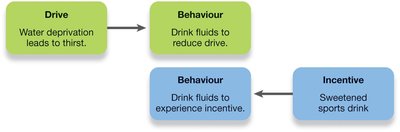
Drive: An internal state that motivates an organism to satisfy a need (e.g., thirst, hunger).
Incentive: External stimuli that motivate behavior (e.g., sweetened drinks).
Example: When fluid levels are low, the body signals thirst, motivating drinking behavior. Once fluid levels are restored, the drive decreases.
Hunger and Eating
Physiological Aspects of Hunger
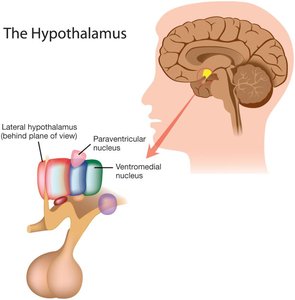
The hypothalamus is a key brain region regulating hunger. Different areas of the hypothalamus signal when to start and stop eating.
Lateral hypothalamus: Signals when it is time to eat.
Ventromedial and paraventricular nuclei: Signal when to stop eating.
Food and Reward
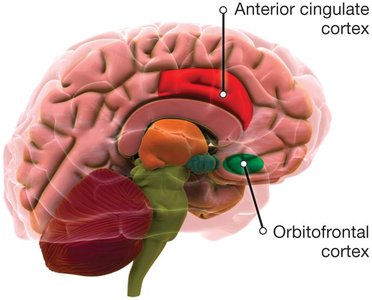
Eating activates reward centers in the brain, such as the orbitofrontal cortex and the cingulate cortex. These regions link taste and texture with pleasure, influencing motivation to eat.
Cingulate cortex: Involved in emotional processing.
Orbitofrontal cortex: Links food taste and texture with reward.
Cognitive and Social Influences on Eating
Eating behavior is shaped by cognitive biases and social context.
Unit bias: Tendency to consume a single unit of food regardless of size (e.g., pop bottle sizes).
Social facilitation: Eating more in the presence of others.
Impression management: Eating less to manage social impressions.
Modelling: Eating similar amounts as others present.
Disorders of Eating
Common eating disorders include obesity, anorexia nervosa, and bulimia nervosa. These disorders have significant health and psychological impacts.
Obesity: Characterized by excessive body fat; influenced by genetic, environmental, and behavioral factors.
Anorexia nervosa: Extreme restriction of food intake, leading to significant weight loss.
Bulimia nervosa: Cycles of binge eating followed by compensatory behaviors (e.g., vomiting).
Disorder | Lifetime Prevalence (Women) | Lifetime Prevalence (Men) | Average Duration | % Receiving Treatment |
|---|---|---|---|---|
Anorexia | 0.9% | 0.3% | 1.7 years | 34% |
Bulimia | 1.5% | 0.5% | 8 years | 43% |
Media and Body Image
Media depictions of beauty can negatively affect body image, contributing to eating disorders and dissatisfaction. Scientific research evaluates these effects and their relevance to health and well-being.
Sexual Motivation and Behavior
Sexual Selection and Evolution
Sexual motivation is influenced by evolutionary processes, including intrasexual and intersexual selection.
Intrasexual selection: Competition within the same sex for mates.
Intersexual selection: Preferences of one sex for certain traits in mates.
Parental Investment Theory
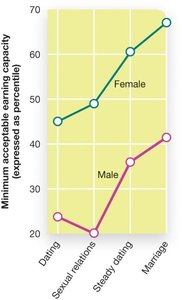
Parental investment theory explains sex differences in mate preferences. Females typically value economic stability more than males, especially for long-term relationships, due to their limited reproductive capacity.
Survey Studies of Sexual Motivation
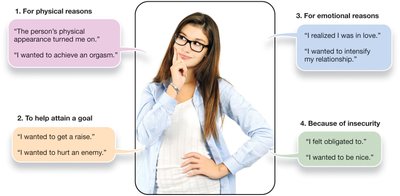
People report diverse reasons for engaging in sexual activity, including physical attraction, emotional connection, goal attainment, and insecurity.
Human Sexual Response
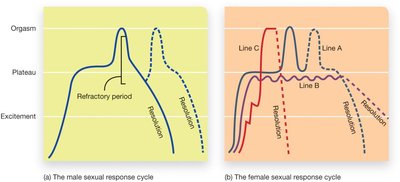
Physiological studies reveal differences in sexual response cycles between men and women. Men typically experience a single orgasm followed by a refractory period, while women may have multiple orgasms or varied response profiles.
Cultural Influences on Sexual Behavior
Gender roles: Societal expectations for behavior based on gender.
Sexual scripts: Socially learned guidelines for sexual behavior.
Sex guilt: Feelings of guilt associated with sexual activity, often shaped by culture.
Sex and Technology
Technology has changed sexual behavior, including cybersex and sexting. While digital activity reduces risks like STDs and pregnancy, it introduces new risks such as privacy concerns.
Social and Achievement Motivation
Maslow's Hierarchy of Needs
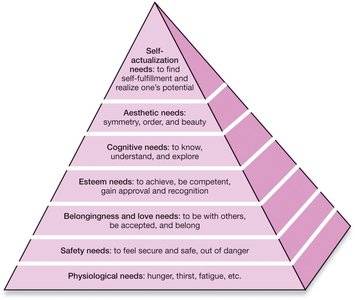
Maslow proposed a hierarchy of human needs, with basic physiological needs at the base and self-actualization at the top. Belongingness and love needs are central to social motivation.
Belongingness and Love
The need to belong is fundamental for survival and health. Love can be passionate or companionate, and is associated with specific brain responses.
Passionate love: Intense emotional and physical attraction.
Companionate love: Deep affection and attachment.
Achievement Motivation
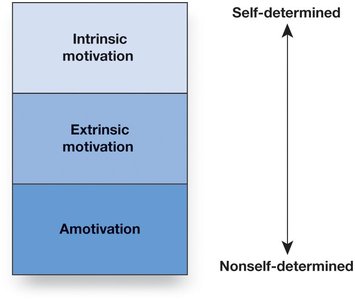
Achievement motivation drives individuals to succeed. Goals can be approached (seeking success) or avoided (avoiding failure). Self-determination theory distinguishes between intrinsic, extrinsic, and amotivational states.
Intrinsic motivation: Doing something for its own sake.
Extrinsic motivation: Doing something for external rewards.
Amotivation: Lack of motivation.
Cultural Differences in Motivation
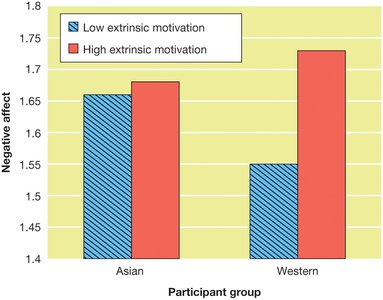
Cultural identification influences the emotional impact of extrinsic motivation. For example, Asian Canadians identifying with Western culture experience more negative emotions with high extrinsic motivation.
Emotion
Physiology of Emotion
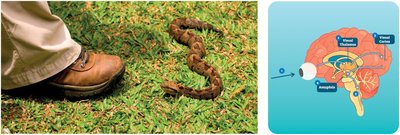
Emotions such as anger involve physiological responses like increased heart rate and muscle tension. The initial response to emotional stimuli is rapid and automatic.
Autonomic Response: Fight or Flight
The autonomic nervous system (ANS) mediates emotional responses. The sympathetic division prepares the body for action (fight or flight), while the parasympathetic division restores normal conditions.
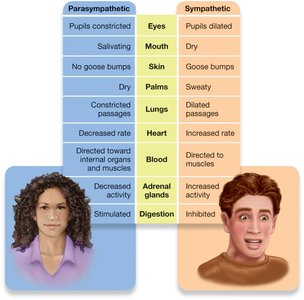
Parasympathetic | Sympathetic |
|---|---|
Pupils constricted | Pupils dilated |
Salivating | Dry mouth |
Skin dry | Goose bumps |
Heart rate decreased | Heart rate increased |
Digestion stimulated | Digestion inhibited |
Theories of Emotion
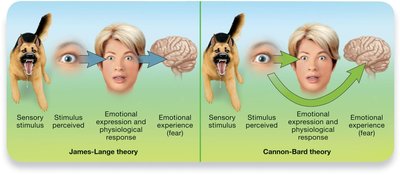
Competing theories explain the sequence of emotional experience:
James-Lange theory: Emotion follows physiological response.
Cannon-Bard theory: Emotion and physiological response occur simultaneously.
Facial Feedback Hypothesis
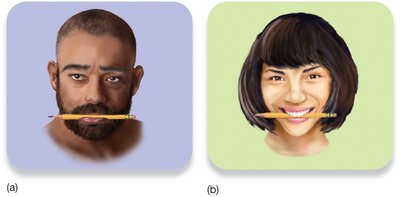
Facial expressions can influence emotional experience. For example, smiling can make people feel happier, supporting the facial feedback hypothesis.
Expressing Emotions
Polygraph: Measures physiological responses to detect deception.
Microexpressions: Brief, involuntary facial expressions revealing true emotions.
Emotional faces: Expressions are often cross-cultural.
Body language: Nonverbal cues conveying emotion.
Culture, Emotion, and Display Rules
Emotional dialects and display rules vary across cultures. Display rules are learned norms for expressing emotions (e.g., "never let them see you sweat").
Culture, Context, and Emotion
Cultural context influences how emotions are perceived and expressed. For example, the interpretation of facial expressions can depend on the surrounding social context.