 Back
BackPsychological Disorders: Classification, Personality, and Dissociative Disorders
Study Guide - Smart Notes
 Tailored notes based on your materials, expanded with key definitions, examples, and context.
Defining & Classifying Psychological Disorders
Abnormal Psychology and Historical Approaches
Abnormal psychology is the scientific study of mental disorders, focusing on patterns of behavior, emotion, or thought that are maladaptive, cause distress, impair daily functioning, or increase the risk of harm. Historically, societies have used various approaches to understand and treat mental illness, ranging from supernatural explanations to early medical interventions.
Trepanation: An ancient practice involving drilling holes in the skull to release 'evil spirits' believed to cause mental illness.
Asylums: Institutions established from the 1400s to house individuals with mental disorders, often under poor conditions.
Mania & Melancholia: Early terms used to describe states of excessive excitement or deep sadness.
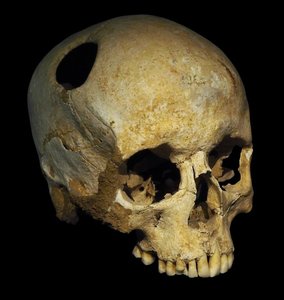
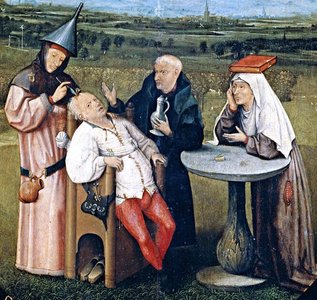
The Medical Model and Classification Systems
The medical model treats psychological disorders as illnesses with specific symptoms, causes, and outcomes, similar to physical diseases. Emil Kraepelin was influential in classifying mental disorders and distinguishing psychosis from other conditions. Early classification systems, such as the Statistical Manual for the Use of Institutions for the Insane, laid the groundwork for modern diagnostic manuals.
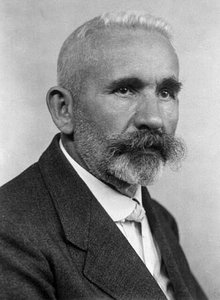
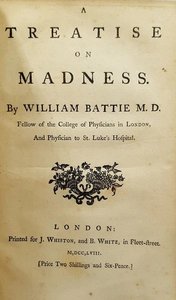
The Diagnostic and Statistical Manual of Mental Disorders (DSM)
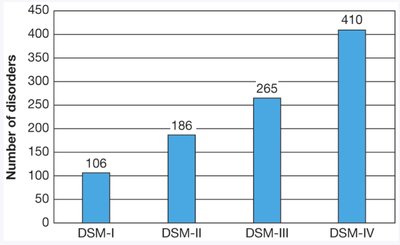
The DSM is the primary classification system for psychological disorders in North America. The current edition is DSM-5-TR, which organizes disorders by symptom clusters and recognizes severity as a spectrum. The number of recognized disorders has increased over time, reflecting advances in research and understanding.
Prolonged Grief Disorder: A new diagnosis in DSM-5-TR.
Autism Spectrum Disorder (ASD): Replaces previous subtypes like Asperger’s syndrome, emphasizing a spectrum of severity.
Problems with Classification: Challenges include subjective clinician bias, reliance on self-report, and the risk of stigma from diagnostic labels.
Applications of Diagnoses
Classrooms and ADHD
Diagnoses such as Attention Deficit/Hyperactivity Disorder (ADHD) are increasingly applied in educational settings. ADHD is characterized by inappropriate levels of hyperactivity, impulsivity, and difficulty maintaining attention. There is ongoing debate about rising diagnosis rates and the influence of social media on symptom presentation, especially in adults and women.
Courtrooms and Legal Implications
Psychological diagnoses are also used in legal contexts, such as the "not guilty by reason of insanity" defense (M’Naghten rule), where mental disorder can affect criminal responsibility.
Personality & Dissociative Disorders
Personality Disorders: Definition and Clusters
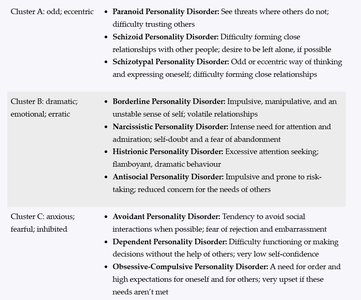
Personality disorders are enduring patterns of behavior, cognition, and inner experience that deviate markedly from cultural expectations, are inflexible, and lead to distress or impairment. They are grouped into three clusters based on descriptive similarities.
Cluster A: Odd or Eccentric Disorders
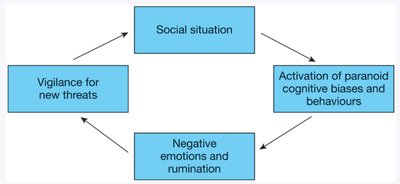
Paranoid Personality Disorder: Persistent suspicion and mistrust of others, often interpreting benign actions as threatening. Associated with increased vigilance for threats.
Schizoid Personality Disorder: Social detachment, lack of desire for close relationships, and limited emotional expression (anhedonia).
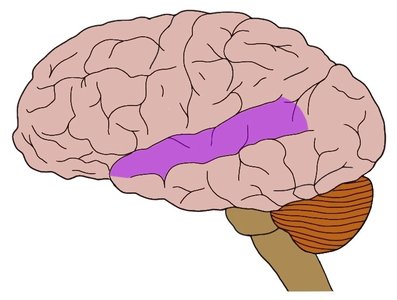
Schizotypal Personality Disorder: Discomfort with close relationships, eccentric thoughts, and behaviors. Linked to abnormalities in the superior temporal gyrus.
Cluster B: Dramatic, Emotional, or Erratic Disorders
Borderline Personality Disorder (BPD): Instability in mood, self-image, and relationships; impulsivity; intense emotional swings. Associated with medial frontal lobe function.
Narcissistic Personality Disorder (NPD): Grandiosity, need for admiration, and sensitivity to criticism; underlying self-doubt and fear of abandonment. Linked to frontal lobe circuits.
Histrionic Personality Disorder: Excessive emotionality and attention-seeking behavior; dramatic and theatrical presentation.
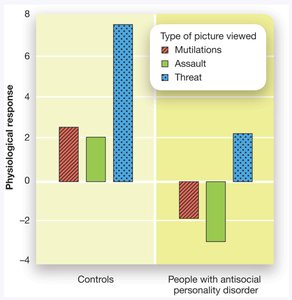
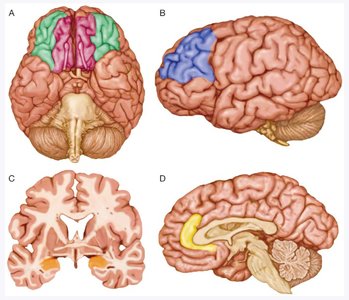
Antisocial Personality Disorder (APD): Disregard for others' rights, lack of empathy, impulsivity, and often criminal behavior. Resistant to treatment and associated with reduced frontal cortex activation. Childhood conduct disorder is a precursor.
Cluster C: Anxious or Fearful Disorders
Avoidant Personality Disorder: Social inhibition, feelings of inadequacy, and hypersensitivity to negative evaluation.
Dependent Personality Disorder: Excessive need to be cared for, submissive and clinging behavior, and fear of separation.
Obsessive-Compulsive Personality Disorder (OCPD): Preoccupation with orderliness, perfectionism, and control at the expense of flexibility and efficiency. Distinct from Obsessive-Compulsive Disorder (OCD), which involves intrusive thoughts and ritualistic behaviors.
Dissociative Disorders
Dissociative Identity Disorder (DID)
Dissociation refers to a disconnection between thoughts, identity, consciousness, and memory. Dissociative disorders involve disruptions in these areas, with Dissociative Identity Disorder (DID) being the most well-known. DID is characterized by the presence of two or more distinct identities or personality states that control an individual's behavior at different times. It is often linked to severe childhood trauma and is a controversial diagnosis due to questions about its validity and prevalence.
Symptoms: Gaps in memory, feeling detached from oneself, and experiencing different identities as separate from each other.
Prevalence: Estimated at 2-5% of the population.
Controversy: Debate exists regarding the influence of cultural factors and media portrayals on diagnosis rates.

Additional info: DID was previously known as Multiple Personality Disorder. Treatment often involves psychotherapy aimed at integrating identities and addressing trauma.
