Collective behavior is the activity of a large number of people that is typically spontaneous, transitory, and occurs outside formal social institutions.
How do sociologists define a crowd?
A crowd is defined as a large number of people in a shared location.
What distinguishes collective behavior from actions within social institutions?
Collective behavior exists outside formal social institutions and is usually more spontaneous and temporary.
What is a casual crowd?
A casual crowd consists of people who are in the same place at the same time with little to no social interaction, such as people at a park.
What characterizes a conventional crowd?
A conventional crowd gathers around a scheduled event, requires planning to attend, but typically involves little social interaction.
What is an expressive crowd?
An expressive crowd gathers around emotional events to share in the emotion, such as at a sporting event, wedding, or funeral.
How does an acting crowd differ from an expressive crowd?
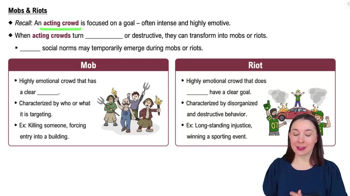
An acting crowd is focused on a shared goal, while an expressive crowd gathers mainly to experience and express emotion.
What can acting crowds sometimes escalate into?
Acting crowds can escalate into mobs or riots if their behavior becomes more intense or violent.
What is a mob in the context of collective behavior?
A mob is a highly emotional, goal-oriented crowd that often pursues its goal with destructive or violent intent.
How is a riot different from a mob?
A riot is a highly emotional crowd without a clear goal, characterized by disorganized and destructive behavior.
What temporary changes in social norms can occur during mobs and riots?
During mobs and riots, new social norms may emerge temporarily, such as harming people or destroying property, which are not typical in everyday life.
Can riots have a purpose, and how do they usually start?
Riots can have a purpose and often start as acting crowds or mobs with a clear goal, but become disorganized over time.
What emotional contexts are mobs and riots most often associated with?
Mobs and riots usually arise in negative emotional contexts, but can also occur in positive situations like celebrations.
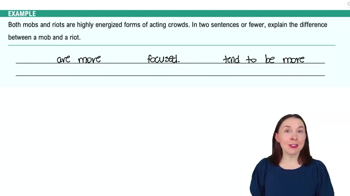
What is the main behavioral difference between mobs and riots?
Mobs are more goal-focused, while riots are more disorganized in their behavior.
How can collective behavior contribute to social change?
Collective behavior can bring about social change by temporarily shifting social norms and highlighting group dynamics and collective action.
 Back
Back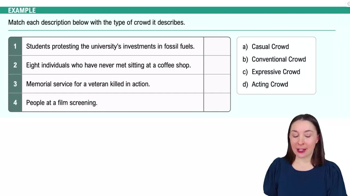
 00:56
00:56