 Back
BackAsian Pacific Americans: Diversity, Experiences, and Social Realities
Study Guide - Smart Notes
 Tailored notes based on your materials, expanded with key definitions, examples, and context.
Asian Pacific Americans: An Array of Nationalities
Overview of Asian Pacific Americans
Asian Pacific Americans (APAs) represent a highly diverse set of communities in the United States, encompassing people from East Asia, South Asia, Southeast Asia, and the Pacific Islands. Despite being grouped together, these communities differ significantly in language, religion, and historical background.
Diversity: APAs do not share a common language, religion, or alphabet, and their histories often include centuries of conflict.
Population: In 2021, there were approximately 24 million APAs in the United States.
Identity: Many APAs identify more strongly with their country of origin than with the broader 'Asian American' label.
Political Activity: APAs have a history of labor organizing, campus activism, and advocacy for immigration rights, challenging stereotypes of passivity.
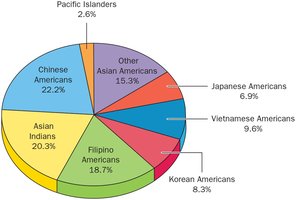
Figure: Distribution of major Asian Pacific American groups in the U.S. (2021). Chinese Americans are the largest group, followed by Asian Indians, Filipino Americans, Vietnamese Americans, and Korean Americans.
Coming to the United States
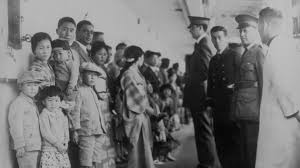
Immigration from Asia and the Pacific Islands has occurred in multiple waves, often shaped by U.S. immigration policy and global events. Early immigrants faced exclusionary laws and discrimination, but later arrivals included professionals and refugees.
The Myth of a Model Minority
The 'model minority' myth portrays APAs as universally successful, especially in education and income. However, this stereotype obscures real challenges and inequalities within APA communities.
Educational Attainment: While APAs as a group have high levels of formal education, this does not always translate into higher household income compared to White Americans.
Barriers: The 'bamboo ceiling' refers to obstacles APAs face in career advancement due to prejudice and intolerance.
Poverty: In 2021, 9.3% of APA families lived below the poverty line, compared to 8.1% of White non-Hispanic families.
College Admissions: Many APAs feel that college admissions policies can disadvantage them, despite perceptions of academic advantage.
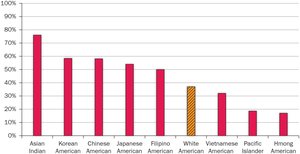
Figure: Percentage of adults (age 25+) with a college degree or higher by ethnic group. Asian Indians have the highest rate, but there is significant variation among APA subgroups.
Experiences of Major Asian Pacific American Groups
Asian Indians
Asian Indian immigration to the U.S. has increased since the 1960s, with many arriving as educated professionals. Maintaining cultural traditions and ties to India remains important, often expressed through symbolic ethnicity and cultural events.
Immigration: Early Asian Indian immigrants faced exclusionary laws; recent immigrants are often urban, educated, and English-speaking.
Economic Ties: Remittances to India from the U.S. are significant, estimated at $23 billion annually (2022).
Cultural Expression: Bollywood films and Bhangra dance are prominent aspects of Asian Indian identity in the U.S.
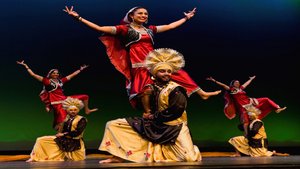
Example: Bhangra, a folk dance from northern India, is performed at cultural events and competitions, reflecting the maintenance of heritage among Asian Indian Americans.
Filipino Americans
Filipino Americans have a long history of migration to the U.S., with distinct waves of immigration tied to labor, military service, and professional opportunities.
Immigration Patterns: Early immigrants worked in agriculture and on Hawaiian plantations; post-WWII arrivals included war veterans and spouses of U.S. soldiers; recent immigrants are often professionals.
Brain Drain: Many Filipino professionals, especially in healthcare, migrate to the U.S., impacting the workforce in the Philippines.
Community Organization: There is no single national social organization uniting Filipino Americans.
Korean Americans
Korean American immigration has occurred in three main waves, each shaped by historical events. Maintaining Korean culture and language is a challenge, and community organizations play a key role in social cohesion.
Immigration Waves: Early laborers (1903–1910), war orphans and wives (Korean War), and professionals (post-1965 Immigration Act).
Economic Adaptation: Many Korean American men start small businesses, often supported by rotating credit associations called kye.
Community Life: Churches are central to Korean American communities, providing social and cultural support.
Example: Sammy Lee, the first Asian American to win Olympic gold (1948), overcame significant discrimination, illustrating both the challenges and achievements of Korean Americans.

Southeast Asian Americans
Southeast Asian Americans, including Vietnamese, Hmong, and others, often arrived as refugees fleeing war and persecution. Their experiences are shaped by trauma, adaptation challenges, and efforts to maintain cultural identity.
Refugee Experience: Large numbers arrived after the Vietnam War, with many resettled in the U.S. through refugee programs.
Adjustment: Language barriers and economic hardship are common, but community organizations help with integration and cultural preservation.
Case Study: Hmong Americans have unique migration and adaptation experiences, often settling in tight-knit communities.
Hawai’i and Its People: Cultural Diversity and Sovereignty
Historical Background
Hawai’i’s history is marked by colonization and the overthrow of its monarchy, leading to its annexation by the United States in 1898. The islands are home to a diverse population, including Native Hawaiians (Kanaka Maoli), Asian immigrants, and others.
Revolution and Annexation: The 1893 revolution, supported by foreign commercial interests, led to U.S. annexation.
Diversity: Hawai’i is a microcosm of cultural diversity, with significant Asian and Pacific Islander populations.
The Sovereignty Movement
The sovereignty movement seeks self-government and land restoration for Native Hawaiians, emphasizing the importance of cultural and historical identity.
Kanaka Maoli: The Indigenous people of Hawai’i, whose name means 'real or true people.'
Protest: Native Hawaiians have protested developments that threaten culturally significant lands, such as the Mauna Kea observatory expansion.
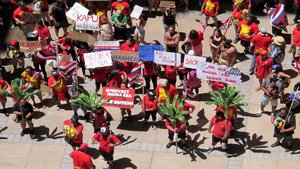
Example: Protests against the Mauna Kea observatory reflect ongoing efforts to protect Native Hawaiian land and assert Indigenous rights.
Summary Table: Major Asian Pacific American Groups
Group | Immigration Patterns | Current Issues |
|---|---|---|
Asian Indians | Recent, professional, urban | Maintaining traditions, symbolic ethnicity |
Filipino Americans | Multiple waves, professionals, military | Brain drain, dispersed organizations |
Korean Americans | Laborers, war refugees, professionals | Language, small business, church |
Southeast Asian Americans | Refugees (Vietnam, Hmong, etc.) | Adjustment, language, community support |
Native Hawaiians | Indigenous, colonization | Sovereignty, land rights |
