 Back
BackConglomerates and Corporations: Structure and Examples
Study Guide - Smart Notes
 Tailored notes based on your materials, expanded with key definitions, examples, and context.
Conglomerates and Corporations
Definition and Structure of Conglomerates
A conglomerate is a very large corporation composed of several combined companies, typically formed through takeovers or mergers. Unlike single-industry corporations, conglomerates supply a variety of goods and services that are not necessarily related to one another. The conglomerate becomes the parent company, while the smaller firms it owns are called subsidiaries. Each subsidiary operates independently but reports to the parent company's management.
Parent Company: The main controlling entity in a conglomerate.
Subsidiary: A company owned wholly or partially by another company (the parent).
Multi-industry Operation: Conglomerates typically operate in multiple, unrelated industries.
Example: Nestlé is a multinational conglomerate with subsidiaries in food, beverages, cosmetics, and more.
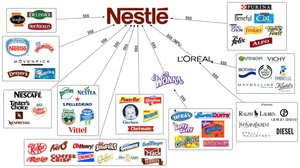
Corporations vs. Conglomerates
All conglomerates are corporations, but not all corporations are conglomerates. The key distinction is that conglomerates must have wholly or partially owned subsidiaries, often in different industries, while corporations may or may not have subsidiaries and can operate in a single industry.
Corporation: A legal entity that is separate from its owners, which may or may not own subsidiaries.
Conglomerate: A corporation that owns multiple subsidiaries, typically across different industries.
Feature | Corporation | Conglomerate |
|---|---|---|
Subsidiaries | May or may not have | Must have |
Industry Focus | Often single-industry | Multi-industry |
Examples | Walt Disney (entertainment) | Nestlé, Berkshire Hathaway, Alphabet |
Examples of Major Conglomerates
Several well-known multinational conglomerates operate across diverse industries:
Berkshire Hathaway
Amazon
Alphabet (parent company of Google)
Meta (formerly Facebook)
Procter & Gamble
Unilever
Diageo
Johnson & Johnson
Warner Media
Each of these conglomerates owns many subsidiaries in different sectors, such as technology, consumer goods, media, and healthcare.
The Walt Disney Company as a Conglomerate
The Walt Disney Company is a prime example of a conglomerate focused on entertainment. It operates in movies, music, television production, live theater, toys, clothing, and theme parks. Disney's presence in over 40 countries highlights its multinational and multi-industry nature.
Media Networks
Parks and Resorts
Studio Entertainment
Consumer Products
Interactive Media

Example: Disney owns and operates theme parks (Disneyland, Disney World), produces films and TV shows, and sells branded merchandise worldwide.
Key Terms
Takeover: The acquisition of one company by another.
Merger: The combination of two companies to form a new entity.
Subsidiary: A company controlled by another company.
Parent Company: The main company that owns subsidiaries.
Summary Table: Conglomerate vs. Corporation
Aspect | Conglomerate | Corporation |
|---|---|---|
Ownership Structure | Parent company with subsidiaries | May or may not have subsidiaries |
Industry Scope | Multiple industries | Often single industry |
Examples | Nestlé, Disney, Berkshire Hathaway | Apple, Ford (if no subsidiaries) |
Additional info: In sociology, conglomerates are studied for their influence on media, culture, and the economy, as they can shape public opinion, consumer behavior, and global markets.
