 Back
BackJewish Americans: Identity, History, and Contemporary Issues
Study Guide - Smart Notes
 Tailored notes based on your materials, expanded with key definitions, examples, and context.
Jewish Americans: The Quest to Maintain Identity
The Jewish People: Race, Religion, or Ethnic Group?
Understanding Jewish identity in the United States involves examining whether Jews are best described as a race, a religion, or an ethnic group. This question is complex and has been debated both within and outside the Jewish community.
Race: Jews have sometimes been categorized as a race, especially in the context of historical discrimination, but this classification is widely rejected by contemporary scholars.
Religion: Judaism is a major world religion, and many Jews identify primarily through religious beliefs and practices.
Ethnic Group: Many Jews see themselves as an ethnic group, sharing a common ancestry, culture, and history.
Survey Data: A 2022 survey of Jewish millennials found that 33% view Judaism as a religion, 42% as a culture, 11% as an ethnicity, and 3% as a nationality.
Judaization: There is a trend toward emphasizing cultural traditions over religious observance among American Jews.
Self-Identification: The most inclusive definition is that a Jew is someone who identifies as Jewish.
Immigration of Jews to the United States
The history of Jewish immigration to the United States is marked by several distinct waves, each shaped by global events and U.S. immigration policy.
Sephardic Jews: The first Jewish immigrants arrived in 1654, primarily from Spain and Portugal.
Eastern European Migration: The largest wave occurred in the late 19th and early 20th centuries, with Jews fleeing persecution in Eastern Europe.
Immigration Acts of the 1920s: These laws sharply reduced Jewish immigration.
Refugees from Nazi Germany: Beginning in 1933, Jews escaping the Holocaust sought refuge in the U.S.
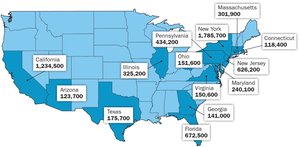
Urban Concentration: Today, Jewish Americans are heavily concentrated in urban areas, especially in the Northeast.
Anti-Semitism: Past and Present
Anti-Semitism refers to prejudice and discrimination against Jews. Its origins are complex and have led to significant historical and contemporary challenges for Jewish communities.
Origins: Theories explaining anti-Semitism include the fringe-of-values theory, scapegoating theory, and the transformation of in-group virtues into out-group vices.
The Holocaust: The most extreme example of anti-Semitism was the Holocaust, the systematic persecution and murder of six million Jews by Nazi Germany.
U.S. Anti-Semitism: While never institutionalized by the U.S. government, anti-Semitic incidents have occurred throughout American history and continue today.
Contemporary Issues: Recent years have seen a rise in anti-Semitic incidents, including hate crimes and vandalism.


Contemporary Position of Jewish Americans
Jewish Americans have achieved significant economic, educational, and political success, but challenges remain.
Economic Status: Jewish Americans, on average, have higher incomes than the national average.
Educational Attainment: Jewish Americans are among the most highly educated groups in the U.S.
Political Involvement: Jewish Americans are active in political life and have historically supported civil rights and social justice causes.
Aspect | Jewish Americans | U.S. Average |
|---|---|---|
Median Household Income | Higher than average | --- |
College Graduation Rate | Significantly higher | --- |
Political Participation | High | --- |
Urban Concentration | High (especially Northeast) | --- |
Religious Diversity | Orthodox, Conservative, Reform, etc. | --- |
Additional info: Table values are summarized from U.S. Census and Pew Research Center data.
Religious Life
Religion plays a diverse role in the lives of Jewish Americans, with varying levels of observance and affiliation.
Orthodox Jews: Adhere strictly to traditional practices, including dietary laws and gender roles in religious life. Ultraorthodox Hasidic Jews follow a large number of commandments (mitzvahs).
Reform Jews: Adapt rituals to modern life, including gender equality in religious roles and less emphasis on traditional commandments.
Conservative Jews: Fall between Orthodox and Reform in terms of tradition and adaptation.
"Just Jewish": Many identify culturally rather than religiously.

Coming-of-Age Ceremonies: Bar mitzvah (boys, age 13) and bat mitzvah (girls, age 12) mark the assumption of religious responsibilities.
Jewish Identity
Jewish identity is multifaceted, encompassing family, religion, and cultural heritage.
Family: Extended family ties have traditionally reinforced Jewish identity, though trends show a move toward individualism.
Religion: Observance of Jewish law varies, with some focusing on cultural or secular aspects of Jewishness.
Cultural Heritage: Many Jews express their identity through political, cultural, and social activities rather than religious observance.
Peoplehood: A strong sense of shared identity persists, transcending national, religious, or cultural boundaries.

Contemporary Issues: American Jews and Israel
Recent events, such as the war in Gaza, have sparked debate within the American Jewish community about the relationship between Jewish identity and support for Israel.
Diverse Opinions: There is no single consensus on support for the Israeli government or military among American Jews.
Community Divisions: These debates have led to divisions within families, friendships, and institutions.

Additional info: These debates reflect broader questions about identity, ethics, and political engagement among Jewish Americans.
