 Back
BackRace and Ethnicity: Structured Study Notes for Introduction to Sociology
Study Guide - Smart Notes
 Tailored notes based on your materials, expanded with key definitions, examples, and context.
Race and Ethnicity in Sociology
Introduction to Race and Ethnicity
Race and ethnicity are central concepts in sociology, helping to explain social dynamics, group interactions, and patterns of inequality. Sociologists emphasize that race is a social construct, not a biological fact, and that ethnicity refers to shared cultural practices, values, and beliefs.
Race: A social construct based on physical differences considered significant by society. Names for racial categories change over time, reflecting social attitudes.
Ethnicity: Describes shared culture, including practices, values, and beliefs. Individuals may identify with ethnicities in complex ways.
Example: The "Blue Eyes, Brown Eyes" exercise demonstrates how social definitions of race can create real consequences.

Minority Groups and Scapegoat Theory
Minority groups are defined by their physical or cultural characteristics and experience unequal treatment. Sociologists use the term "subordinate group" interchangeably with "minority group." The dominant group often holds more power and may displace aggression onto minorities (scapegoat theory).
Characteristics of Minority Groups: Unequal treatment, distinguishing traits, involuntary membership, awareness of subordination, high in-group marriage rates.
Scapegoat Theory: The dominant group displaces aggression onto subordinate groups (e.g., historical examples like Hitler).
Stereotypes, Prejudice, Discrimination, and Racism
Sociologists distinguish between stereotypes, prejudice, discrimination, and racism. These concepts are interconnected and contribute to social inequality.
Stereotypes: Generalized beliefs about groups, often negative and recycled from subordinate groups.
Prejudice: Beliefs, thoughts, feelings, and attitudes about a group.
Discrimination: Actions against a group, can be overt or institutional.
Racism: Prejudice used to justify the belief that one racial category is superior or inferior, embedded in social practices.
Institutional Racism: Racism embedded in societal institutions.

White Privilege and Colorism
White privilege refers to unearned advantages received by individuals perceived as white. Colorism is the belief that one skin tone is superior or inferior within a racial group.
White Privilege: Promotes the status of white people simply for being part of the dominant group.
Colorism: Discrimination based on skin tone within a racial group.
Intergroup Relations: Tolerance and Intolerance
Intergroup relationships range from extreme intolerance (genocide) to tolerance (pluralism). Sociologists classify these relationships along a spectrum.
Genocide: Deliberate annihilation of a targeted group (e.g., Holocaust, Trail of Tears).
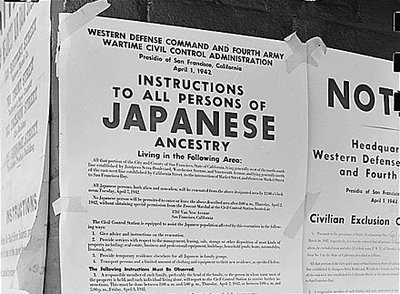
Expulsion: Forced removal of a subordinate group (e.g., Japanese internment camps during WWII).
Segregation: Physical separation of groups; can be de jure (by law) or de facto (by practice).
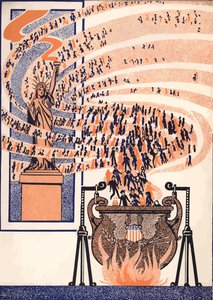
Pluralism: Coexistence of multiple groups, each retaining its identity ("salad bowl" analogy).
Assimilation: Minority group adopts characteristics of the dominant culture, losing its own identity.
Amalgamation: Minority and majority groups combine to form a new group ("melting pot" analogy).
Historical Context and Current Experiences of Racial and Ethnic Groups in the U.S.
Native Americans
Native Americans have experienced centuries of discrimination, forced relocation, and cultural erosion. Key legislation and events include the Indian Removal Act, Dawes Act, and Indian Civil Rights Act.
Forced Relocation: Indian Removal Act, Dawes Act.
Cultural Erosion: Boarding schools aimed at "civilizing" Native children.
Current Issues: Lower life expectancies, ongoing effects of historical degradation.
African Americans
African Americans' history in the U.S. is marked by slavery, segregation, and ongoing struggles for equality. Key events include the Civil War, Civil Rights Movement, and landmark legislation.
Slavery: Began in 1619, codified by slave codes.
Civil Rights Movement: Boycotts, marches, legal victories (Brown v. Board, Civil Rights Act).
Contemporary Issues: Racism persists in institutions, ongoing debates about equality.
Asian Americans
Asian Americans are a diverse and rapidly growing group, with immigration waves from China, Japan, the Philippines, India, Korea, and Vietnam. Discrimination has included exclusion acts and internment camps.
Immigration Waves: Third wave (1880-1914), fourth wave (1965-present).
Discrimination: Chinese Exclusion Act, internment camps for Japanese Americans.
Model Minority Stereotype: Assumes Asian groups achieve success without protest.

Hispanic/Latino Americans
Hispanic/Latino Americans include many ethnic groups, with immigration shaped by treaties and political events. Mexican Americans, Cuban Americans, and Puerto Ricans have distinct experiences.
Mexican Americans: Treaty of Guadalupe Hidalgo, ongoing debates about immigration.
Cuban Americans: Easier path to citizenship after 1959.
Puerto Ricans: More live on the mainland than the island.
Arab Americans
Arab Americans are diverse, with ancestry linked to 22 countries. They have faced mistrust, misinformation, and Islamophobia, but also contribute to American society in many ways.
Diversity: Varying religious backgrounds, complex identities.
Discrimination: Hate crimes, stereotypes, political tensions.
White Americans
White Americans come from diverse backgrounds and have historically held dominant status. White supremacy has been visible throughout history, but the group is now declining slightly in population.
Diversity: European origins, regional cultures.
White Supremacy: Groups like the Ku Klux Klan.
Population Trends: Declining as more people die than are born.
Theoretical Perspectives on Race and Ethnicity
Functionalism
Functionalists view racial and ethnic inequalities as serving a purpose in society, often benefiting the dominant group. Racism can strengthen group bonds but also creates dysfunctions by wasting talent and resources.
Key Points: Racism is functional for the dominant group, but dysfunctional for society as a whole.
Conflict Theory
Conflict theorists focus on struggles between dominant and minority groups, analyzing how power and inequality shape everyday life. Intersection theory examines how race, class, gender, and other factors interact.
Key Points: Inequality is maintained by the dominant group; intersection theory highlights layered disadvantages.
Symbolic Interactionism
Interactionists emphasize the role of symbols and interactions in forming racial identities and prejudices. Double consciousness describes the divided sense of self experienced by minorities.
Key Points: Race is defined through social interactions; culture of prejudice is embedded in society.
Review and Application
Key Concepts and Questions
Difference between race and ethnicity
Minority groups and scapegoat theory
Stereotypes, prejudice, discrimination, and racism
White privilege
Intergroup relations: genocide, expulsion, segregation, pluralism, assimilation, amalgamation
Historical context and current experiences of major racial and ethnic groups
Theoretical perspectives: functionalism, conflict theory, symbolic interactionism


Practice and Discussion
Reflect on personal experiences with stereotypes.
Discuss strategies for creating racially inclusive classrooms.
Consider social responsibility in addressing racism.
Analyze sources of information and the impact of misinformation on stereotypes and oppression.
Summary Table: Intergroup Relations Spectrum
Type | Description | Example |
|---|---|---|
Genocide | Deliberate annihilation of a group | Holocaust, Trail of Tears |
Expulsion | Forced removal of a group | Japanese internment camps |
Segregation | Physical separation of groups | Jim Crow laws |
Pluralism | Coexistence of groups retaining identity | Salad bowl analogy |
Assimilation | Minority adopts dominant culture | Immigrant integration |
Amalgamation | Groups combine to form new group | Melting pot analogy |
Summary Table: Theoretical Perspectives
Theory | Main Idea | Key Sociologist |
|---|---|---|
Functionalism | Inequality serves a function | Nash (1964) |
Conflict Theory | Struggle for power and resources | Vivien Thomas, Intersection theory |
Symbolic Interactionism | Race defined through interaction | W.E.B. DuBois |
Key Formula: Social Stratification Index
Social stratification can be measured using indices such as the Gini coefficient:
Additional info: The Gini coefficient is a common measure of inequality, relevant to discussions of social stratification.
